
What it’s like living long-term in America’s No. 1 college party town
By Levi Kauffman and Elijah Obando
August 28, 2026 at 12:00 pm
Every year, thousands of students graduate from UC Santa Barbara and subsequently leave the adjacent college town of Isla Vista behind, making room for the next generation of similarly temporary residents. But, who remain amongst this fluid population are the residents that continue to call this beach town, known for its party culture, home.
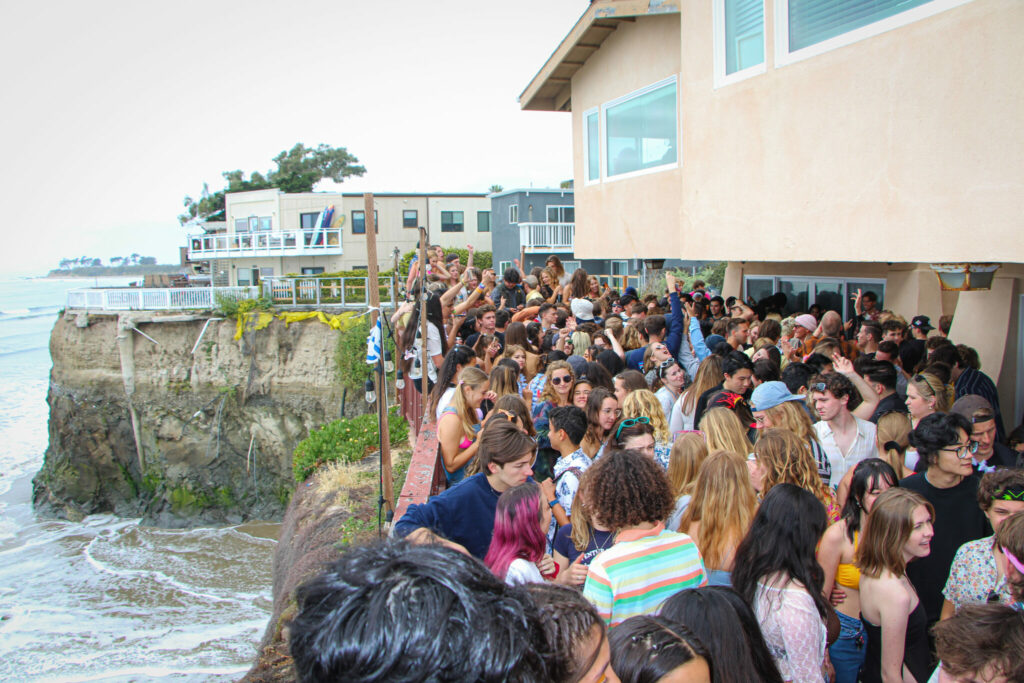
According to Santa Barbara County Planning and Development, I.V. has a population of around 20,000, of which about 65% are students. Among the remaining roughly third of the community are recent graduates building careers, couples raising families and local leaders.
Their stories and experiences offer a glimpse into the idyllic and difficult lives of long-term I.V. residents.
Building a family
Henry Sarria has lived in I.V. for 39 years with his wife Kim and their family of five cats. He explained that while many plan for a life after I.V., he found himself establishing his life in it.
“I was too busy doing school or work, playing in bands, skateboarding in contests, [and] racing bicycles, Motocross and mountain bikes,” Sarria said. “I was always too busy … to think about moving.”
Pegeen and Jon Soutar, long time friends of Sarria, met at UCSB in the early 1980s and bought the home where they still live in 1983. The Soutars have raised two children in I.V. since then, a son born in 1988 and a daughter born in 1990.
Although they briefly considered moving to Santa Cruz while Pegeen was pregnant with their daughter, the couple chose to stay in I.V. and make it better for their children and the community. To this end, the Soutars have strongly advocated for more parks, sidewalks and increased safety while Pegeen served on the I.V. Recreation and Park District Board of Directors for 20 years.
The Soutars described the I.V. community as “always super friendly,” especially toward their children, diverse and having a “culture of learning.” They recalled allowing their children to go to any house in I.V. as long as the people living there called them and shared their names, address and told them what the kids were doing.
“We had a lot of trust for the students here,” Pegeen Soutar said. “[For students] it’s like a puppy. It was like, ‘look what just showed up on our front doorstep; these two little kids that for some reason decided our house was a cool one to come visit.’”
Despite the Soutar’s fond memories of their children’s childhood, they still acknowledged the certain risks of raising a family in a town known for its party culture.
“I think if you weren’t watching what was going on there was probably opportunities for the young kids to get involved and stuff a little earlier than might happen someplace else,” Pegeen Soutar said.
Pegeen Soutar also said that cars speeding in I.V. was a major issue when they were raising their children. The family lost a dog and a cat after they were struck by vehicles driving recklessly.
In regards to raising kids in I.V. today, the Soutars feel that it is likely similar in terms of safety and other challenges compared to the nearby communities of Goleta and Santa Barbara. One particular challenge they highlighted was that I.V. is “a magnet for young people,” leading many kids to come for parties, a fact they feel has been aided by an increase in electric bike use.
The biggest difficulty they see in starting a family in I.V. today is affordability.
Aaron Howard, who has lived in I.V. since starting at UCSB in 2007, said that while he isn’t seeking to start a family currently, he doubts he would be able to in I.V. without owning a house.
“I’m just not quite in that phase yet of my life,” he said. “I imagine I’d probably be living on my own and without housemates by the time that happens, which would likely mean outside of Isla Vista.”
The Soutars said they know many people who have left the community to start families and despite wanting to return, can’t afford to do so because of the high cost of living.
“This place is magic,” Pegeen Soutar said. “And those people that have figured it out want to live here and they can’t cause of the rents.”
An ever changing community
Multiple people interviewed by the Nexus noted seeing an increasing number of homes occupied by long-term residents taken over by student tenants. A key factor in this trend has been rising rents, which are among the highest in the county.
“I think there’s a really tight-knit community of the long-term residents and there’s just fewer of them now,” Spencer Brandt, who has lived in I.V. for over a decade, said.
During his time in I.V., Brandt recounted the 2023 evictions of residents living in 243 apartments across three buildings located on El Colegio Road, collectively known as CBC & the Sweeps, as the biggest single change in population. According to the Santa Barbara Independent, this was a case of “renoviction,” where a property owner evicts tenants in order to renovate and subsequently raise rent.
“Families were evicted by a company that believed that they could upgrade the income of their tenants,” Brandt said.
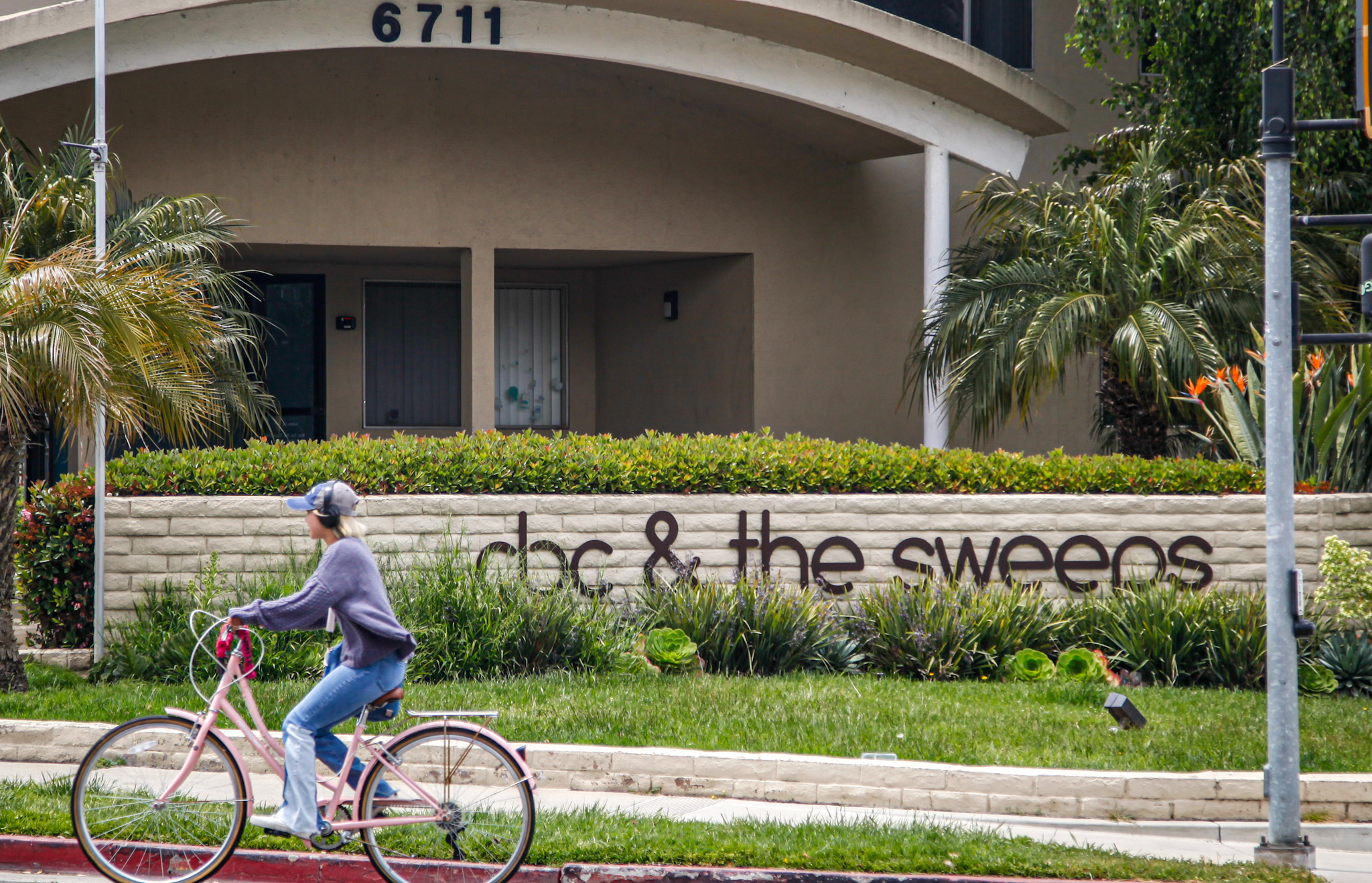
He highlighted that the evictions were particularly felt at I.V. Elementary School, where enrollment dropped by 30 students the following year and has continued to decline.
The Soutars said that a friend of theirs, a single mother who lived in the Sweeps apartments for 20 years, was forced to leave.
Howard has witnessed this shift too. In the west end of I.V., where Howard and many other long-term residents live, he has seen “many” family-owned houses converted to rentals and taken over by students.
“One house where there’s maybe one couple living there, it sells, and then all of a sudden it becomes a renter and then you’ve got, what, six, eight, 10 people?” Howard said.
With the increased density, Howard said he’s seen more waste on streets, foot traffic and vehicles.
“Even one house turning over on the 68 block has an impact,” he said.
Sarria highlighted that the growth in population and infrastructure is more than he has ever seen. UCSB has experienced a rising student population, and when coupled with the limited on-campus bed spaces offered, students must find spaces in tall apartment complexes within I.V.
“In my early days here, I would have never thought there would have been a four-story building in I.V.,” Saria said. “Now you got the new one that’s being built over in the corner of Trigo and Embarcadero Del Mar.”
The fluidity of I.V.’s population was particularly noticeable to the Soutar’s, who recalled students attending universities other than UCSB and Santa Barbara City College living in I.V. while taking classes remotely. Despite assumptions that I.V. cleared out during the pandemic, the couple said “it was just as full.”
Response to tragedy
2014 is remembered as one of the darkest years in I.V.’s history. In April, riots erupted during Deltopia celebrations and a mass shooting the next month killed seven people. Brandt arrived as a freshman at UCSB the next year.
“As a student during that time period, that was always something that was in the back of your mind,” he said.
Sarria described the periods where I.V. has experienced tragedy as a major challenge he’s faced while living there. He explained that it’s difficult to see the community he’s a part of go through devastating loss.
“The challenges that I face in I.V. have been what some people have gone through as a function of those [tragic] incidents,” Sarria said. “A grief that a lot of people are undergoing is tough — it’s hard to watch. Imagine coming back [to I.V.] and wondering if some of your friends got killed or injured, you know; it’s just not right.”
Brandt emphasized that discussion among students about the causes of both the riots and shooting was very common at the time, but has declined in the years since, which he attributed to the transient student population and “human nature to forget.”
Howard, who graduated three years before 2014, recalled a “somber atmosphere” hanging over I.V. for a while after the shooting but simultaneously “a lot of beautiful community support.” He fondly remembered joining the memorial paddle-out honoring the victims that drew thousands of people.

“It was just a very heavy situation that you don’t think would happen in your town and then it does,” Howard said.
The Soutars also recalled the community coming together after the shooting.
“I don’t know how to describe it but there were a few years there where people would look right at you and smile and say ‘hello,’” Pegeen Soutar said.
Since entering the community in the aftermath of tragedy, Brandt said the biggest change he’s seen in I.V. has been increased safety, which he attributed in-part to services like the Community Service Organization, bridging the gap between students and law enforcement. However, not all long-term residents agree to having witnessed this shift.
Sarria believes that crime reporting has decreased due to negative attitudes toward law enforcement, thus skewing crime rate statistics to appear lower. He clarified that he doesn’t believe crime is drastically increasing, but he has viewed a shift in the severity of crime.
Sarria referenced the rape and strangulation that occured in May, the arrest of several men living in I.V. for illegally possessing multiple firearms last year, among other incidents.
“There’s a lot of stuff that goes on that doesn’t go reported, [and] when I say reported, I don’t mean just to law enforcement,” Sarria said. “A lot of what goes on the media doesn’t know about.”
Sarria attributed this lack of information to the desire to “present a nice image” of I.V., so that parents feel secure in sending their children to UCSB. While he understands where the avoidance of negative press comes from, he believes it is important “to report the truth [because] there’s a certain responsibility.”
Looking ahead
With the next class of UCSB and SBCC students arriving to I.V., some who may one day become long-term residents, Brandt voiced his excitement for them and hope that future residents will leave I.V. “a little bit better than [they] found it.”
“You’re about to be moving to one of the most vibrant and special communities in the entire world,” he said. “You’re gonna experience some of the best and most exciting years of your life. Living here, building relationships with people [and] getting to enjoy everything our community has to offer.”
Sarria emphasized the importance for the community to get along with one another as a piece of advice for the continuing community and the incoming alike.
“We’re all gonna have differences of opinions on things, [but] that doesn’t mean we have to be a jerk about it,” Sarria said. “It just means that you have to learn to accept those differences and be with them or around them. We’re not a city or a town — we’re a community.”
A version of this article appeared on p. 3 of the Aug. 27 print edition of the Daily Nexus.

Living long-term in a famous college party town like Isla Vista offers a unique dynamic, balancing vibrant student energy with the everyday realities of local life. If you want to check the page lang or explore online options, visit royalstiger.Experiencing the shift in neighborhood atmosphere over time gives a fascinating perspective on community life.
Living long-term in a college party town probably feels very different from visiting for one weekend. I spent three months renting a room two blocks from a university, and Thursday nights regularly meant music outside until 2 a.m., crowded pizza places, and students walking everywhere. By morning, I loved grabbing coffee early while the neighborhood was completely quiet. That experience also got me interested in student resources, and I later browsed https://the-college-network.pissedconsumer.com/review.html while researching education options. Despite the nightlife, what stayed with me most was the walkability, local businesses, and surprisingly close community among long-term residents.