
IVCSD debate, compromise on resolution to place tax measure on ballot
July 1, 2026 at 4:24 pm
The Isla Vista Community Services District Board of Directors approved a resolution placing the Increased Municipal Infrastructure & Services Measure on the November ballot at their June 23 meeting. If approved by voters, the measure would instate a 6% tax on trash, water, electricity and sewage, and 7% on methane, raising $1.2 million annually for local improvements.
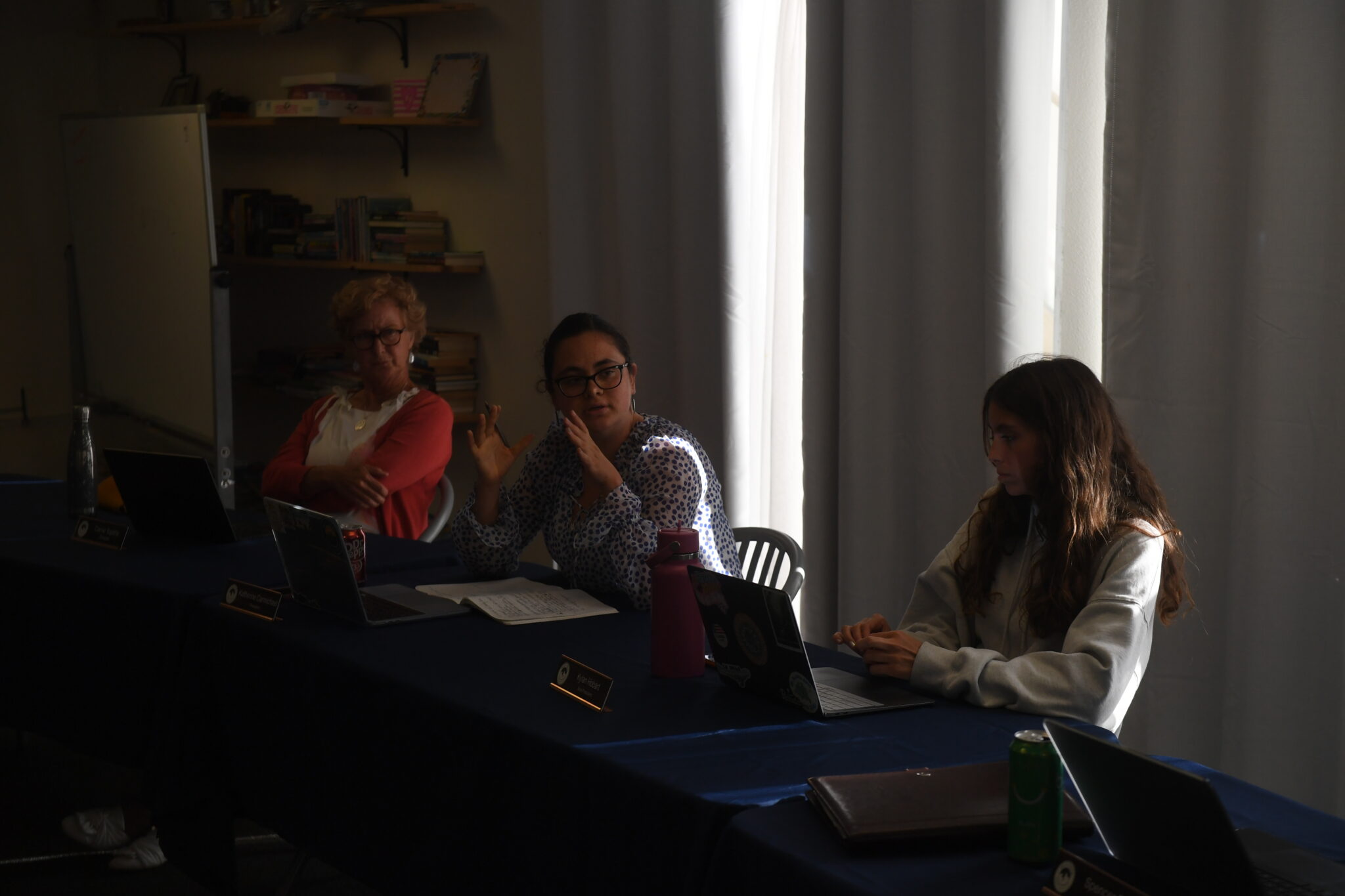
The Isla Vista Community Services District (IVCSD) Board of Directors was first presented with three competing resolutions to place differing Utility User Taxes (UUT) on the November 3 ballot. All three resolutions would raise $1.2 million dollars, authorize the establishment of exemptions and included a second measure to place a $3.5 million yearly appropriations limit on the board.
Resolution 26-21 would create a 6% UUT on trash, sewage, water, gas, and electric. It specified that the additional revenues would fund improvements to “housing services; community based public safety; transportation, parking, and public transit; clean and safe public spaces, including lighting and sidewalks; and community facilities and events.”
Resolution 26-22 would create a 6.5% UUT on residential trash, sewage, water, gas and electric, and 3% on commercial trash, sewage, water, gas and electric. It specified that the additional revenues would fund the same services as Resolution 26-21, but according to IVCSD General Manager Jonathan Abboud, they chose to omit language highlighting improvements to “lighting and sidewalks” because of a 75-word cap on ballot measures.
Resolution 26-23 would create a UUT of “9% on residential methane and 7% on residential trash, sewage, water, and electric, and 3% on commercial methane and 1.5% on commercial trash, sewage, water, and electric.” It included shortened language emphasizing that the increased revenues would fund improvements to “transportation, parking, public safety, lighting, and clean, safe, public spaces and events.”
IVCSD Director and fourth-year political science major Edward Pilotte could not vote because he was not at the location the meeting agenda stipulated. Additionally, Director Kirsten Deshler said she would abstain because she is appointed by UC Santa Barbara. This meant that at least four of the remaining five board members would have to vote in favor of the resolution for it to pass.
IVCSD Director and fourth-year political science and environmental studies double major Kylan Hobart raised concerns that resolutions 26-22 and 26-23 focused too much on higher taxes for methane rather than what the revenues would fund. She also raised concerns that a 9% methane tax would be too high and unlikely to be approved by voters.
“From my perspective, the value of the tax is to generate more revenue for IVCSD so we can do more for the community. And I think that an environmental agenda should come second to that,” Hobart said. “I think that there is a lot of importance to pushing out natural gas. I mean, that’s definitely something that I personally really would love to see, but I think as a board member, my interest is going to be in providing a ballot measure that is as descriptive as possible [with] what we’re trying to do instead of focusing on targeting specific utilities.”
Board President Katherine Carmichael agreed with Hobart that the measure’s language should be as “straightforward” as possible, but said that the Board’s environmental agenda can align with services the District provides. To support the language in 26-23, Carmichael and Director Spencer Brandt referenced studies that found taxes on methane may reduce natural gas use. They also highlighted the large support for Measure R, which established the IVCSD’s tax base in 2018, and which Brandt said had “90%” of the same language as 26-23.
Hobart and Deshler said that they didn’t see a methane tax being effective in reducing gas usage, and that Measure R passed at a different time in Isla Vista. They both suggested that incentive programs may be a better avenue for reducing natural gas use, which Carmichael and Brandt agreed should be explored.
Pilotte, Hobart and Director and fourth-year anthropology and global studies double major Annabelle Sipos questioned whether the studies the board members referenced could be applied to I.V. because of the large student population. Carmichael responded by asking, “What are you making your decisions off of?”
“I make my decisions on existing research that I’ve read in peer reviewed journals on a plethora of communities and on our own Measure R,” Carmichael said. “I know it’s different but what else can we make our decisions off of? A hypothetical what we think the community will and will not like?”
Additionally, board members initially disagreed on whether to impose differing tax rates on residential and commercial utility use. Directors Carrie Topliffe and Sipos said they were in favor of a flat tax with possible exemptions for struggling businesses. In response, Brandt emphasized that the Board should avoid creating a program that would be too complicated to administer.
Abboud clarified that taxes on commercial users make up a small portion of the District’s tax base. The Board agreed to not have a variable tax rate between commercial and residential users in order to simplify the language and save words in the measure to describe funded services.
Carmichael asked what Hobart would be willing to compromise on. Hobart responded by saying she valued including wording specifying that revenues would go to “lighting and sidewalks” and “parking services” — common issues she has heard from concerned I.V. residents — more than a variable tax rate on methane. Abboud proposed a rate of 6.5% on methane and 6% on all other utilities which would still raise $1.2 million.
“I just think if a 6.5 and a 6 could get us 1.2 million, then what’s the point of doing a variable? I just think that gas is such a small part of it. And I think that there’s other avenues that we could go down that would have just as meaningful an impact,” Hobart said. “Why not just do 6 and keep it simple?”
Following further discussion, Brandt suggested passing resolution 26-21 and amending it to include an 8% tax on methane. Hobart said that she felt 8% was still too high but that she would support a 7% tax on methane instead, which Brandt agreed to.
The Board then voted five in favor of the motion to have a 7% tax on methane and 6% tax on trash, sewage, water and electric, with Deshler abstaining and Pilotte unable to vote. Hobart and Carmichael also volunteered to lead an ad hoc committee to look into additional ways to move I.V. away from non-renewable energy.
Next, the Board unanimously approved Resolution 26-25 indicating that board candidates, not the District, would pay for their candidate statements.
Abboud then presented the 2026-27 fiscal year preliminary budget, sharing that the District received $2,374,479 in revenue and expended $2,477,729. Abboud explained that the main reason for the deficit stemmed from the district hosting Soltopia. The Board unanimously approved the preliminary budget.
The next item on the agenda was the approval for the collection of the existing 8% UUT for sanitary sewer services provided by the Goleta West Sanitary District, which the Board passed unanimously.
Lastly, the Board heard reports. Abboud shared that the recent IVCSD furniture sale was a “massive success,” and they have “three containers” saved for their move-in sale.

Local measures like this always remind me how much daily life depends on things we barely notice until they need funding: clean water, safe lighting, trash pickup, sidewalks, and public spaces. A 6% utility tax looks like the kind of proposal people will want to discuss carefully, but I appreciate that the goal is visible local improvement. I once helped a neighbor sort community paperwork and even had https://turbotax.pissedconsumer.com/review.html saved with tax notes, because taxes feel less stressful when everything is organized. If residents see clear results, this could become one of those practical choices that quietly improves everyday life.
This sounds like a thoughtful debate, and it’s good to see the board discussing not only how much revenue the measure could generate but also how the funds would directly benefit the community. Finding the right balance between environmental goals and practical public services is never easy, so it’s encouraging to see different viewpoints being considered. I also enjoy exploring informative websites in my free time, and recently came across https://fortune-thor.fr/, which offers another interesting online experience.
This seems like a difficult balance between raising enough revenue for community improvements and keeping the tax burden reasonable for residents and businesses. I’m curious to see whether voters will support the compromise measure in November. On a different note, while browsing local discussions recently, I also came across https://winaura.be/ and found it interesting to explore.
An insightful local government report in the Daily Nexus covering the IVCSD debate and their hard-fought compromise on a crucial resolution to place a new tax measure on the upcoming ballot. Tracking community administration, public infrastructure funding discussions, and localized fiscal policy adjustments is essential for understanding regional governance. After staying informed on these important civic debates and public financial initiatives, a quick break is an excellent way to unwind. For those in the Netherlands searching for a secure, fast, and modern digital platform for premium online entertainment, feel free to visit https://casoolas.nl/.
It sounds like the board reached a practical compromise after a long debate. Balancing infrastructure funding, environmental goals, and what voters are actually willing to support is never easy, so settling on a 6% utility tax with a 7% methane rate seems like a middle ground that may be easier for the community to evaluate. I also enjoy discovering useful websites in my free time, and recently came across spinania. It will be interesting to see how residents vote on the measure in November
It’s also interesting how the article points out the challenge of making decisions for a community like Isla Vista, with its large student population, and relying on studies from other places. It’s a reminder that local context matters a lot. The ad hoc committee to look into other ways to move away from non-renewable energy shows they’re thinking long-term, too. Sometimes, after reading about such serious civic matters, it’s nice to have a different kind of break. When I’m looking for a change of pace and a bit of light entertainment, I might check out a site like zumospin for… Read more »
It’s interesting how they had to compromise on the language just to fit everything into the ballot measure word limit—seems like a lot of important details get lost that way. I’ve been using Bass Bet lately to keep track of local ballot measures and tax proposals in my area, and it actually helps break down what’s going on without all the legal jargon.