
How contention over a local pipeline garnered an executive order from the president
March 21, 2026 at 9:00 am
Last week, an executive order from President Donald Trump prompted the United States Department of Energy to direct oil company Sable Offshore to restart a pipeline system off the Santa Barbara coast. Several rejections of the restart at the local and state levels complicate the process, continuing the years-long legal battle over the pipeline that caused the 2015 Refugio Oil Spill.
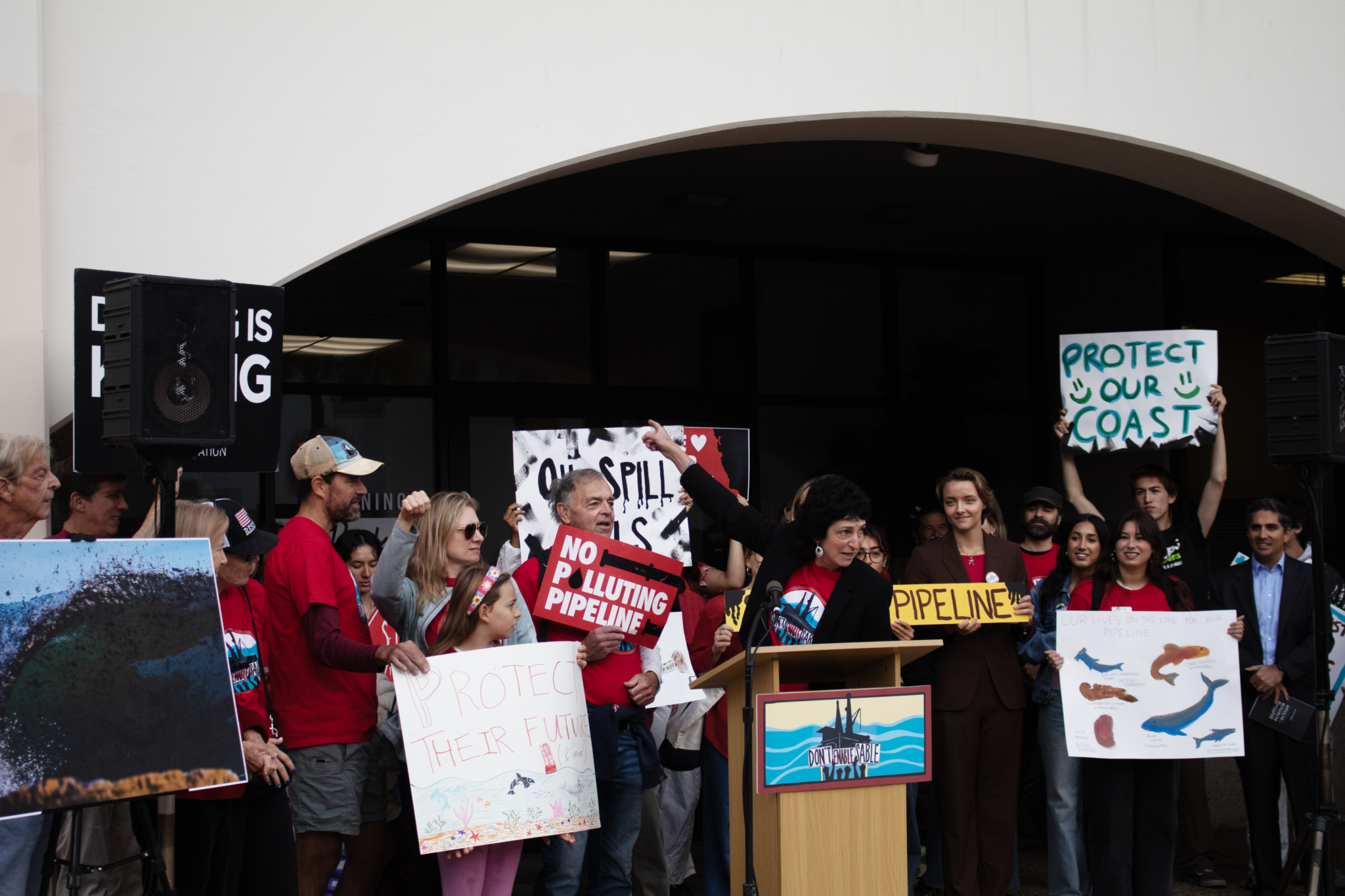
In early 2024, Texas-based oil company Sable Offshore purchased the Santa Ynez Unit (SYU), a set of oil platforms off the Santa Barbara coast, along with the Las Flores Pipeline System, which is an onshore and offshore pipeline network. Since then, an extensive legal battle with local environmental organizations has continuously blocked the pipeline system’s restart. In 2015, corrosion within one of the pipelines in the Las Flores pipeline system caused over 100,000 gallons of crude oil to spill.
In the aftermath, local wildlife, fishing and tourism were affected. In 2020, the United States Department of Justice finalized a $22.3 million settlement to address damages caused by the oil spill.
The ongoing war in Iran has caused gas prices to climb, motivating the federal government to seek alternatives to foreign oil. On March 13, Trump issued an executive order that cited the Defense Production Act, a Cold War-era law, that allows the president to facilitate domestic supply chains and services to “ensure the nation’s defense.” That same day, Secretary of Energy Chris Wright issued a statement directing Sable to restart operations at the SYU.
State autonomy versus federal agenda
The legal battle is part of a larger dispute over state autonomy and federal goals. Wright’s press release stated the facilitation of Sable’s restart was to “address supply disruption” created by state and local decisions that have kept Sable from restarting the pipeline.
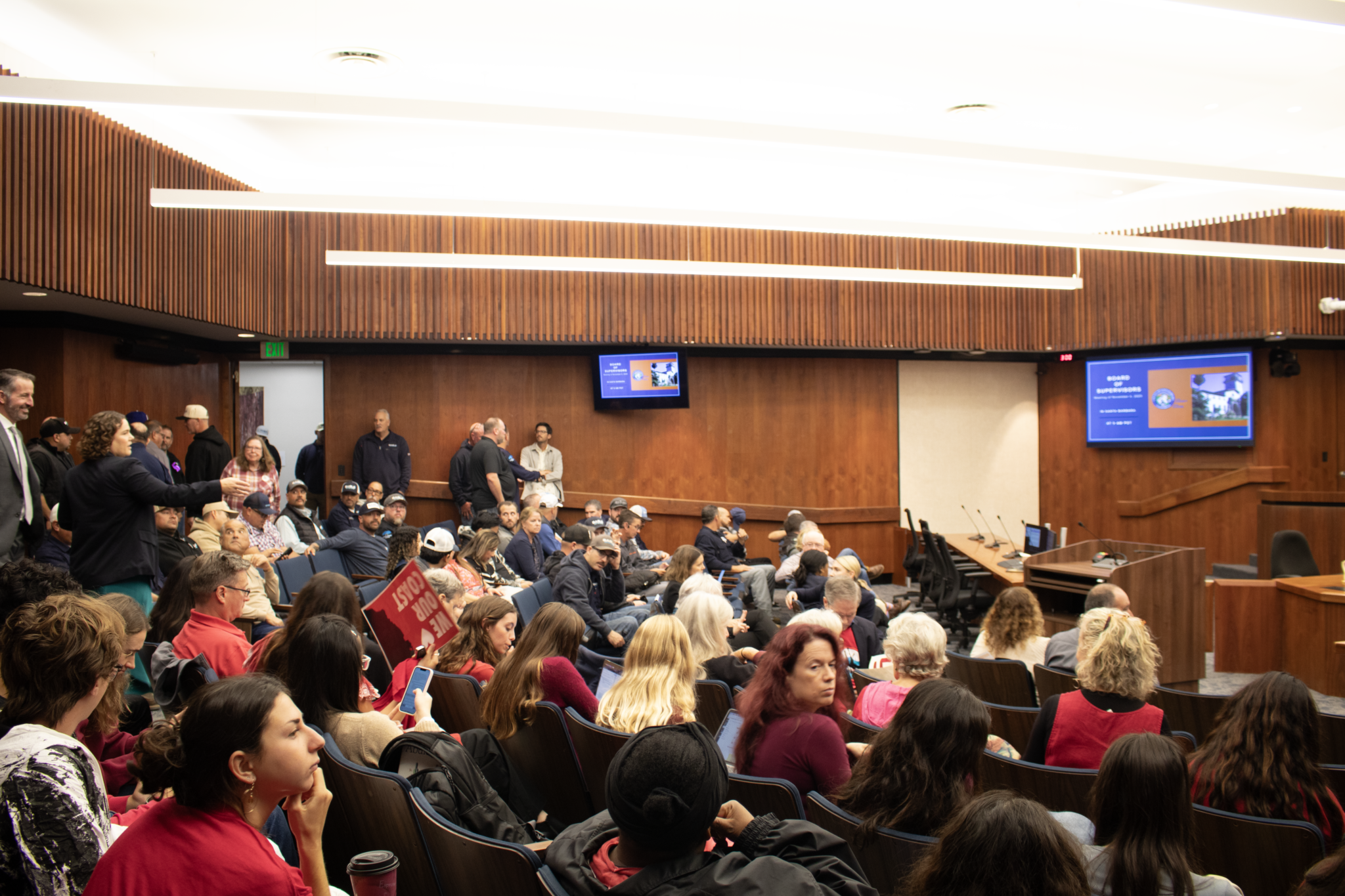
Under several state and local laws, Sable needs permits and approvals to restart the pipeline, such as the approved transfer of county permits from the Santa Barbara County (SBC) Board of Supervisors, which was rejected last November. Sable has long held that some of these regulations are not needed, while environmental groups such as the Environmental Defense Center and the Center for Biological Diversity have argued that they are necessary for a legal restart.
One of the most recent developments is a decision earlier this month that maintained an injunction, which requires 10 days between the restart’s announcement and the actual restart to ensure all permits and approvals have been obtained before officially resuming operations.
Wright’s press release specifically highlights “California policies” as the reason the pipeline hasn’t started. He argued that the unused pipeline has left the military reliant on foreign oil. He also highlighted the jobs created by the restart as well as the “millions in local economic activity” that it would generate.
“The Trump Administration remains committed to putting all Americans and their energy security first,” Wright said in the release. “Unfortunately, some state leaders have not adhered to those same principles, with potentially disastrous consequences not just for their residents, but also our national security. Today’s order will strengthen America’s oil supply and restore a pipeline system vital to our national security and defense, ensuring that West Coast military installations have the reliable energy critical to military readiness.”
California Governor Gavin Newsom issued a statement the same day the restart was announced, condemning the action.
“The move is Trump’s political attempt to point the finger at California to divide and distract the American people from his wartime failures and the massive spike in oil and gasoline prices his war has caused,” the statement read.
Will oil from the Santa Barbara Coast lower gas prices?
Wright’s statement continued by arguing that California should once again become a significant producer of oil, citing that the state used to supply nearly 40% of oil production in the United States. Per Forbes, California produced this amount of oil about 100 years ago.

According to Wright’s statement, Sable’s pipeline can produce about 50,000 barrels of oil per day and would replace nearly 1.5 million barrels of foreign crude oil each month.
California has been trying to phase out oil production by no later than 2045 and end the sale of new gas cars by 2035 as part of its climate action and “green economy” initiatives. Local organizations and Newsom have argued that offshore drilling in Santa Barbara would not lower gas prices since they are determined by global supply and demand.
According to the U.S. Energy Information Administration, the Organization of the Petroleum Exporting Countries (OPEC) has a significant impact on global oil prices. OPEC is a multinational organization that coordinates petroleum policies for Member Countries. Since Iran is a member of OPEC, the ongoing war in the region is a contributing factor to growing prices.
Local reactions and next steps
UCSB Stop Sable, a coalition of environmental student groups at UC Santa Barbara, has formally opposed the pipeline’s restart since February 2025. Since last week’s announcement, the group has updated its followers on social media about the state of the pipeline and held a vigil on March 19 to protest the restart.
“The way that Sable Offshore has behaved in the past with complete disregard for state regulations. I wasn’t surprised when they appealed to the Trump administration to help them,” fourth-year environmental studies major and UCSB Stop Sable member Izzi Sistek said in an interview with the Daily Nexus.
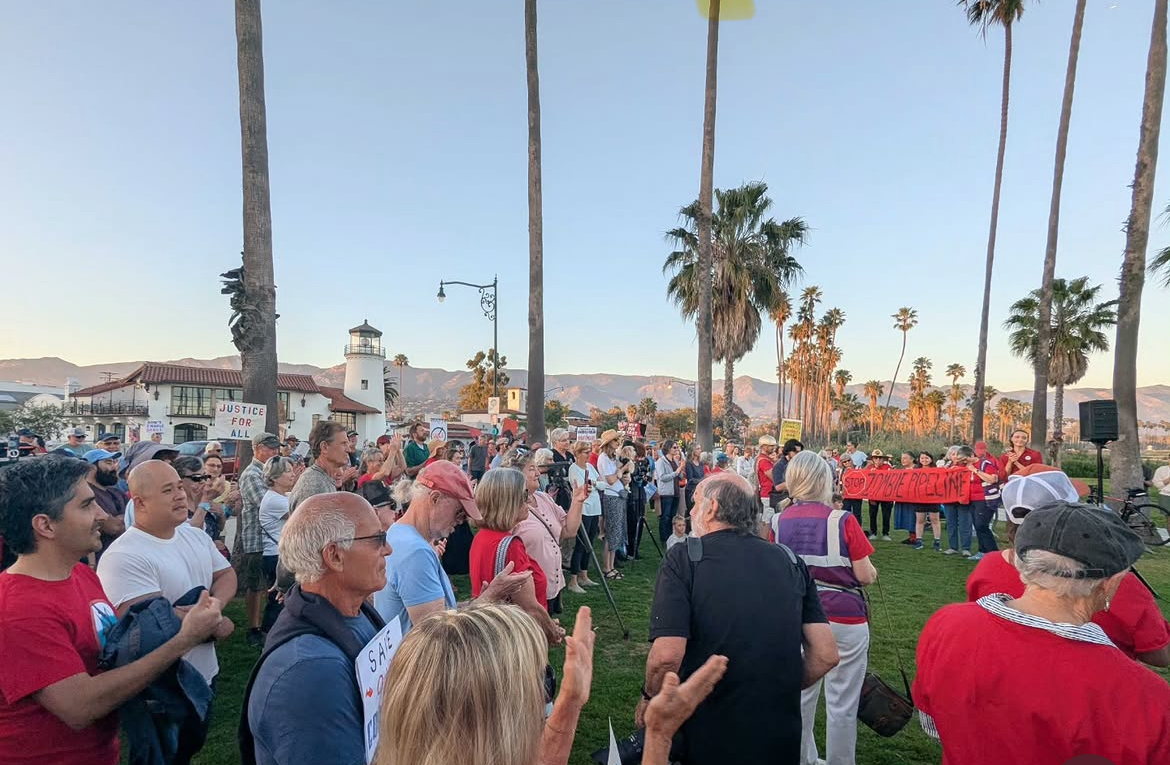
Fellow UCSB Stop Sable member and third-year environmental studies major Vivienne Chankai said the announcement wasn’t completely unexpected. Sable had already appealed to the Trump administration late last year when it sought federal oversight of the pipeline system.
“It didn’t happen out of nowhere necessarily, but it happened pretty fast,” Chankai said. “We’ve just been seeing a response from our elected officials and community leaders expressing their dismay towards it.”
California State Assemblymember for the 37th District Gregg Hart was present at the Thursday vigil. In addition, SBC Second District Supervisor Laura Capps issued a statement condemning the action.
“This announcement by Secretary Wright is yet another interference in local control and serving the people in our community – and possibly an attempt to distract the public from skyrocketing gas prices due to the war in Iran,” Capps’ statement read.
According to Staff Attorney for the Center for Biological Diversity Talia Nimmer, a judge upheld that a 10-day preliminary injunction is needed for the restart on March 17. Sable and local environmental organizations will appear in court in April to resolve the issue.
“Every second these pipelines are pumping oil puts Californians and our iconic coast and wildlife at risk of another devastating spill. I look forward to being back in court soon to explain why this illegally restarted pipeline system needs to be shut down,” Nimmer said in a statement.

There is NOTHING worse than a white liberal… all these retarded senior citizen hippie motherfuckers ruining Santa Barbara
Vance 2028!!!!!
Vance’s shifting stance on the war in Iran shows he’s “full of —-.”
This ongoing conflict is viewed as a significant administrative law dispute
(especially after the Loper Bright Enterprises v. Raimondo decision), making
it a strong candidate for US Supreme Court review.
In that case, the US Supreme Court determined that judges, not federal agencies,
are responsible for interpreting ambiguity in laws, based on the Adminstrative
Procedure Act.
Sable Offshore (ticker symbol: SOC) was down over 5% @$16.28/share in
Friday’s trading. Future investors are weary and are afraid that the Trumpkins
are eventually going to lose on this one after reading all the commentary.
Oil prices climbing to at least $140/barrel and staying at that level for months
could push the economy into a recession, analysts say.
Iran threatened on Sunday to destroy the Middle East’s biggest oil factories.
Let’s see who blinks first in this tit-for-tat. Remember, the red in the Iranian flag
stands for martyrdom.
President Trump’s latest threats to “obliterate” Iranian power plants and infrastructure
constitute serious war crimes.
Even the Brits now are refusing to let him use their bases to commit these heinous crimes!
This whole war is going to escalate out of control with no end in sight. Mark my words.
The deadline set by Trump is tomorrow evening Washington time. Let’s see what the TACO man does next.
Trump postpones his ultimatum for five days—TACO Trump again!
We our proud democrat’s hear in Santa Barbara and we our NOT morrons like that idoit what live’s at 1600 Pennsylvania Ave. The FoxNews-whaching republitards our to stupid to now that oil is obsoleet now and that SOLER ENERGY can power every thing. Globel warming is real and it will TAKE A VILLIGE to re-verse the climate cricis. Soler plus battery’s is the future. Battery’s generate clean electricity and their our no GHG’s that result from there production. But the FoxNews whatching rednecks will NEVER NO THIS. Save are planet….VOTE DEMOCRAT!
Never, ever, until now, has an American president threatened to commit war crimes
against its adversary. This is surely Trump’s Waterloo.