
Senate debates eliminating recurring student fee reaffirmations
November 11, 2026 at 2:00 pm
The Associated Students 77th Senate debated a bill that would eliminate the need for students to reaffirm certain lock-in fees on the ballot, prompting concerns over student representation at its Nov. 4 meeting.
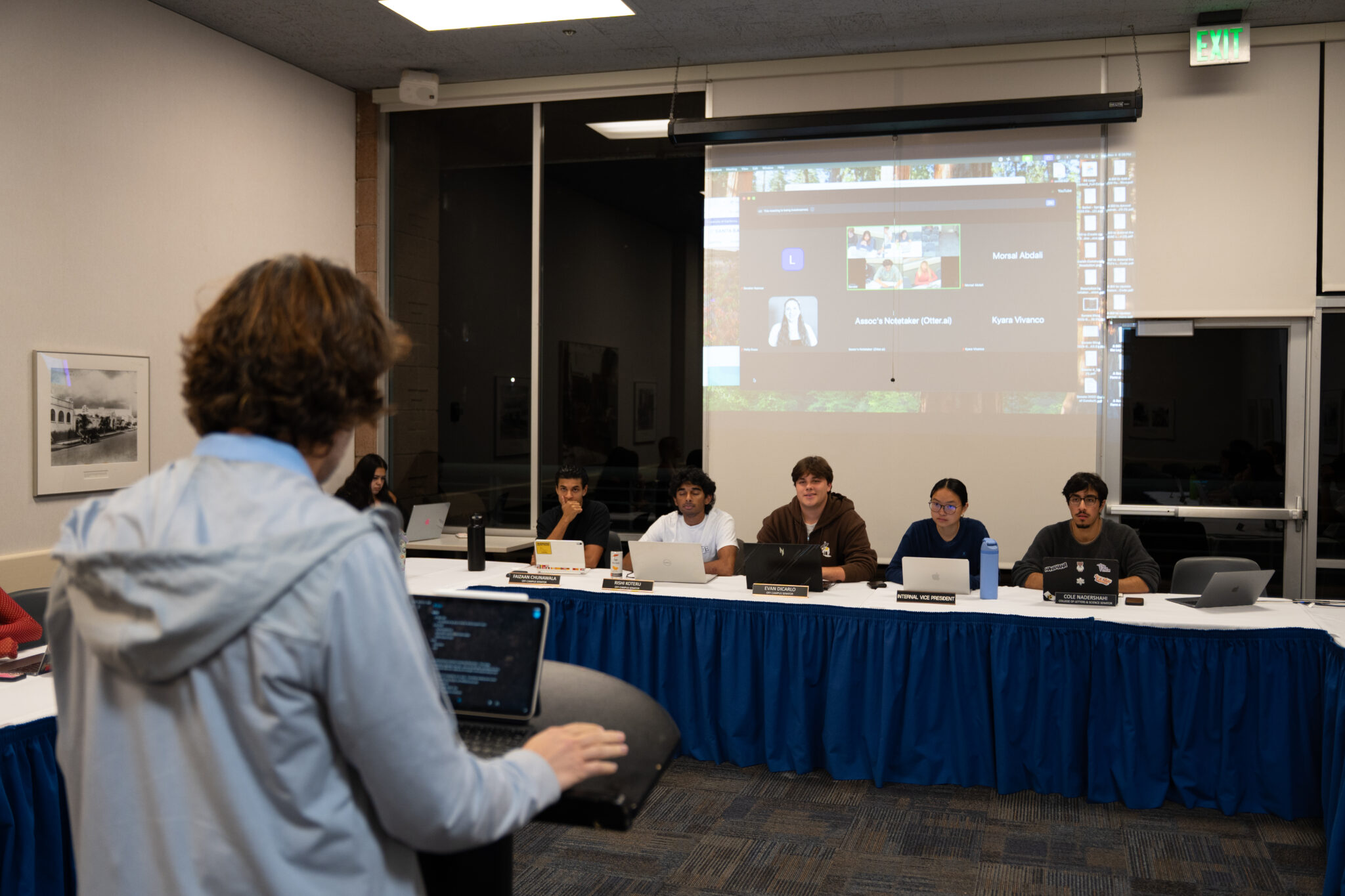
The proposed bill aims to shorten the ballot in order to try and increase voter turnout in the Associated Students (A.S.) elections.Under the current system, students vote to re-affirm lock-in fees every two years, however, the bill proposes exempting fees from needing reaffirmation if it has received an average approval rate of 65% over the past 10 years.
Legislation proposed
The bill was introduced by Senator and second-year political science major Adeline Nguyen at the request of the Elections Board Chair Annabell Guinan, a second-year global studies and political science double major. According to the legislation, the bill would retroactively apply to all lock-in fees that meet the criterion.
Supporters argued the change would simplify the A.S. voting process — encouraging students to complete and submit the ballot. They cited last year’s election that had around 1,100 students who left their ballots incomplete which invalidated their votes.
Since 2020, the A.S. elections have experienced a decline in voter turnout. The A.S. legal code requires 20% of undergraduate students to participate in the election — a threshold the student body often fails to meet — leading to weeks-long delays in obtaining results.
“Essentially the main concern or issue is that our voter turnout, especially from last year, was extremely low,” Nguyen said. “It has been a really steady decline over the last few years. Last year we only received 20.45% of the student body voting in our elections.”
This year, A.S. leadership have been looking for ways to increase voter turnout. Nguyen said that decreasing the amount of items on the ballot would make it easier for students to complete it.
Some senators raised concerns about justifying a bill that would reduce the frequency of student votes on mandatory fees. Senator and fourth-year economics and accounting major Faizaan Chunawala said his main issue with the bill is its retroactivity. He argued students who initially voted for certain lock-fees did so under the understanding that they were not permanent.
In response, Nguyen said that the student body has been reaffirming lock-in fees for a decade, which demonstrates “that students have shown immense support” for these fees. She mentioned that in last year’s election, the Environmental Affairs Board and A.S. Bike Shop lock-in fees were reaffirmed with the lowest support being 82% from voters.
Senators also raised concerns over the process to return previously exempted fees back on the ballot to be reaffirmed. The process requires a student petition and two-thirds of the Senate’s approval. Senator and second-year chemistry major Alexandria Turner questioned why the Senate needed to approve a fee’s return when students have already expressed their desire through a petition.
“My concern with that whole thing is the Senate could potentially say no to a student — it could prevent students from trying to reaffirm something on the ballot,” Turner said.
Senator and third-year applied math major Luke Lopez was opposed to limiting students’ ability to vote on fees they pay. He argued that the proposed system could make it significantly more difficult for students to challenge existing fees.
Throughout the discussion, senators suggested amendments that would remove the retroactive provisions, adjust the approval threshold and create a more direct petition process without requiring Senate approval.
The bill was referred to the Outreach Committee for further consideration.
The Senate also introduced a bill that would establish a treasurer position for the A.S. Living History Project — a student organization dedicated to documenting and preserving archives of student activism on campus.
The organization’s Chair and second-year writing and literature major Summer Agren explained that the position would help the team manage outreach, archival materials and student event expenses. She also highlighted that the position would not require additional costs because the organization’s existing budget would pay for its honoraria.
The bill was referred to the Liaison Committee.
Legislation adopted
The Senate approved a resolution calling for a non-binding student referendum on the A.S. ballot, which would poll students on whether UC Santa Barbara should maintain its academic quarter system or switch to a semester-based system. The resolution was previously introduced at the Senate’s Oct. 28 meeting.
The resolution was amended to require A.S. to provide the number of students who took the poll when presenting its results to University officials. The amendment was added to address concerns that low voter turnout could affect the results by inaccurately representing the larger student body.
The Senate additionally approved $15,000 in funding for a project to replace 12 white boards in the University Library. The project, previously approved by the 76th Senate, required a financial reauthorization due to its funding not carrying over into the current fiscal year. The project is expected to cost $14,304, with additional funds intended to cover potential installation and maintenance expenses.
The Senate also approved a bill clarifying the responsibilities of the A.S. Solicitor General and an omnibus bill that restructures A.S. entities and honoraria eligibility.
A version of this article appeared on p. 3 of the Nov. 12 print edition of the Daily Nexus.