
International students’ post-graduation employment authorization on pause indefinitely
May 28, 2026 at 10:00 am
Earlier this month, 13 UC Santa Barbara Iranian graduate students, researchers and alumni signed a letter requesting 24th District Congressman Salud Carbajal’s help in lifting a pause on a postgraduate work authorization program affecting thousands of international students nationwide.
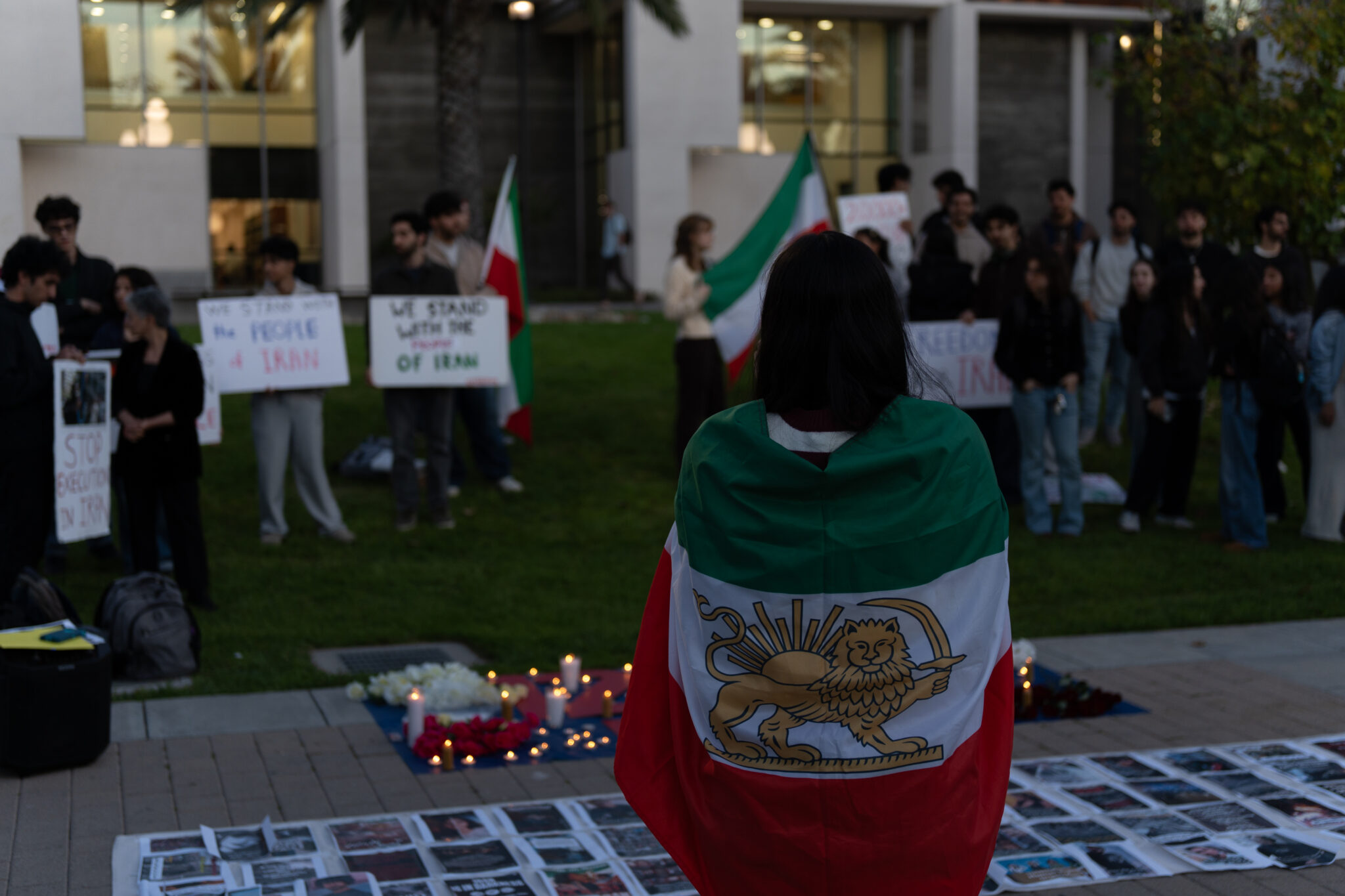
In 2025, President Donald Trump issued presidential proclamations 10949 and 10998, which, citing national security concerns, imposed full and partial travel bans on nearly 40 countries. Additionally, United States Citizenship and Immigration services (USCIS) issued memorandums in December and January directing its personnel to “place a hold on pending benefit requests” for countries on the ban lists, among other things. This hold has paused adjudication of Optional Practical Training (OPT), which allows international students to work in the U.S. for 12 months post-graduation in a field related to their studies.
The countries affected by the bans with the largest student populations in the U.S. as of 2025 are Nigeria, with 21,847 students, and Iran, with 12,656 students. According to the letter to Carbajal, the signees alone represent “over $12 million in federally funded research,” “more than 80 peer-reviewed publications” and have instructed over 5,000 students.
“Iranian students graduating from UCSB in Spring 2026 will be forced to leave the country within 60 days if OPT processing does not resume, taking with them the knowledge, skills, and taxpayer investment that American universities provided,” the letter read.
For many of the students on the ban lists, they face returning to countries experiencing active conflict or state repression. In January, Iranian security forces killed between 7,000 and 30,000 protestors, and as of May 20 according to Al Jazeera, an estimated 3,468 people were killed and over 26,500 injured in Iran since the start of the U.S.-Israeli war.
Currently, these students’ main path to employment is Curricular Practical Training (CPT), which only requires approval from a “Designated School Official” and not USCIS. However, CPT must be completed before the student’s program end date.
The letter also cited the New Bedford Light, which allegedly received confirmation from USCIS Spokesman Matthew J. Tragesser that “OPT applications for Iranian nationals are banned and will not be processed under the presidential proclamation.” In a statement to the Daily Nexus, USCIS Spokesman Zach Kahler said that USCIS had “paused” adjudications.
“The Biden administration failed American citizens by undermining basic vetting and screening processes for aliens. Unfortunately, this recklessness allowed dangerous people, including national security threats, into our country who may pose a serious risk to the nation,” Kahler’s statement said. “The Optional Practical Training program has become a pathway for foreign students to secure long-term employment in the U.S., undermining qualified American workers and depressing wages. Stopping this abuse is essential to ensure opportunities for American [science, technology, engineering and math] graduates.”
The letter calls on Carbajal to submit congressional inquiries on behalf of signees with “pending OPT or related immigration applications,” and to initiate or co-sign “a letter to the Secretary of Homeland Security requesting a timeline for resuming adjudication for nationals of affected countries.” Additionally, it requests that Carbajal support Resolution 924, known as the National Origin-Based Antidiscrimination for Nonimmigrants (N.O. B.A.N.) Act “to prevent blanket nationality-based processing freezes.”
UCSB doctoral candidate in the mechanical engineering department and one of the signees, Faranak Rajabi, was offered an internship at Google but could not accept it because of the pause. She also claimed that she was told while applying to work for Uber that they “prefer not to move forward with Iranian applicants.”
“It’s very hard to get a job right now in this job market for engineering and computer science students. It’s apparently the worst economy in [the] United States, in the last 100 years,” Rajabi said. “On top of that, there are extremely limited options for Iranians to apply, even if they have [a] green card or they are citizens, and the one that you get are banned right now. So I cannot at all get a full-time job right now, and I’m trying to extend my PhD through doing internships or applying for fellowships.”
Beyond the difficulties of finding employment, Rajabi explained that, because of the proclamations, she cannot return to Iran or travel to conferences outside of the U.S. because she would likely be unable to reenter the country. She said that she hasn’t seen her family in over four years and would have made a “different decision” about her education knowing what she knows now.
“I feel like it’s not really fair to just use people in their youth, in their 20s, and they spend their time, hope, future, life, and then all of a sudden they tell them this is not going to work out,” Rajabi said. “It’s like all you’ve been through was just suffering, no result, and it’s not fair to just suddenly say that everything is changed.”
Rajabi highlighted Resolution 8740, which would provide temporary protected status and employment authorization for certain Iranian nationals affected by the pause on adjudications.
Another signee and UCSB alum, Ehsan Sayyad, used OPT to work after graduating in 2022. He voiced concerns that the pause is a “blanket” measure that fails to account for individual cases.
“[Iranian students are] already threatened from their own country. And then their presence in the United States had been fully legal. And then now they’re being just blanket treated as a threat, which is very dehumanizing,” Sayyad said. “This is the part that gets frustrating. It’s never about legality. It’s never about doing the right thing. It’s like if you are alien enough, we’re just gonna find a way to kick you out. That’s how it feels.”
A version of this article appeared on p. 2 of the May 28 print edition of the Daily Nexus.

Although I really love Sandbox Games, I have to admit that its original graphics are quite outdated. Player are forced to install additional light enhancement packages to make the game look better.
Why suspend them when their diplomas are perfectly valid? We are depriving recent graduates of their right to work, and that will harm the economy. immaculate grid
Battery lasts forever, VapeVape.com.ua
finally a vape that doesn’t die on me mid-day.
Why impose a suspension when their diplomas are entirely valid? We are denying recent graduates their opportunity to work, which will negatively impact the economy. Visit TVGarden
Players are required to install supplementary light enhancement packages to improve the visual quality of the game. Visit Website: CineHD Web
A difficult situation for international students who have worked hard for their degrees and future opportunities. Staying informed about global education, immigration, and entertainment updates is important. Visit (https://desicinematv.app/) also offers a convenient place to discover the latest entertainment content online.
I deeply sympathize with these international students facing uncertainty, as preserving strong structural foundations requires careful effort like brickwork repointing washington offers.