
A night of classics: Santa Barbara Symphony performs Debussy, Poulenc and Berlioz at The Granada Theatre
November 19, 2026 at 10:00 am
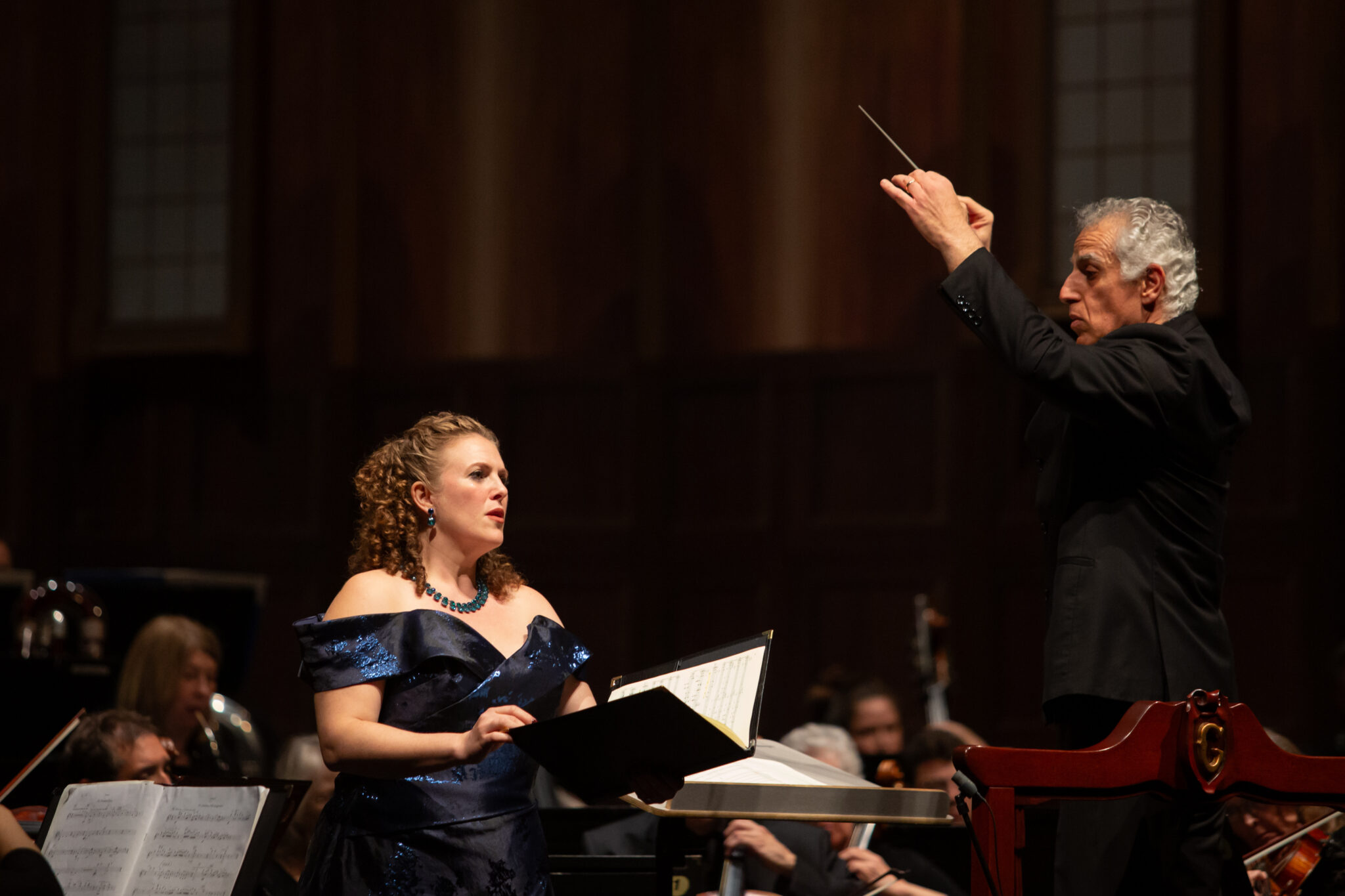
The Santa Barbara Symphony performed Hector Berlioz’s 200-year-old hypnotic classic “Symphonie fantastique” this past weekend at The Granada Theatre.
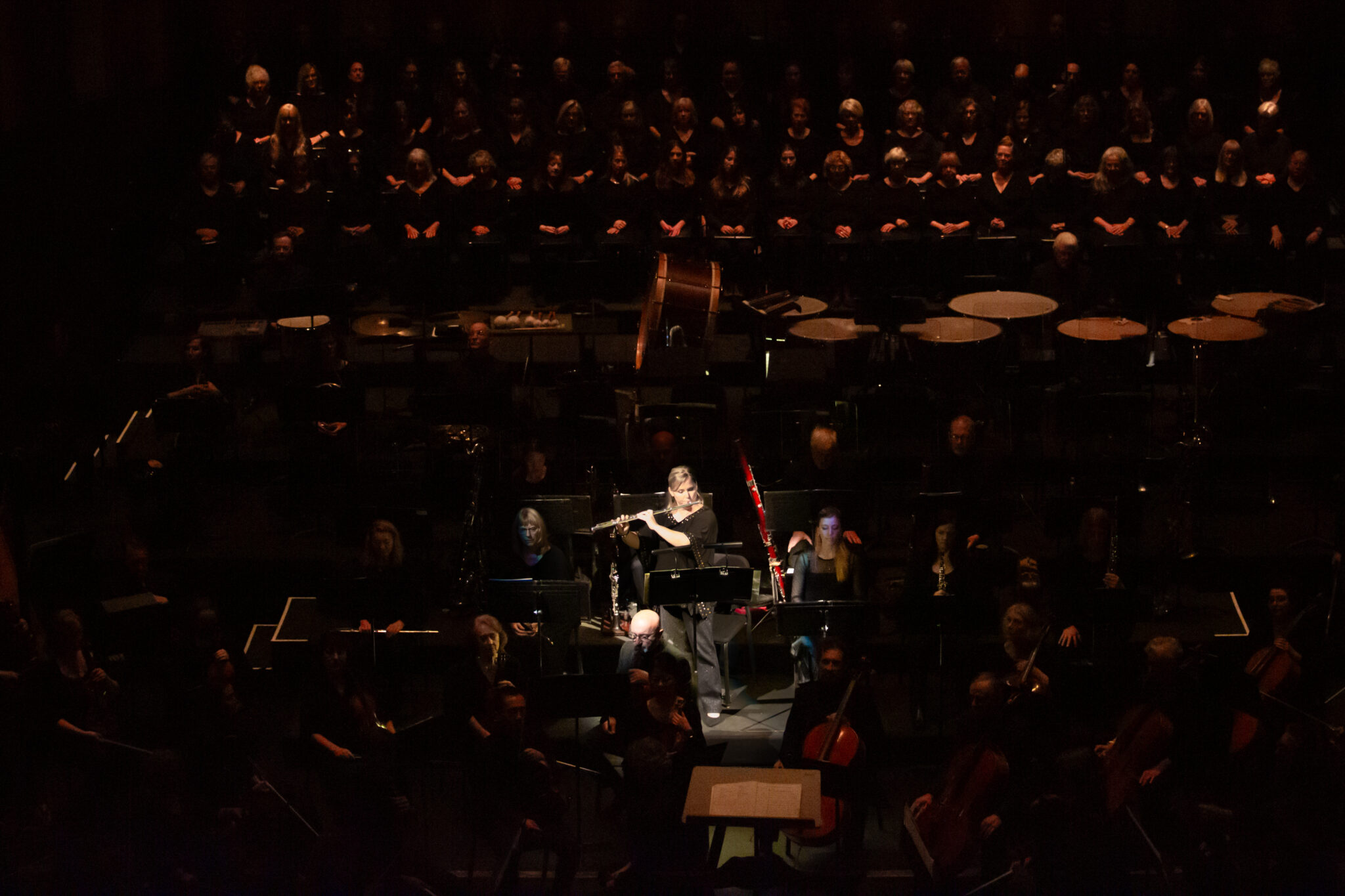
Before the main program, flutist Amy Tatum performed Claude Debussy’s “Syrinx,” followed by the orchestra’s performance of “Prelude to the Afternoon of a Faun.” The Santa Barbara Symphony Chorus and Grammy-nominated soprano Devon Guthrie then joined the stage for Francis Poulenc’s “Gloria.” The concert was conducted by the symphony’s 20-year Music and Art Director Nir Kabaretti and follows an autobiographical psychedelic story of Berlioz.
Pre-concert conversations
Before her performance, Guthrie sat down with Santa Barbara Symphony Board Member and Santa Barbara City College assistant professor James Mooy to discuss her journey as a singer.
“I was doing [singing] competitions while I was doing my artist diploma at Julliard,” she said. “I did a competition where I didn’t even get an honorable mention, but the head of casting for the English National Opera was one of the judges … they were looking for [people] for a new production of ‘The Marriage of Figaro’ and one thing led to another!”
Mooy then asked Guthrie about her connection to the piece she was performing that night, Poulenc’s “Gloria.” She explained that she had the opportunity of joining Paul Taylor Dance Company’s ballet tour of “Gloria.”
“For whatever reason, I don’t know how the stars aligned, but every time they have ever done the performance live in Lincoln Center, I have always had the great pleasure and privilege of being their soprano soloist,” Guthrie said. “I probably performed this between 20 and 30 times over the last 10 years.”
Mooy then asked about Guthrie’s connection to Santa Barbara, as her grandmother once worked at The Granada Theatre.
“Her job was to stand in the lobby in a beautiful dress loaned to her by the theatre … and be beautiful [while directing patrons] to either the right or left [to their seats],” she said.
In response, Mooy quipped jokingly, asking if “The Granada [Theatre] still have somebody like this in the lobby?” To which Guthrie said she could volunteer, making the crowd laugh. She then left the stage to prepare for the concert as the crowd applauded.
Debussy and Poulenc
As the concert began, the audience applauded as the symphony and conductor Kabaretti took the stage. Tatum then stood up with flute in hand to begin her solo performance of Debussy’s “Syrinx.” The spotlight turned on and focused on her as she played with smooth and gentle movements that emphasized the piece’s impressionistic atmosphere.
When Tatum finished the piece, the rest of the orchestra joined her in playing “Prelude to the Afternoon of a Faun.” The dreamy sounds of “Syrinx” carried into “Prelude to the Afternoon of a Faun,” where the symphony’s instruments and harps created an almost weightless harmony. The audience responded with roaring applause.
Guthrie entered the stage alongside the symphony chorus. Guthrie wore an almost iridescent dark blue dress that shimmered in the light, matching the dramatic tone of Poulenc’s “Gloria.” “Gloria” contained six sacred, spiritual movements inspired by Poulenc’s reconnection to religion.
The first movement “Gloria in excelsis Deo” started with just the symphony chorus’ voices praising the Catholic Lord. The large chorus’ voices came together to create an atmosphere of dramatics and power, highlighting the importance of people’s connection to religion that “Gloria” alludes to. Singing lyrics like “Laudamus te. Benedicimus te. / Adoramus te. Glorifcamus te,” translating to “We praise you. We bless you. / We adore you. We glorify you,” the symphony chorus’ voices underlined the conspicuous meanings of the piece.
The third movement “Domine Deus” brought Guthrie into the piece, adding warmth to the chorus’ booming voices. Guthrie showed off her distinguished “honeyed tones and silver-tipped high notes” as she sang the lyrics clearly. Throughout the next movements, Guthrie showcased the powerfulness of her soprano voice, reaching all the piece’s high notes seamlessly. Guthrie truly made the stage hers as all eyes focused on her and her sparkling voice. When “Gloria” reached its conclusion with a final “Amen,” the audience rose to their feet in ovation for the elegance just performed. Guthrie took a proud bow accompanied with waves, thanking those in the audience for their support.
“Symphonie fantastique”
The symphony performed the main program “Symphonie fantastique” during the second half of the concert. The first movement titled “Reveries – passions” began the autobiographical tale. “Reveries – passions” started slowly as Kabaretti guided the orchestra through its opening melody. As the recurring melody representing Berlioz’s lover appeared, the music gradually became more passionate. The strings and woodwinds built upon one another, creating emotional bursts of darkness, showcasing each individual instrument.
The second movement “A Ball” shifted the symphony into playing a more graceful sound. This movement was generally glamourous with the string instruments establishing a reminiscing sound of a ballroom waltz. Kabaretti also reflected this calmness, having his conducting motions match the swaying atmosphere of the piece. However, the audience was reminded of the emotional instability previously hinted at in the earlier movement as the graceful melody was interrupted by somberness.
The third movement “Scene in the Fields” introduced a quieter atmosphere through the symphony’s softer sounds. In this movement, Kabaretti slows down and the lonely sound of the oboe is highlighted. This peacefulness was then suddenly interrupted by the thunderous sounds of the timpani, disrupting the movement’s seemingly mellow atmosphere.
By the fourth movement “March to the Scaffold,” the symphony introduced a new atmosphere of unsettling sounds. Repeated sounds from the instruments resembled marching footsteps, building tension after the previous movement’s peacefulness. Kabaretti conducted with sharper, more forceful movements, matching the intensity of the melody. The movement reached its dramatic peak with a sudden orchestral crash — representing a guillotine’s fall. Following the orchestral crash, the strings played two faint notes, creating a striking and grotesque contrast to loudness heard before.
The final movement “Dream of a Night of the Sabbath” intensified the performance with eerie sounds and atmosphere. There were sudden repeated sounds of funeral bells played on chimes that created a sense of urgency. This made the final movement climactic, with uneasy sounds coming from each instrument. The instruments began to be played faster and louder as the symphony came to an end, with the final notes being shocking and quick.
As the sounds stopped, Kabaretti turned to face a standing ovation, taking a final bow alongside the Santa Barbara Symphony players, leaving audiences with a final awe of appreciation.