
I.V. midterm election voter guide
By Elle West
October 29, 2026 at 1:00 pm
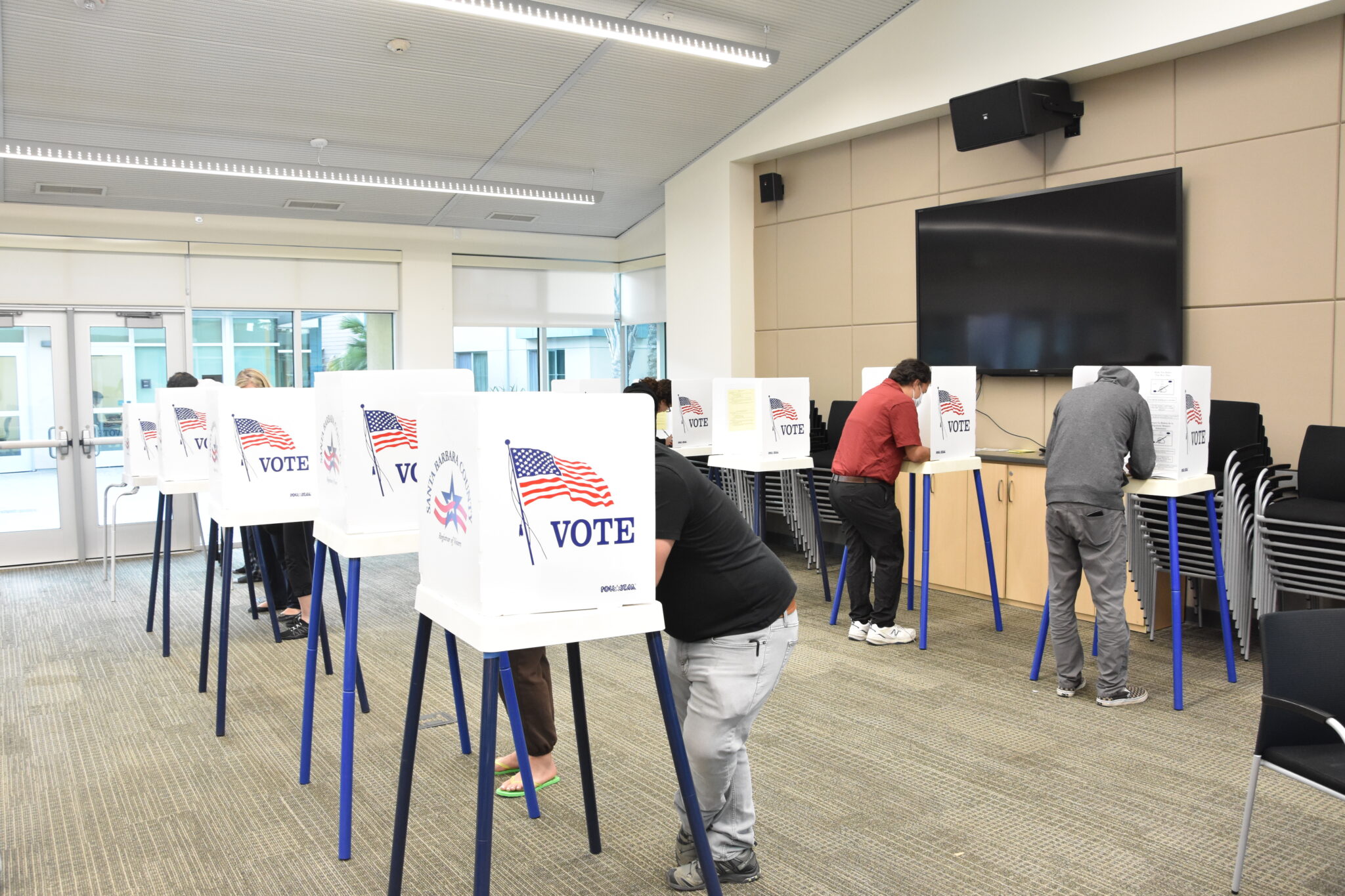
The 2026 midterm elections will take place on Tuesday, Nov. 3. Ballots include a variety of local, statewide and national elections, including contentious California propositions such as Proposition 40, known as the “billionaire’s tax.”
Local Isla Vista ballot measures:
Measure E2026 would increase Isla Vista residents’ taxes by 6% for utility usage on trash, sewage, water and electricity and 7% on methane. According to the measure, it is estimated to generate an additional $1.2 million annually and would fund local improvements, including community-based public safety transportation, parking and public transit.
Measure F2026 would establish an appropriations limit, the amount of tax revenue state and local governments can collect each year. In Isla Vista, it would set a limit of $3.5 million per fiscal year.
California governor candidates
The Democratic candidate — Xavier Becerra — has served on the California State Assembly and the United States House of Representatives, as well as attorney general of California and the U.S. secretary of health and human services. Becerra’s platform highlights strengthening state-sponsored healthcare benefit programs, transitioning California to greener energy goals and opposing the Trump administration. He is backed by Kamala Harris, Gavin Newsom, Planned Parenthood Affiliates of California and the California Teachers Association.
The Republican candidate — Steve Hilton — is originally from the United Kingdom and moved to Silicon Valley in 2012. He is an active political commentator, appearing on platforms such as Fox News. His platform includes cutting state income taxes, capping vehicle registration costs and lowering gas prices to $3 per gallon. Hilton is endorsed by President Donald Trump and the California Republican Party.
California propositions
Proposition 1 would allow the state of California to sell bonds amounting in $11.25 billion to fund affordable housing efforts, such as veteran housing, tribal housing and affordable student housing. It is supported by Governor Gavin Newsom and the California Democratic Party.
Proposition 2 would increase California’s “rainy day fund” from the current 10% of tax revenue threshold to 20%. The “rainy day fund” budget stabilization account is a reserve that is set aside for emergencies, such as financial recessions and climate emergencies. It is supported by the California Democratic Party and opposed by legislative Republicans.
Proposition 3 would make an income tax rate on higher earners permanent. Originally established by voters in 2012 and set to expire in 2031, it taxes earners who make over $360,000 a year. The revenue generated from the tax goes mainly to public education. Prop 3 is supported by California State Parent Teacher Association and Planned Parenthood. It is opposed by organizations such as the California Taxpayers Association.
Proposition 4 would allow state and local governments to publicly fund campaigns. In 1988, California voters approved Proposition 73, which banned the use of public funds for campaign financing. Prop 4 would effectively overturn Prop 73. Prop 4 is supported by the American Civil Liberties Union (ACLU) of Southern California and the California Democratic Party, and is opposed by the California Taxpayers Association.
Proposition 5 would delay replacing recalled state officials. When an elected official is recalled, current state laws require an immediate election to replace them, but Prop 5 would leave the office vacant. Instead of one singular recall election, it would create two separate elections. Additionally, it would modify the law to allow the recalled officer to re-run for the office.
Proposition 37 would create a second mortgage homebuyer program, spending up to $25 billion in bonds to help middle-income citizens be able to afford down payments on homes. Gubernatorial candidate Becerra supports Prop 37, while Reform California opposes it.
Proposition 38 would authorize $8.4 billion in general obligation bonds to research immunotherapy and immunology. 50% would go to select public universities and nonprofits, and the other 50% would go to a research organization affiliated with the University of California. Supporters, including the California Democratic Party, argue that this proposition would fill the gap in funding lost with Trump’s “Big Beautiful Bill.” The League of Women Voters opposes Prop 38.
Proposition 39 regards a highly controversial “voter ID law,” which would require voters to show government-issued identification when voting. Currently, 36 states require an ID when voting, but California does not. Proponents of voter ID requirements often cite concerns regarding potential voter fraud, while critics often express concerns that the laws are based in racial discrimination. The Latino American Political Association supports Prop 39, while the ACLU of California opposes it.
Often labeled a “billionaire tax,” Proposition 40 imposes a one-time 5% tax on individuals with assets over $1 billion who were California residents as of Jan. 1, 2026. It is meant to address the loss of funding California has experienced as a result of Trump’s “Big Beautiful Bill.” The proposition is supported by Senator Bernie Sanders, Representative Ro Khanna and California Democratic Socialists of America.
Proposition 41 would effectively make Prop 40 null by requiring the California State Auditor to review tax proposals. It would require new tax proposals to stay under California’s spending limit. Building a Better California, a billionaire-sponsored political action committee, is a large supporter of the proposition.
Proposition 42 would reverse Prop 40 by prohibiting new taxes on assets and personal property and is backed by Building a Better California.
Proposition 43 is requiring two-thirds voter approval, as opposed to 50%, to approve special taxes. This would make it significantly harder for the states to impose increased taxes.
Proposition 44 would require health centers for low-income patients to spend at least 90% of their revenue on advancing patient health care. The California Democratic Party opposes Prop 44, while Service Employees International Union-United Healthcare Workers West supports it.
Proposition 45 would set deadlines and limit the amount of time agencies can take to review environmental impacts. The proposition highlights tension between pro-development groups and environmental advocacy groups. In 1970, California passed the California Environmental Quality Act, requiring public agencies to disclose and avoid any possible environmental harm when building and developing. Pro-development groups argue that this process of approval slows down housing and building efforts. Opponents of Prop 45 include environmental advocates such as the ACLU of Southern California and the California Democratic Party. Those who support it include the California Republican Party and the California Chamber of Commerce.
A version of this article appeared on p. 4 of the Oct. 29 print edition of the Daily Nexus.