
Elizabeth Holmes simultaneously reveals nothing and everything in Nathan Fielder’s unnerving documentary “You Can See Everything”
By Fiona Feng
October 29, 2026 at 8:08 am
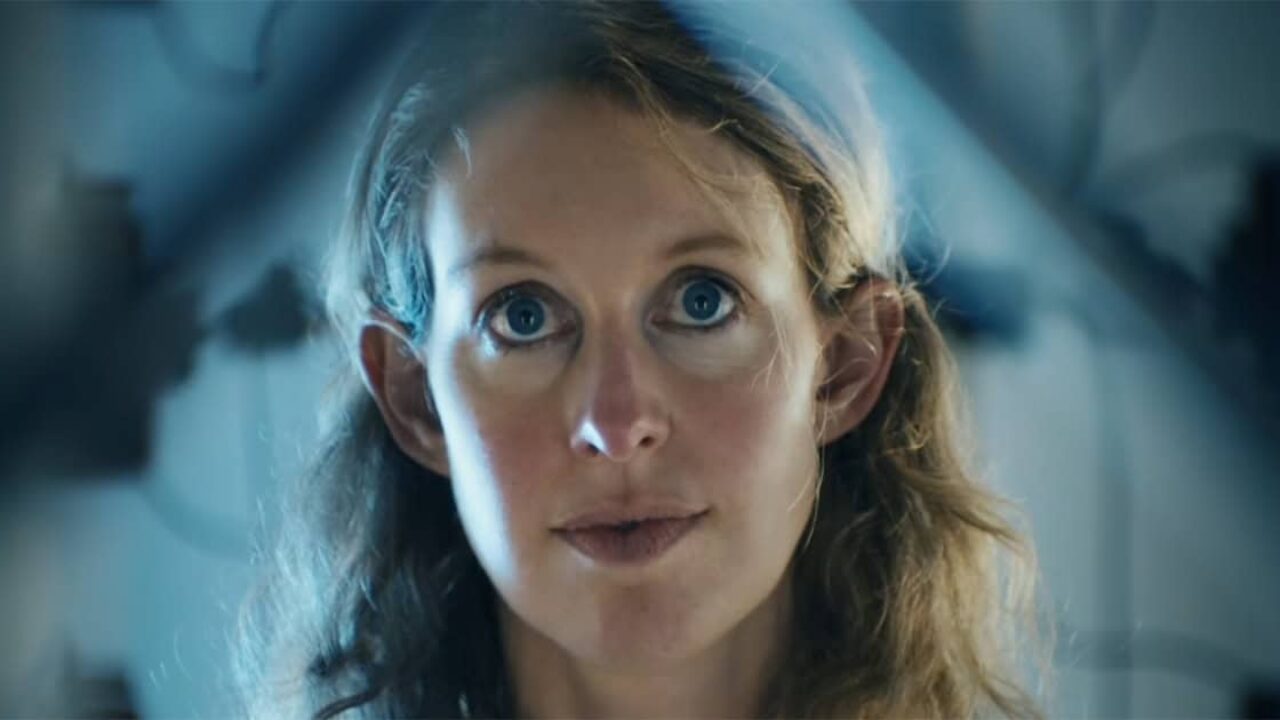
*Contains spoilers*
“Why would I deceive you? There’s no … there’s no reason for me to do that,” convicted fraudster and disgraced Silicon Valley entrepreneur Elizabeth “Liz” Holmes says as her expressively honest face is mere inches away from comedian and filmmaker Nathan Fielder’s probing gaze.
This year she makes an enigmatic return to mainstream media — despite her supposed aversion to it — through “You Can See Everything,” a nearly three-hour experimental documentary co-directed by Fielder and documentarian Lance Oppenheim. What unfolds before the audience’s hungry eyes is a fascinating case study of a woman whose greatest deception may be the one she has successfully sold to herself.
There is little reason to approach Holmes with any degree of sympathy. Her Icarian fall from Silicon Valley darling to convicted fraudster has already been exhaustively documented, leaving seemingly little more to uncover about the woman behind Theranos. Yet, Fielder and Oppenheim appear less concerned with establishing the truth of her crimes than with examining how she continues to construct her version of it. The result is an unusually intimate documentary that invites the audience into Holmes’ carefully curated reality.
The audience becomes intimately familiar with her, her fiance Billy Evans, their two young children and Fielder’s awkwardly lurking presence half hidden behind convenient walls. Holmes, awaiting an 11-year prison sentence for defrauding investors through her now-defunct blood-testing company Theranos, remains remarkably serene. Evans, however, seems perpetually on the verge of exploding.
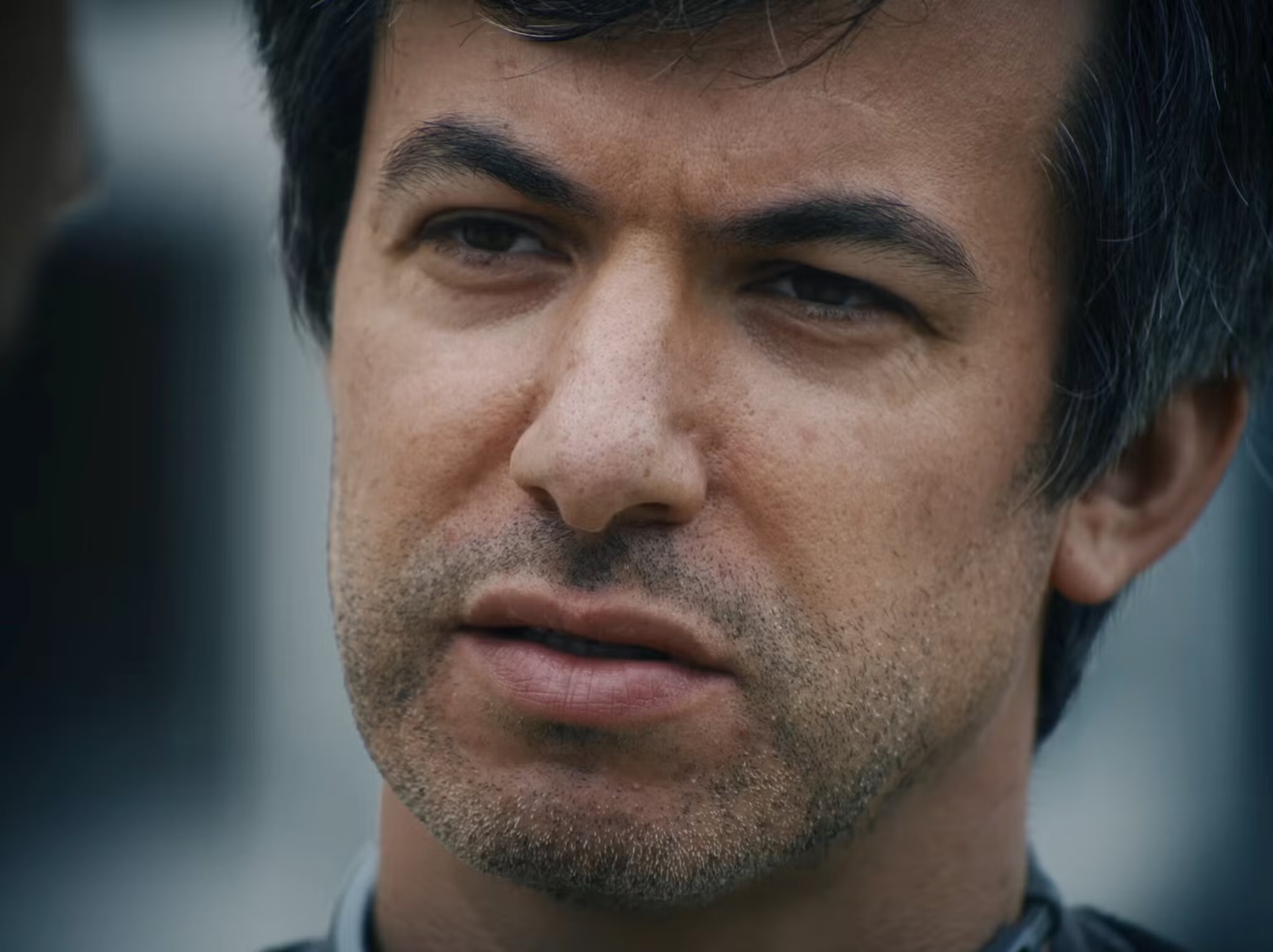
Very quickly, it becomes evident that Evans is the mad and vengeful barking dog for Holmes. What the dog does, the master approves of. His aggressively protective demeanour makes him a fascinating counterpart to Holmes’ cultivated fragility, allowing her to remain outwardly detached from the hostility that surrounds her. Now, with Evans holding power of attorney over her, another man has assumed considerable authority over her affairs. Before him was Ramesh “Sunny” Balwani, Holmes’ former romantic and business partner, who served as Theranos’ president and chief operating officer before being convicted of fraud himself. Whether this is deliberate manipulation on Holmes’ part remains uncertain, but the arrangement certainly benefits her. Evans gets to indulge his protective instincts whilst Holmes retains the convenient possibility of distancing herself from his actions.
This becomes especially apparent when Holmes insists that financial matters belong to Evans’ world, not hers, despite his earlier attempts to negotiate a share of the documentary’s proceeds. For someone who once commanded a multibillion-dollar company, she has developed an impressively selective understanding of her own involvement in business.
Holmes staunchly maintains that she has never knowingly deceived anyone, even claiming that she cannot recall telling a lie in her adult life — a statement Fielder hopes to catch her lying about. When confronted with the evidence against her, she retreats into variations of “I don’t know” and “I don’t remember,” occasionally becoming emotional over her portrayal as a liar.
Her seemingly genuine distress raises a far more unsettling possibility: Holmes may have spent so long manipulating others into her narrative that she successfully manipulated herself.
Fielder and Oppenheim’s decision to foreground Holmes’ domestic life makes her transformation from the black-turtlenecked Steve Jobs disciple to the fragile, devoted mother equally revealing. Through private glimpses of her nurturing personality, including scenes of her breastfeeding her child, the documentary presents a considerably softer image of the woman who once deliberately cultivated the image of a technological visionary. Holmes now emphasizes her vulnerability, seemingly bewildered by the circumstances surrounding her conviction. She even expresses a desire to use the media properly this time, as though her previous notoriety were simply the result of unfortunately misrepresentation. Yet, the filmmakers’ willingness to capture these tender moments calls into question the ethics of their potentially sympathetic portrayal of a convicted fraudster.
Nevertheless, there is no discernible crack in her facade. Holmes appears to believe every word she says, regardless of how thoroughly it contradicts reality. As long as she believes it, it is true. This is where “You Can See Everything” becomes considerably more interesting.
Fielder, who initially approaches Holmes with a clinical skepticism, gradually becomes entangled in the reality he is attempting to dissect. His growing familiarity with her, coupled with her all too obvious vulnerability, begins to compromise the distance between filmmaker and subject. Following her imprisonment, his increasingly obsessive attempts to revisit their interactions transforms the documentary into a case study of Fielder himself. As he continues to scrutinize his footage for some elusive indication of her true intentions, the more he exposes the limitations of his own judgement.
The introduction of Amanda Seyfried, who portrayed Holmes in Hulu’s 2022 television miniseries “The Dropout,” is particularly brilliant. Recruited to reenact Fielder’s interactions with Holmes following her imprisonment, Seyfried initially approaches her real-life counterpart with sympathy. Yet, her encounters with Evans and examination of Fielder’s recollections gradually produce a far more dubious assessment. She almost becomes the audience’s grounding presence, recognizing contradictions that Fielder, despite his investigative instincts, seems progressively willing to overlook.
The documentary’s closing sequence makes this transformation especially chilling. Having initially declined Holmes’ invitation to swim in the cold ocean, Fielder is eventually shown joining her in the water — playing and splashing around with her. It is a strangely intimate conclusion to a film that began with his determination to expose the inconsistencies in her account. Holmes has offered no convincing acknowledgement of wrongdoing, yet Fielder has somehow moved closer to her.
Perhaps the most disturbing implication is that Holmes does not necessarily need to convince anyone of her innocence — she merely needs to convince them of her sincerity. Even Fielder, whose career has largely revolved around exposing the absurdities of human behavior, appears susceptible to the extraordinary conviction with which she inhabits her own manufactured reality.
For a film titled “You Can See Everything,” its greatest achievement may be demonstrating just how little can be known about someone who has perfected the art of appearing entirely sincere.
And – as @brendohare said on Letterboxd – “I believe Theranos 2 will work.”
9/10
This article appeared in the Oct. 29 print edition of the Daily Nexus.