
Happy International Wombat Day!
October 22, 2026 at 10:00 am
If you’re anything like me, you’ve been counting down the days until International Wombat Day, which just so happens to be today, Oct. 22. For those of you who aren’t me, you probably have some questions, such as: What is a wombat? Why does it have a day? Why in the world do they poop cubes? Lucky for you, your local self-proclaimed “wombat super fan” can answer these questions, plus the most important question of all: Why should we care?
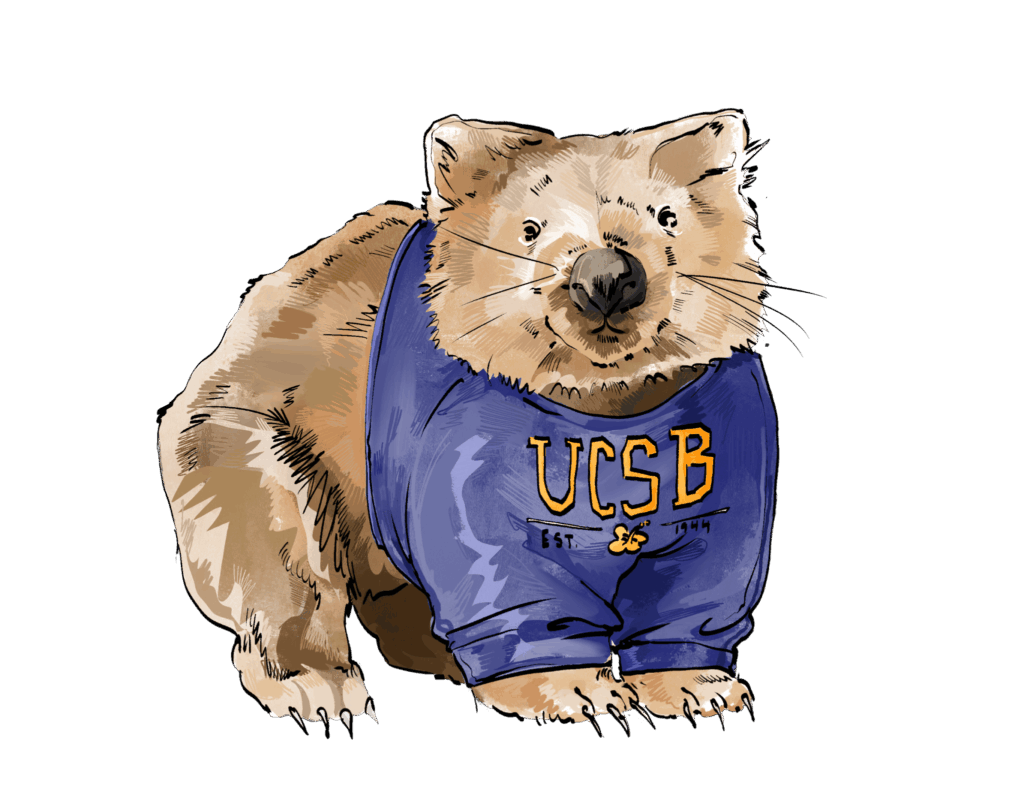
Our friends, the wombats, are primarily found in Australia and are marsupials, known for their pouches that contain growing joeys, or baby marsupials. Though not all marsupials have pouches, the most commonly known ones, kangaroos, koalas and wallabies, do. Despite this connection to marsupials, wombats can be described as looking like “short, stocky bears.” Unlike some other marsupials, they have pouches facing their rear. This characteristic is important as wombats are known to burrow, and a front-facing pouch would cause dirt to be shoveled into or near the pouch and possibly harm the joey.
In order to burrow, the San Diego Zoo explains that wombats have “wide, strong feet with large claws.” These features allow for the building of an extensive tunnel system, with one entrance and “several tunnels that can reach up to 650 feet” long.
Scientists at the University of Tasmania found that their cube-shaped poops are “formed within the last 17 percent of the colon” through the drying of its feces along with muscular contraction. The resulting cubes are “unique in the animal kingdom” and are likely used to communicate with other wombats. A group of wombats is called a wisdom.
There are three known species of wombat: the common, bare-nosed wombat, the northern hairy-nosed wombat and the southern hairy-nosed wombat. Although the average observer might assume these three look similar, the San Diego Zoo elaborates on the physical differences of these species: The common wombat has “coarse fur and short, round ears,” while the hairy-nosed wombats have “soft fur and much larger ears.” The common wombat has three subspecies: mainland, Tasmanian and Flinders Island. The northern hairy-nosed wombat is critically endangered, with roughly 100 individuals remaining according to PBS in 2021. Thankfully, due to conservation efforts, the Australian Wildlife Conservancy claims that there are now around 300 northern hairy-nosed wombats in Epping Forest National Park in eastern Australia and more in populations elsewhere.
Despite the other wombat species not being classified as endangered, the same threats that northern hairy-nosed wombats face also affect them. Bush Heritage Australia, an organization dedicated to protecting Australia’s ecosystems and landscapes, has determined several factors that have reduced overall wombat populations.
In Victoria, Australia, a bounty of $1 for every wombat killed was offered, a policy that remained in place from 1926 to 1966. Today, Victoria still considers wombats pests, despite all wombat species being protected everywhere else in Australia. Bush Heritage Australia also considers how “Habitat loss and competition for food with introduced herbivores – rabbits, cattle, sheep and goats – are now the biggest threats for wombats.”
International animal days, such as International Wombat Day, bring awareness to environmental issues as a whole while highlighting a specific animal. Focusing on one animal at a time allows for the observance of their unique issues, while also keeping in mind the dangers that affect most animal species. Ultimately, celebrating the world’s animals is an important step in raising awareness and advocating for environmental conservation and the protection of species around the world.
A version of this article appeared on p.11 of the Oct. 22, 2026 edition of the Daily Nexus.