
$15.3 million awarded for I.V. community microgrid
May 14, 2026 at 11:00 am
Santa Barbara County was recently awarded $15.3 million to develop a community microgrid for Isla Vista. The grid will support “critical community facilities,” 120 residential customers and an additional 50 non-residential customers.
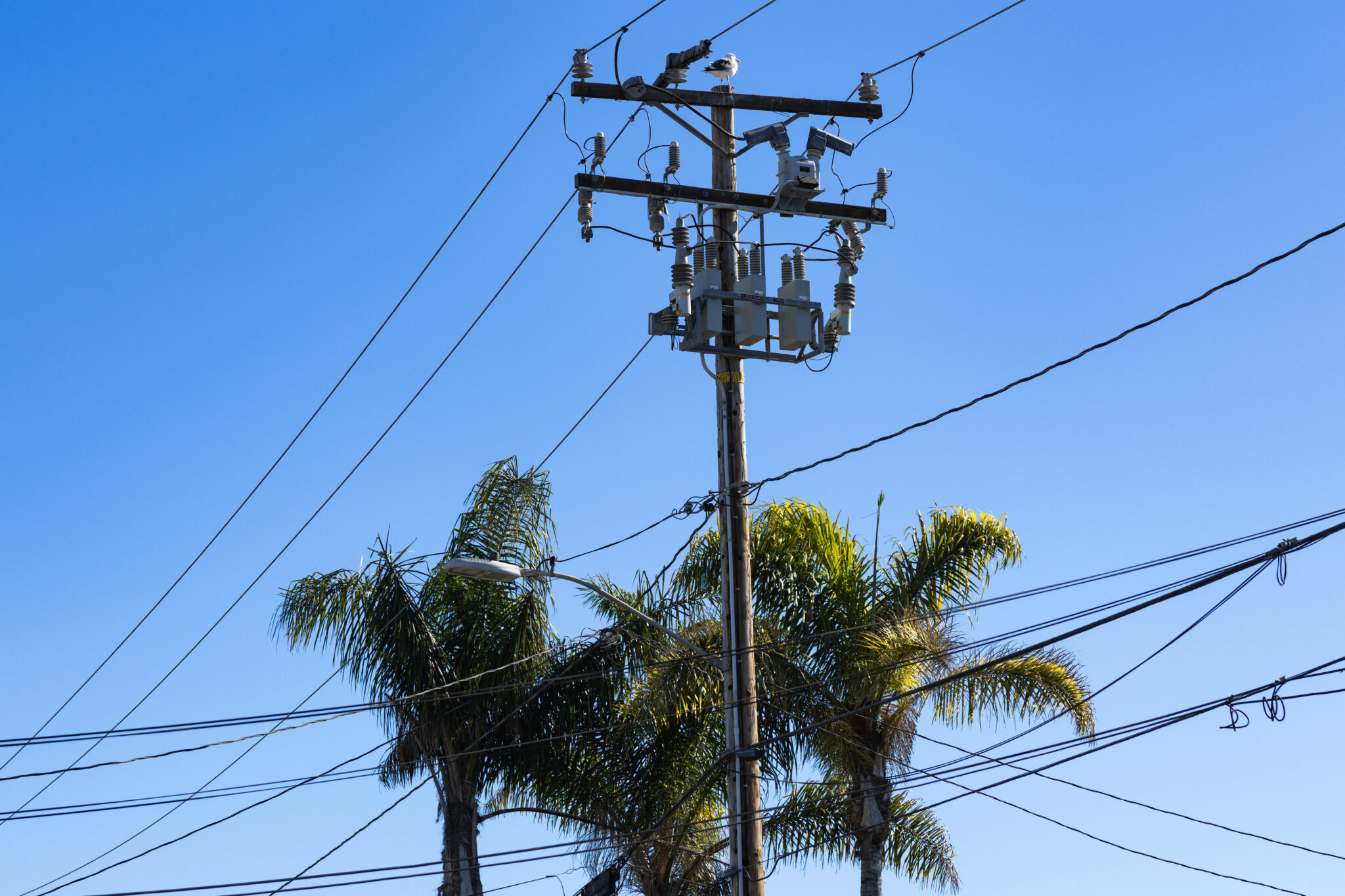
A microgrid is a localized, interconnected power grid that can operate independently or in tandem with a main power grid. In general, they consist of electricity generation resources, battery energy storage and a microgrid control system. Microgrids can disconnect from the main grid to allow for “islanding,” where connected facilities can supply electricity during outages.
According to Santa Barbara County (SBC) Sustainability Division Manager Garrett Wong, the bounds of the microgrid were determined after identifying points in I.V.’s utility distribution system that could be physically disconnected if needed. The microgrid plan prioritized “critical community facilities” such as the I.V. Sheriff’s Office, Neighborhood Clinic and the Community Center. Residential and non-residential properties “downstream” from the disconnection points also got roped into the grid; however, this will not raise their power bills.
“It was more a coincidence, not an intentional design, that these commercial accounts are part of the system,” Wong said. “They’re going to benefit if the power goes down, there will be other blocks in Isla Vista where the lights are out, but these certain blocks would have the lights on.”
Wong said that the main power lines affected run down Embarcadero and Trigo Road and that the microgrid will be “clustered around” People’s Park. Additionally, while SBC Sustainability hasn’t notified future microgrid customers, they plan to begin outreach once they are “more robustly into the project.”
According to Wong, most microgrids serve only one customer and community microgrids are “rare.” The I.V. community microgrid will largely be the first of its kind and serve as a “demonstration piece.”
“It’s a very different operation than what we’re used to, but it’s an opportunity, I think, to demonstrate what local community energy resilience could look like and how that can be the backbone of, more broadly speaking, community resilience,” Wong said.
Funding for the project comes from utility company Southern California Edison (SCE) under the statewide Microgrid Incentive Program, which is run by the California Public Utilities Commission. According to SCE’s website, to qualify for the program, communities must be vulnerable to outages, considered a disadvantaged and vulnerable community and meet the technical eligibility. Wong explained that many power lines that connect I.V. run through the mountains and are at risk when a wildfire breaks out, such as the 2017 Thomas fire which resulted in blackouts in I.V.
“We don’t have any ability to manage our power locally and be self sufficient if we were ever to get cut off by the transmission lines or something like that,” Wong said. “So the next best option is to try and do microgrids.”
While there is no official timeline for the project, Wong expects construction to begin within two to three years following initial studies and last less than a year. Once built, the grid will be tested before finally beginning its 10-year operating period. Given the “protracted timeline,” Wong urged community members to be patient.
According to Wong, the $15.3 million budget covers various expenses. $4 million will go to SCE for utility costs, roughly $4.5 million will go to labor costs, $400,000 will go to “community engagement and workforce development” and $6.7 million will cover equipment.
Wong emphasized that the project aims to involve the community and provide “educational and professional opportunities.” He shared that he spoke with a UCSB electrical engineering lecturer about using the project to offer students a “hands-on learning experience.”
“We want to make sure that there’s educational and workforce opportunities along with the program as well. So maybe giving some people opportunities to learn about electrical engineering or construction as a part of the project,” Wong said. “We’d like to be a part of the community and the educational institutions’ processes and be accepted in that way.”
A version of this article appeared on p. 6 of the May 14 print edition of the Daily Nexus.
