
UCSB art museum presents Gemidos de la Tierra exhibition
November 6, 2026 at 12:00 pm
UC Santa Barbara’s Art, Design & Architecture Museum presented the third public activation of Gemidos de la Tierra, which translates to “Wailings of Land/Soil,” a memorial created by Guatemalan-American artist Jackie Amézquita dedicated to honoring victims of Immigration and Customs Enforcement detention centers.
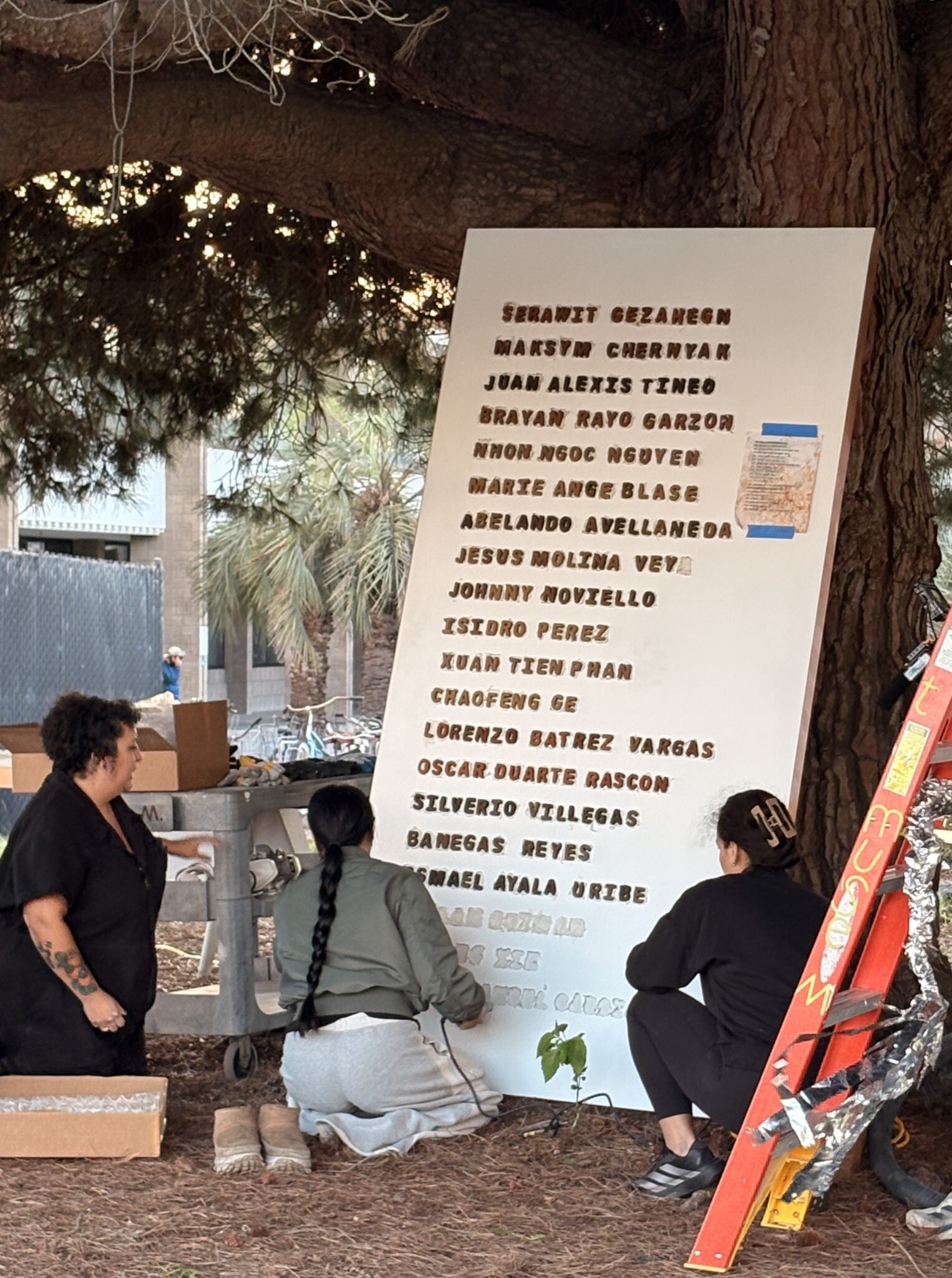
The memorial commemorates those who lost their lives in Immigration and Customs Enforcement (I.C.E.) detention centers since the agency’s inception in 2003. According to Daniela Lieja Quintanar, an independent curator and the original curator of Gemidos de la Tierra, Amézquita created the exhibition based on her own experiences and is dedicated to bringing light and honor to each of the individuals who lost their lives.
The exhibition, held Nov. 1 on Día de los Muertos, marked the first public activation of Gemidos de la Tierra since March 2023 in Los Angeles. Amézquita and her collaborators, Natalie Godinez, Hedy Torres and Johnny Pérez, added 57 new names of I.C.E. victims — bringing the number to 298 and expanding the work to 15 panels, which will be showcased in a museum setting for the first time until Nov. 29.
Amézquita began Gemidos de la Tierra in 2020 as her Master of Fine Arts thesis at UC Los Angeles. She was inspired to create the exhibition after coming across a list of the names of immigrants who passed away in I.C.E. detainment while searching for her sibling seeking asylum.
Amézquita uses the art of sculpture to bring recognition and respect to those who have lost their lives in I.C.E. custody, shared with audiences through public activations. Gemidos de la Tierra is a project built from the act of remembering those who were lost and sharing their stories with the community.
“The work honors people who died in immigration custody, and giving their names a physical presence, insists that their lives deserve recognition and dignity. The ritual asks us to remain in relationship with them,” Amézquita said.
Amézquita hand-casts each name onto carved wooden panels in front of a live audience using the soil from the region where individuals lost their lives and a mixture of masa de maíz — a dough made of corn salt and rainwater. She shared that each material used during this process serves a purpose.
“In my practice, materials are collaborators, and earth is a holder of memory and erasure,” Amézquita said.
Amézquita emphasized the importance of masa de maíz as it connects the work back to the everyday actions of caring for one another and the sustenance of life. She explained that she sculpts each letter, taking time to craft them by hand, as the time spent on each name becomes a part of the offering.
“Through the masa, the names take shape in a material that has nourished generations. What sustains the living body now helps sustain the memory of someone who is no longer here,” Amézquita said.
Melinda Gandara, an instructor at Santa Barbara City College for the Chicano studies and American ethnic studies department, said the use of soil has sharpened the meaning of the piece.
“The soil is from where these people are from. You cannot take away that connection … We are all connected to soil,” Gandara said.
Curator of the Art Design & Architecture museum Gemidos de la Tierra exhibit, Ana Briz, said this exhibit enabled community members to come together and raise awareness on the local impact of I.C.E.
“This is an opportunity to be able to honor people who are impacted locally, and also an opportunity to gather and show support,” Briz said.
Amézquita presents these deaths not as a number or a new addition to statistical data, but instead uses art to ensure each name is honored and is recognized as a human being who lived a life cut short in I.C.E. custody.
“It allows us to have much more of a civic engagement rather than just a statistical way of looking from a distance,” Gandara said.
The exhibition also allowed UCSB students and faculty to participate in community engagement and continue bringing awareness to the problem of immigrants losing their lives to I.C.E.
“Jackie’s practice, artistic practice, varies from performance, installation, sculpture and the topics that she engages with also has given us the opportunity to engage with a wide range of faculty and students,” Briz said.
Gemidos de la Tierra is a project that will continue to grow, and Amézquita hopes that sentiment stays with observers.
“Something I hope comes through is that the work needs to be continually tended. The panels are part of a larger practice that lives through sound, movement, gathering and the relationships that sustain it,” Amézquita said.
A version of this article appeared on p. 3 of the Nov. 5 print edition of the Daily Nexus.