
Reel Rock 20 goes from V15 boulders to Patagonia’s frozen peaks
By Fiona Feng
November 5, 2026 at 10:00 am
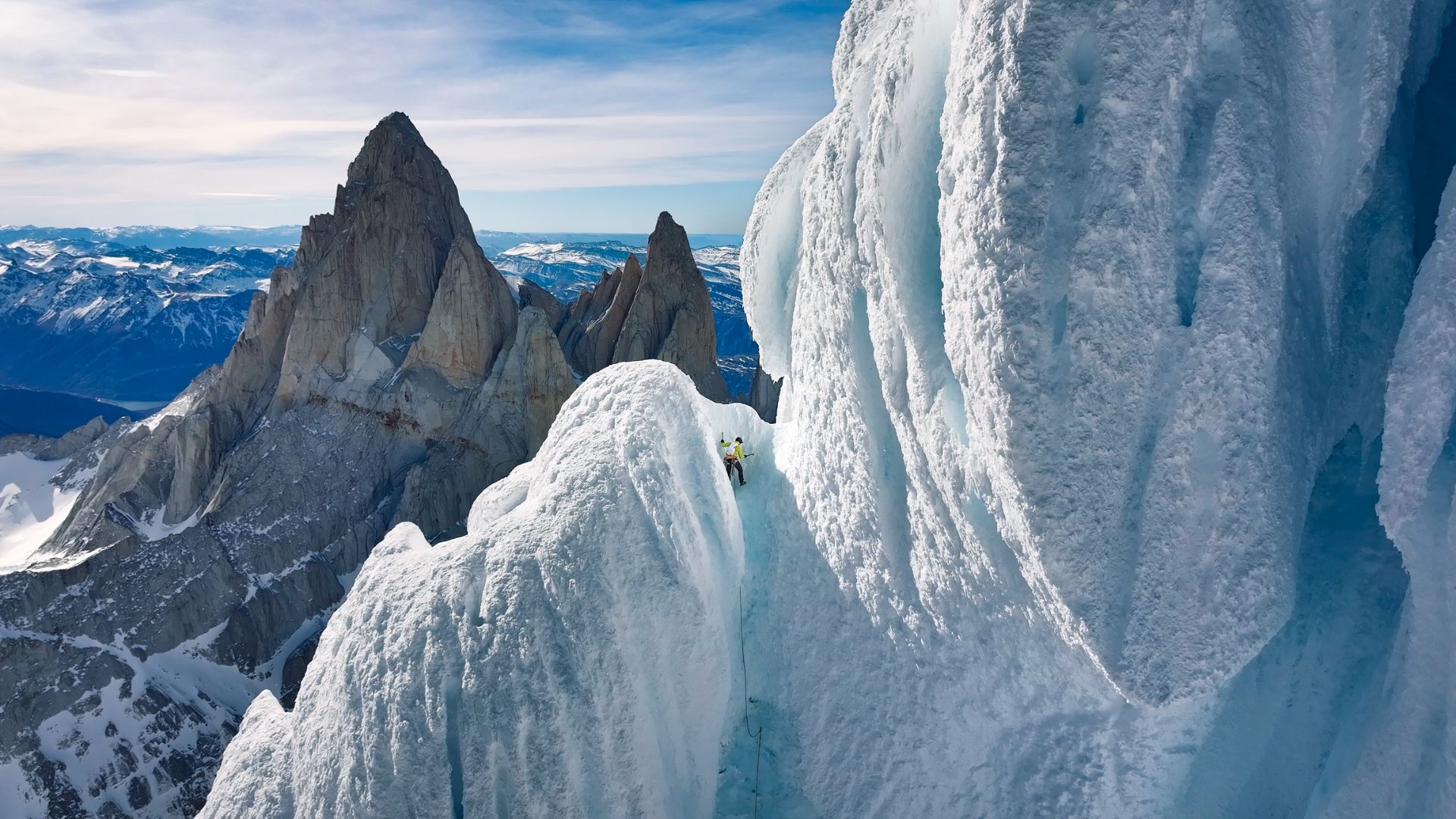
UC Santa Barbara’s Department of Recreation brought the Reel Rock 20 Film Tour to Isla Vista Theater on Oct. 28, putting on a special event for the rock climbers in the I.V. community. The 20th installment of the annual Reel Rock Film Tour brings four remarkable climbing stories to the big screen, spanning everything from cutting-edge bouldering and sport climbing to adaptive climbing and high-stakes alpine expeditions. Equal parts exhilarating, humorous and occasionally nerve-racking, Reel Rock 20 offers an exclusive look at the extraordinary athletes pushing the limits of the human body in their respective disciplines. Reel Rock 20 offers plenty of impressive climbing, unexpected humour and moments that are genuinely difficult to watch but that you can’t look away from. For the 165 members of the climbing community — families, children and adults alike — gathered at I.V. Theater, the screening offered a rare opportunity to appreciate the sport and some of its most accomplished athletes on the big screen.
Each of the four climbers set out to send a route of extreme difficulty. Bouldering involves climbing shorter routes without ropes and typically fall between 10-15 feet tall, although highball boulders can reach considerably greater heights. Per the Hueco grading scale, bouldering routes are graded from V0 to V15. Sport climbing, on the other hand, involves ascending taller routes, often 40-100 feet or more, using gear for protection. Following the Yosemite Decimal System, sport climbing is graded from 5.0 to 5.15.
Michaela Kiersch’s Global Sending Spree
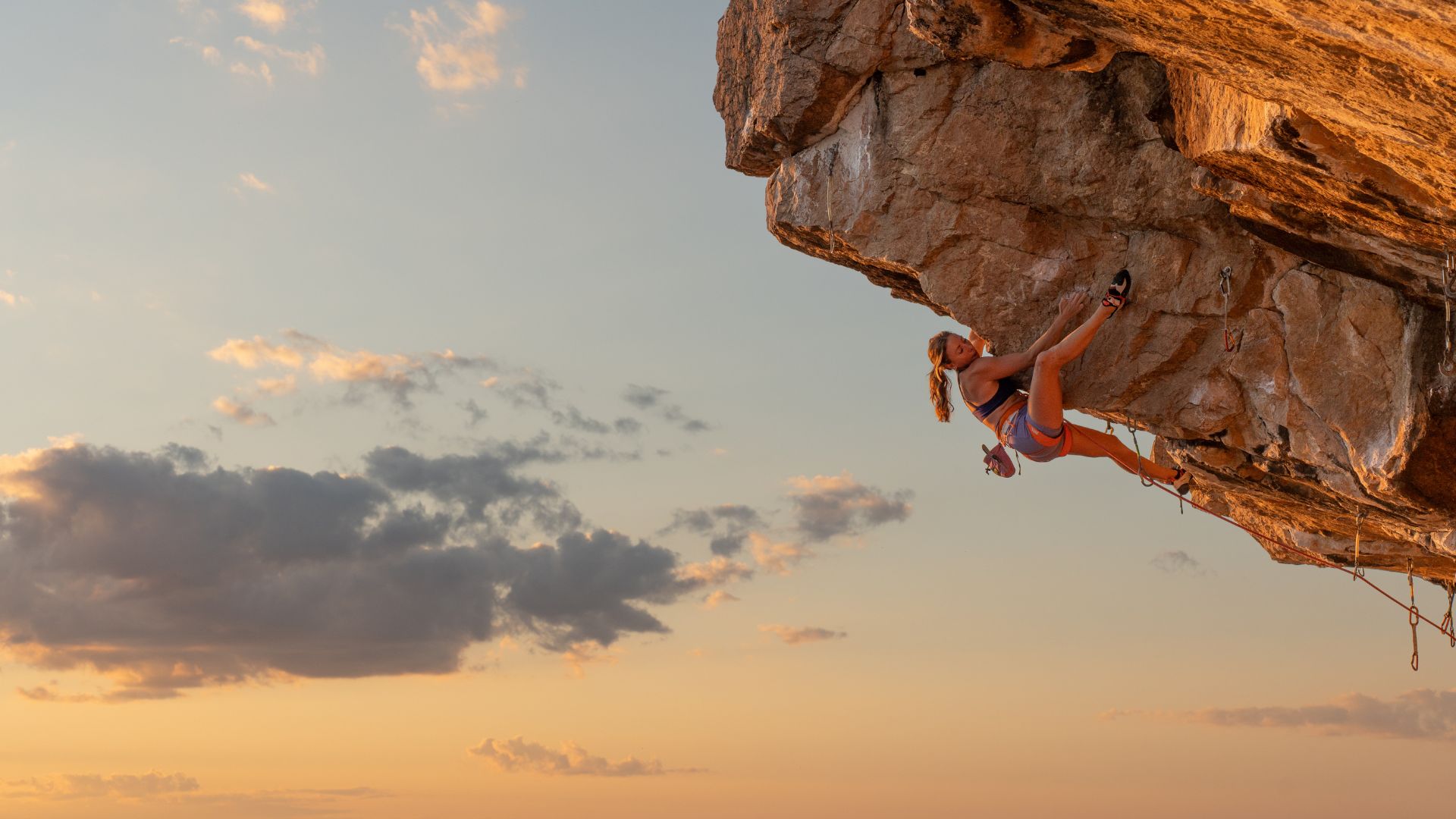
Against the picturesque backdrop of the Swiss Alps, Michaela Kiersch opens her global sending spree with an impressive ascent of Kings of Sonlerto (V12) accompanied by a soundtrack as groovy as it is intense. The film wastes little time establishing its pace, plunging straight into a two-year stretch of historic climbing achievements by one of the world’s strongest female climbers.
Standing at a considerable height disadvantage in a sport that greatly values reach, Kiersch has nevertheless become the first woman to climb both V15 and 5.15. Her ascent of The Dagger (V14) is particularly captivating, featuring a smoothly controlled bat hang, powerful heel hooks and a generous amount of power grunting. An avid wearer of La Sportiva Solutions and Solution Comps, Kiersch makes a convincing case for the shoes’ heel-hooking capabilities, despite their notorious baggy heels.
The film’s most compelling moments, however, are its relatively unembellished climbing sequences. An extended, uncut recording of Kiersch on Dreamtime (V15) captures the remarkable composure behind her physical strength. After seven sessions on the boulder, she appears almost comically relaxed during her send attempt, casually shaking out an arm while topping out.
Away from the rock, Kiersch lives in Salt Lake City with her husband and works as an occupational therapist. Her otherwise ordinary professional life makes her extraordinary climbing achievements all the more fascinating. The film follows her First Ascent (FA) & First Female Ascent (FFA) on Mad Lib (5.14d) and Dolby Surround (5.15a), the latter requiring more than two months and 20 sessions to fully send. Its dynamic crux delivers a particularly triumphant, almost heroic sequence.
Fast-paced and refreshingly straightforward, Kiersch’s part in Reel Rock 20 allows her climbing to command the attention it deserves. With minimal editorial embellishment and an infectious soundtrack, the film is as entertaining as its subject is impressive.
Ben Mayforth redefines adaptive climbing in his intense pursuit of 5.13
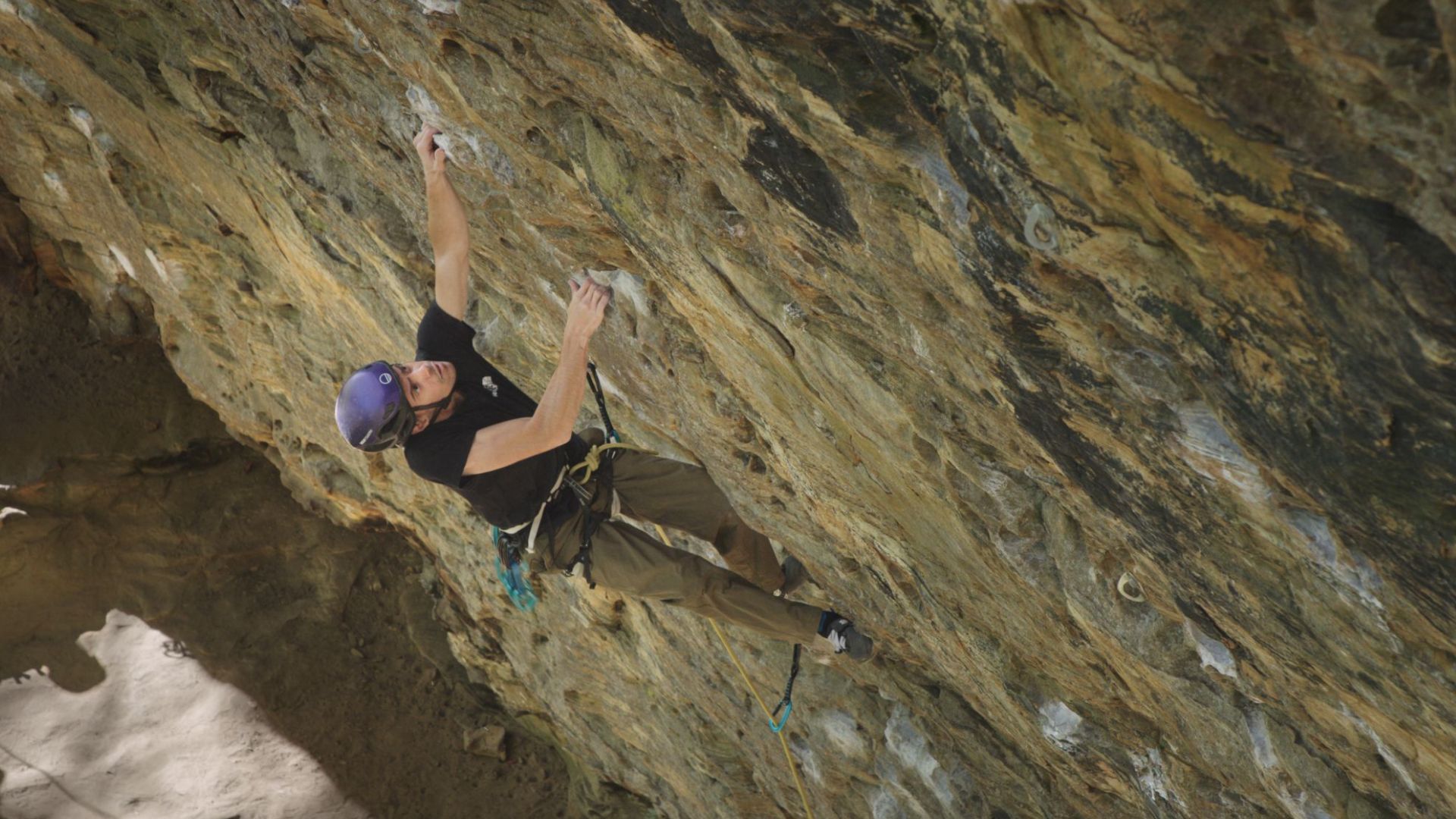
Ben Mayforth was born with the congenital condition spina bifida, and doctors believed he might never walk — much less climb — yet he has spent much of his life defying expectations. In one of the most emotionally gripping installments of Reel Rock 20, Mayforth sets his sights on Slim Shady (5.13a), a formidable project in West Desert, Utah that demands considerably more from his body than most.
At 5 feet, 1 inch tall with an extraordinary 6-foot wingspan, Mayforth possesses proportions practically engineered for climbing. His legs, however, remain considerably weaker than his upper body, making precise footwork and lower-body engagement particularly challenging. His solution is as amusing as it is effective: “When in doubt, campus it out,” Mayforth said.
Having grown up participating in sports to prove his physical capabilities, Mayforth approaches climbing with an almost relentless discipline. His training and repeated attempts on Slim Shady reveal the extent of his determination, particularly as he navigates the physical complications associated with his condition. Yet, his humour remains intact, lending the film a welcome lightness amidst its more demanding sequences.
The documentary’s orchestral soundtrack and intense pacing heighten the physical and emotional stakes of his project. There is a palpable tension throughout, especially as Mayforth confronts the limitations of his lower body whilst attempting movements that require tremendous precision and strength.
One of the film’s more touching developments comes through Mayforth’s involvement with an adaptive climbing festival, where he progresses from participant to instructor. It is a fitting full-circle moment for someone who once believed he would never be able to climb at all.
Witty, emotional and occasionally nerve-racking, the film is an engaging depiction of an athlete whose relationship with climbing reaches far beyond physical achievement. As Mayforth himself puts it, climbing is what he was meant to do.
Janja Garnbret takes on Bibliographie (5.15c)
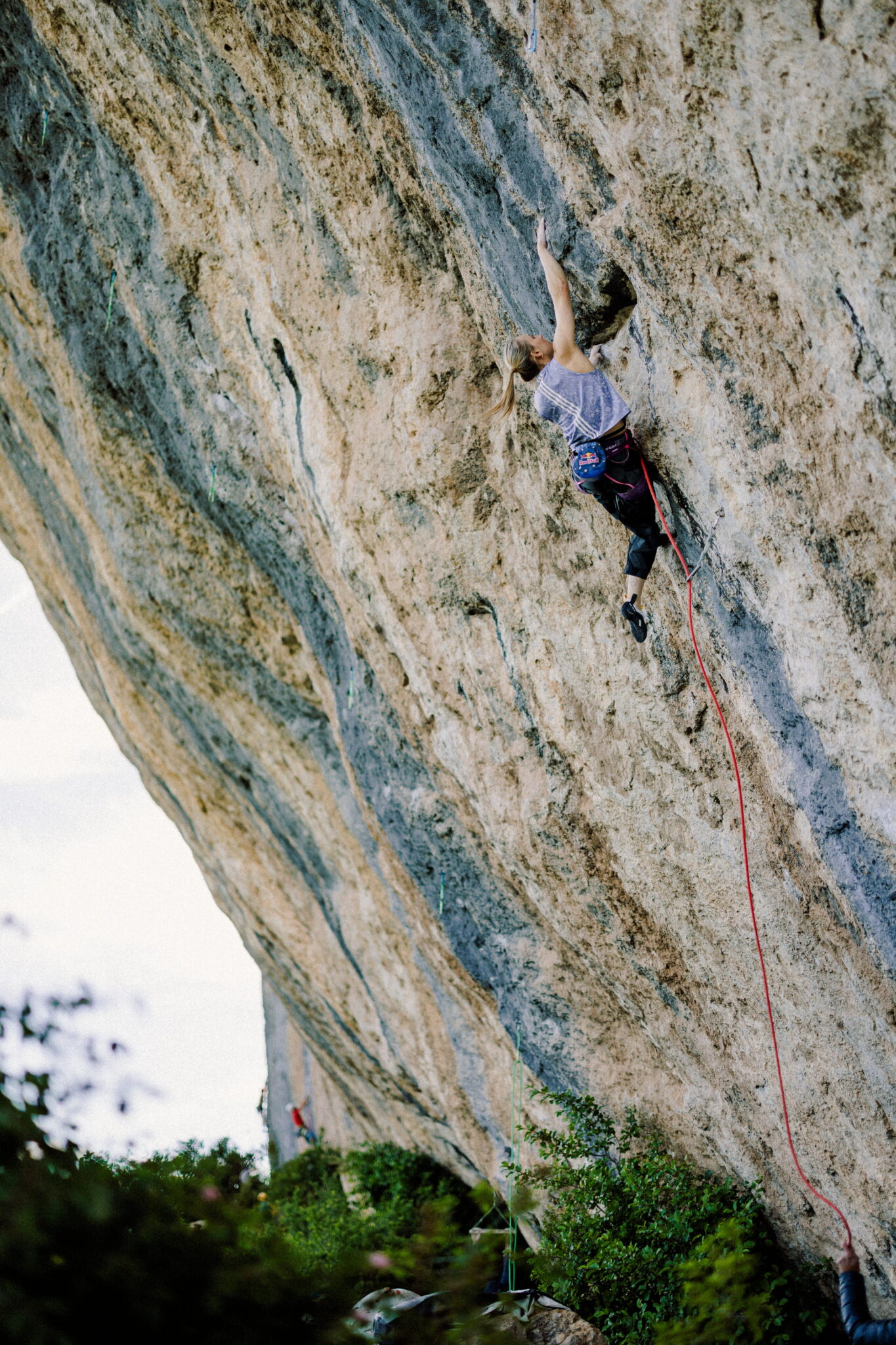
Widely regarded as one of the greatest competition climbers of all time, Janja Garnbret is considerably less accustomed to the unpredictability of outdoor climbing. Her attempt on Bibliographie (5.15c), one of the world’s most difficult sport routes in Hautes-Alpes, France, makes for an unexpectedly humorous and thoroughly entertaining installment of Reel Rock 20.
Compared with the energetic intensity of the preceding films, Garnbret’s segment adopts a cooler, more restrained atmosphere. Much of its appeal comes from the Slovenian climber’s personality, particularly her wonderfully entertaining relationship with her coach. Their constant banter provides some of the film’s funniest moments, revealing a playful dynamic beneath the otherwise serious business of projecting a 5.15c route.
Although Garnbret’s competition credentials are virtually unparalleled, Bibliographie presents a distinctly different challenge. Unlike the controlled environments of indoor competitions, where men and women compete on separate routes, outdoor climbing allows Garnbret to measure herself against the world’s strongest male climbers on the very same rock, with established grades that remain unchanged for decades. Outdoor climbing also introduces a myriad of variables that cannot be anticipated or managed quite so easily. Poor conditions repeatedly complicate her attempts, forcing her to contend with the rock and the environment as much as the route’s physical difficulty.
In one particularly ridiculous sequence, a bee finds its way into Garnbret’s shirt just before the crux. Somehow, this becomes the first attempt in which she successfully moves beyond the route’s hardest section. The discovery of a previously overlooked thumb hold also proves instrumental, prompting the wonderfully simple revelation that apparently all one needs is a thumb.
Garnbret’s segment is especially enjoyable for its willingness to embrace the absurdities of outdoor climbing. Her extraordinary ability is never in question, but the film finds considerable entertainment in watching an otherwise dominant athlete negotiate unfamiliar challenges. The result is a charming — and often hilarious — portrayal of a climber whose competitive perfectionism is in a battle with the reality of real rock.
Colin Haley attempts the first winter solo ascent of Cerro Torre
As a child, Colin Haley was so captivated by Patagonia’s Cerro Torre that he once wrote a poem about the mountain for a school assignment. Decades later, that fascination has developed into a rather dangerous ambition: completing the first winter solo ascent of one of the world’s most formidable alpine peaks.
Unlike the explosive athleticism of the preceding films, Haley’s segment unfolds against an almost eerily serene landscape. Towering walls of rock and blue and rime ice, vast expanses of snow and an impossibly picturesque sunset fashion the documentary into a majestic piece of work, although the beauty of its surroundings does little to alleviate the anxiety of watching a man climb an enormous mountain entirely alone.
Haley is an amusingly meticulous character — for good reason — approaching his expeditions with the temperament of a chronic overthinker and overpacker. His preparations are extensive, although there is only so much planning that can account for the sheer unpredictability of alpine climbing. His objective is straightforward enough: to accomplish something exceptionally difficult. Cerro Torre certainly obliges.
Throughout his ascent, Haley must repeatedly self-belay, a precarious undertaking made even more exhausting by the necessity of climbing each pitch twice to retrieve his equipment. Between navigating icy wind tunnels, contending with treacherous terrain and enduring the considerable physical discomfort of prolonged exposure to freezing temperatures, his progress is painstaking and impressive.
The film also finds moments of unexpected comedy amidst the danger. In one particularly memorable sequence, Haley’s hands begin warming after continuous exposure to the cold, producing such excruciating pain that he repeatedly moans in what he describes as an “orgasm of pain.”
Yet, beneath the occasional absurdity lies a genuinely unnerving display of ambition. As the climb grows increasingly difficult, Haley’s determination begins to border on an unwillingness to accept defeat, raising the uncomfortable question of perseverance turning into recklessness.
Visually magnificent and quite anxiety-inducing, the film captures the peculiar appeal of alpine climbing, where even the greatest climbers are at the mercy of nature. Although each film follows a different aspect of climbing, all four athletes demonstrate an admirable willingness to subject themselves to immense physical and mental challenges.