Gevirtz Graduate School of Education creates new education and society undergraduate major
October 2, 2026 at 12:00 pm
The Gevirtz Graduate School of Education has formulated a new interdisciplinary undergraduate major: the Bachelor of Arts in education and society. This major will be offered to incoming students in Fall Quarter 2027.
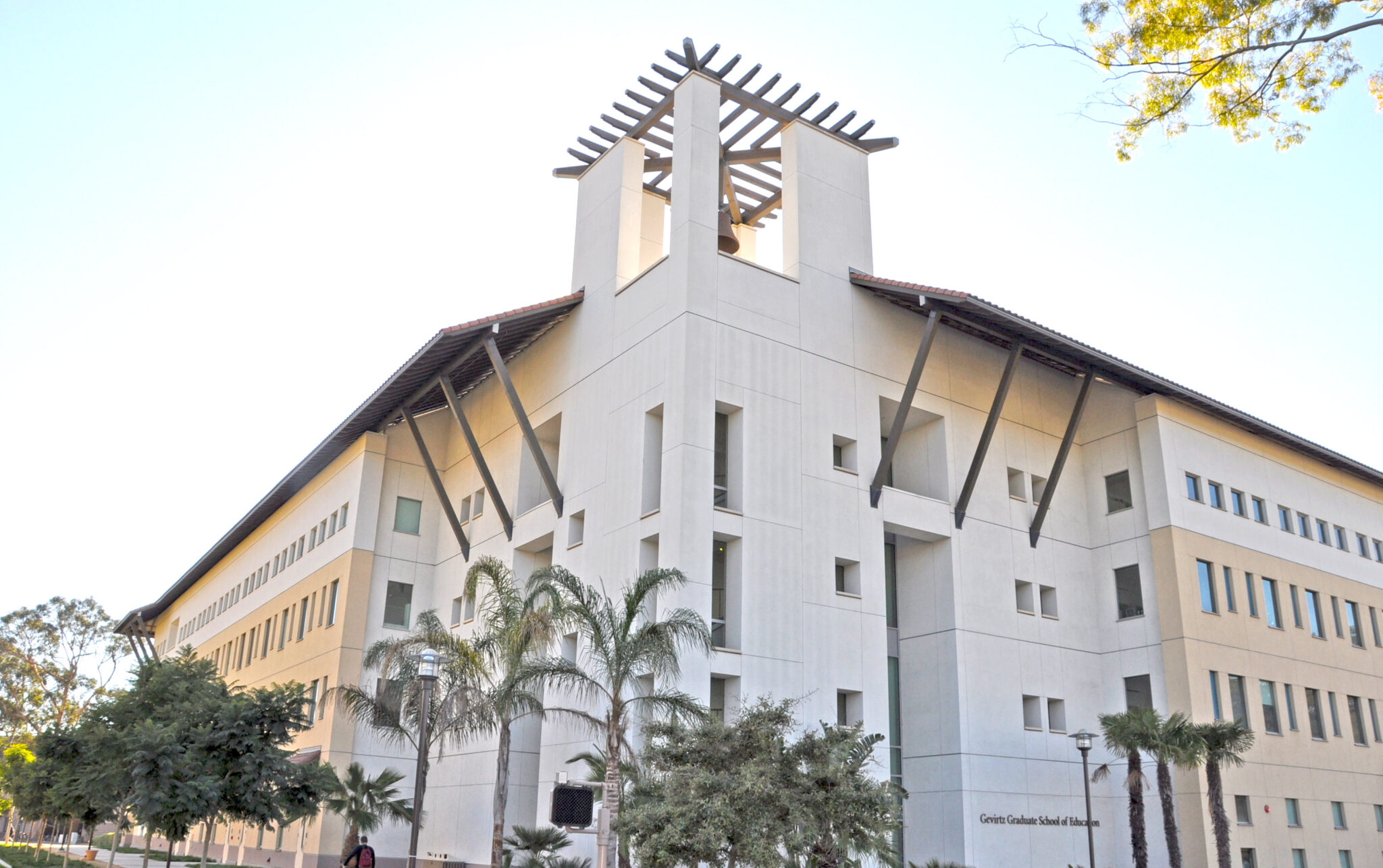 The department expects to admit 75 first-year students in the new major’s first cohort, and expects to see this quantity grow to a couple hundred over time. Photo Courtesy of Wikipedia
The Gevirtz Graduate School of Education is its own college at UC Santa Barbara and is split into two departments: the Department of Education and the Department of Counseling, Clinical and School Psychology. Approximately five years ago, the two departments collaborated to propose an interdepartmental major which was denied repeatedly.
Last summer, the Department of Education started working on a proposal for a major that would be solely their department. It was worked on all year and proposed in February, before finally being approved in May. Current high school seniors can apply to the Bachelor of Arts in education and society (EDSO) major in this upcoming application cycle.
The department expects to admit 75 first-year students in the new major’s first cohort and expects to see this quantity grow to a couple hundred over time. Professor and Undergraduate Faculty Director Jason Duque said the department is still trying to figure out when they will be prepared to offer this path to current students who want to either change their major or double major in EDSO.
“We just want to make sure we [will be able to] serve their needs,” Duque said. “So not now, but we are very interested in trying to see how that’s gonna work and making sure it’s successful.”
Even so, current students that are interested in exploring these departments can still apply to the previously existing minors, such as educational studies, applied psychology and science and mathematics education for the foreseeable future.
Duque is a teaching professor as well as the undergraduate faculty director and has been heavily involved in the implementation process of EDSO. He emphasized this major as being a project of their whole faculty.
Duque described the major as having four distinctive features: being interdisciplinary, learning across a lifespan and multiple contexts, practice-based learning and preparation for acquiring employment after graduation.
Being interdisciplinary is a constant feature of their department as they have faculty from hard sciences, social science, humanities and more. Students will be learning from multiple academic perspectives.
Duque views school as just one place where learning occurs rather than the only place. They plan to have a pre-major requirement course covering “learning across a life-span,” which introduces students to this unique key aspect of the major.
Practice-based learning takes place inside and outside of the classroom and is a required part of the curriculum. This could involve joining a research team or field-based activities such as working with a local museum or non-profit.
As of now, the preparation for the major requires taking 12 academic units. Meanwhile, the core areas will require 16 units and the advanced pathways will require 24 units total. The advanced pathways include taking 20 units minimum of advanced topic courses and four units minimum of practicum courses and experiences.
According to Duque, there are a variety of interests this major accommodates. Additionally, he believes the major is going to prepare students for not only finding a job but leading a “full and rich life.”
Duque said the major’s obvious appeal is teaching, and that it would be a good fit for students who want to become elementary or special education teachers. However, those that want to be secondary teachers who specialize in a specific subject should major in that subject.
The department’s main goal is to prepare students for various professional tracks.
“Majors that really give you an opportunity to develop these thinking habits and thinking skills and ways of working with others and not just solving problems, but finding good problems to work on. I’d like to think about that as sort of a big part of our subject matter, and that could help you be a scholar,” Duque said.
According to Duque, the kinds of thinking this major cultivates in students could lead to career paths in entrepreneurial work, policy, nonprofit work, community support roles and public service.
“Beyond the professional preparation, though, I think UC has a real commitment to preparing people to be not citizens, but also leaders,” Duque said. “Education, as a field, provides a really unique focal point for civic engagement.”
Duque also mentioned that his personal mission is to prepare students to be good citizens by teaching them how to live with others in a way that acknowledges the “value and promise of diversity.”
A version of this article appeared on p. 1 of the October 1 print edition of the Daily Nexus.
The new Education and Society major is interesting because it treats learning as something that happens across communities and throughout life, not only inside a classroom. I especially like the emphasis on practical experiences, since students can learn a lot by applying ideas to real situations. Even outside education careers, understanding how people learn and work together seems useful for communication, problem-solving, and everyday decision-making. I think activities that encourage strategic thinking, such as playing daman game, can also be a simple way to practice patience and planning outside academic settings.
This new major sounds like a smart option for students who are interested in education beyond the traditional classroom. A friend of mine studied sociology but kept gravitating toward tutoring, youth programs, and questions about how schools shape communities. During one summer, she also joined EF Educational Tours and came back talking nonstop about how much she learned from seeing different school systems and cultures firsthand. That kind of experience seems to fit perfectly with an interdisciplinary degree like this. Combining education, society, policy, and real-world observation could open doors to teaching, nonprofit work, research, or community programs after graduation.
The advanced pathways include taking a minimum of 20 units of advanced topic courses, including tape and texture drywall, and a minimum of four units of practicum courses and experiences.