
Students explain how to navigate UCSB clubs
September 1, 2026 at 1:12 am
UC Santa Barbara is home to multitudes of clubs; there are 677 campus organizations registered on Shoreline, the university co-curricular and community engagement platform, as of August. From academic oriented clubs to recreational, sports, cultural, Greek life, community service and women organizations; there is one for nearly every interest.
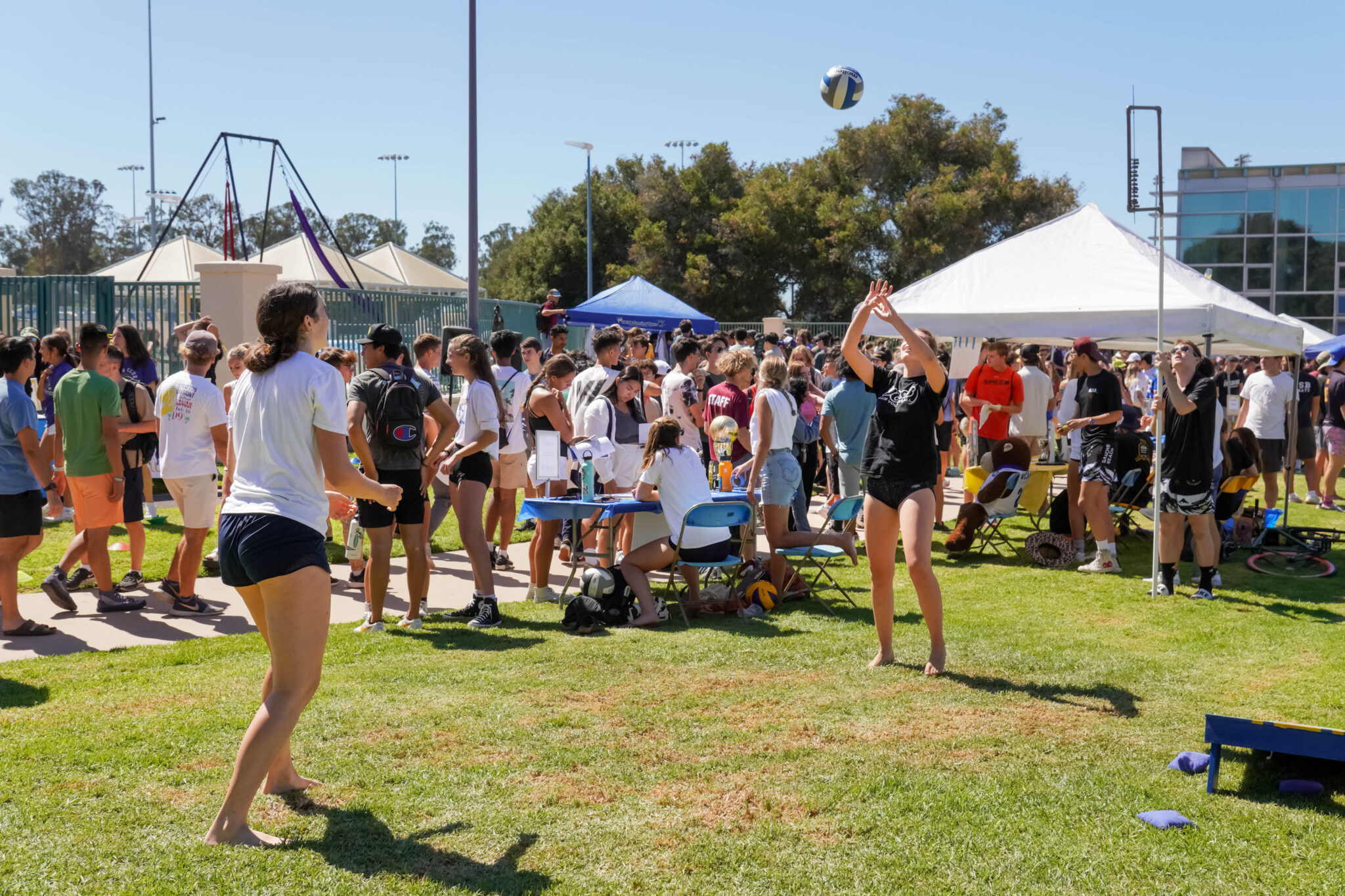
Looking to further prepare for a potential career or make lasting bonds, UCSB students have found the resources to do so through clubs on campus. Photo courtesy of UCSB Department of Recreation.
Many UCSB students may be unsure of how to choose the right club, finding this wealth of choices to be overwhelming. Second-year history of policy, law and governance major, Maya Schwartz, revealed how she felt as a first year experiencing this for the first time.
“As a freshman, it can be overwhelming to decide clubs to commit to with such a large pool of organizations, but I eventually followed my gut, sticking to the clubs that felt the most fulfilling to me,” Schwartz said.
Schwartz is involved in a community service based organization called Isla Vista Surfrider, which is dedicated to the protection and enjoyment of the ocean and beaches for all. Their student club features several committees dedicated to different aspects of their protective mission.
“Surfrider adds value both within campus culture and sustainability as a whole. Our campus is defined by its gorgeous geographical location, which can only be preserved for years to come by students’ efforts to conserve and protect,” Schwartz said.
Other opportunities to get involved in activism and community service are Freedom 4 Youth — which aims to empower youth to build safe and compassionate communities — and Best Buddies, whose mission is to create meaningful one-on-one friendships with individuals with and without intellectual and developmental disabilities.
About 13% of UCSB students participate in Greek life. This includes groups under the United Sorority & Fraternity Council, a cultural or identity based organization, the Interfraternity Council for male identifying students, the Collegiate Panhellenic Council for students who do not identify as male and the National Pan-Hellenic Council, which is a historically Black and African American organization.
Ingrid Ramirez, a fourth-year sociology major, is a member of Lambda Sigma Gamma Sorority, Inc., which is part of the United Sorority & Fraternity Council.
“I met so many girls with so many similar backgrounds, and it was just so nice building those connections,” Ramirez said.
Ramirez is also part of Sociedad Eterna — a Latine organization with three pillars: networking, community service and academics. During her first-year orientation, Ramirez said she remembered feeling out of place.
“I didn’t see people that looked like me. … The culture shock when I first got here was crazy, and especially being homesick, I needed to find my community. So within those organizations, I’ve been able to find my closest friends,” Ramirez said.
Luna Castellanos, a fourth-year political science and philosophy double major, shared a similar feeling when she discovered she did not feel like she truly belonged in any of the spaces already at UCSB. As a result, she created her own by co-founding the Central American Student Association (C.A.S.A.).
“I personally felt like there wasn’t really a space for Central American students specifically on campus. I know you’ve probably seen the Chicano Latino room in the [Student Resource Building] or El Centro, but those always have Chicano in front of them and a lot of Central Americans don’t really feel like that word represents them and their identity,” Castellanos said.
In addition to being co-president of C.A.S.A., Castellanos is the incoming co-chair of the Legal Education Association for Diversity (L.E.A.D.). She joined her second year and described it as a “life-changing experience” that led her to pursue pre-law.
Through L.E.A.D., she experienced an all-expenses-paid trip to Boston to visit prestigious law schools and talk to Latine law students. Castellanos said she valued hearing experiences she could relate to and found it easier to imagine herself in their position because of that.
“I want to make sure that that legacy of L.E.A.D. keeps going and that students from low-income and first-generation backgrounds get to actually experience those things and feel like they have a space in those campuses,” Castellanos said.
Addysen Wilson, a second-year political science and economics double major, is part of a different academic club: Model United Nations (MUN). After trying other academic clubs, such as Mock Trial, she ultimately felt drawn to MUN.
“I heard about the travel opportunities, the team building and the speeches you create. And how every time [you compete] you’re just working on your public speaking skills — that really spoke to me,” Wilson said.
Not only has she gained skills applicable toward her career aspirations, but she has also met her closest friends in her clubs. Overall, being a part of MUN has benefited Wilson in ways she did not foresee.
“The people in [MUN] are just so dedicated to the club, but also their academics, and most of them are in the same major as you are. And so it really helps one, that community support, and two, I’ve seen just through so many people that the more extracurriculars you have, the more balanced you become, and it really helps your schoolwork too,” Wilson said.
Aurora Thompson, a fourth-year communication and film and media studies double major, was looking for a creative outlet when she found Her Campus, a digital women-led and focused magazine.
“It is also a very diverse organization, and I think it is very cool seeing the different things that are written about and what certain interns care about. Some people like to tell really personal stories, some people are into pop culture and what’s going on in the world, so I think it’s cool to have different perspectives that all stem from women because I feel like women aren’t usually taken as seriously and heard from as much, and so it’s nice to have that outlet for us,” Thompson said.
Thompson joined the spring of her third year and appreciated how welcoming the members were. She described them as being incredibly welcoming of new members.
There are a myriad of women’s only organizations such as Women in Business, Women in Law, Women in Media and more. Thompson noted feeling empowered as a woman being a participant of a woman-centered organization.
Struggling to find community within a community so large is what led second-year environmental studies and geography double major Audrey Young to join club ultimate Frisbee.
“I feel like college is so overwhelming and it can feel very isolating at times because you don’t know anyone and you don’t really have close friends at the beginning of your freshman year. I remember at the information meeting [for club ultimate Frisbee] this girl was like, yeah you know I enjoyed Frisbee and all of a sudden I didn’t have to worry about having friends or having people to do something with, there’s always someone to do something with,” Young said.
Young commented that club sports are typically ranked among high school varsity sports in terms of time commitment. There are multiple practices a week and many teams travel for games in and out of the state.
“I think it’s all about what you make of it. I think I could have probably joined other sports and had fun, but I just really loved the community and Frisbee. And the people doing it, I just got along with,” Young said.
What all of these club members have in common is they were looking for a place to belong, including Sophia Green, a second-year political science major, who joined UCSB Psychedelic Club after conversing with different clubs at a club fair.
“I think it adds a really safe space for a subgroup of students that maybe they don’t have a lot of friends that have similar interests or experiences regarding psychedelics to them. And so I feel like it offers a nice sense of belonging, and also it’s like a little community,” Green said.
The club features education and awareness around psychedelics through history, science and personal stories. Green commented that the level of deep communication she has reached with the other members has reassured her that there are people similar to her at UCSB.
Joining a club can prepare students for future career aspirations or offer unforgettable experiences. For Ramirez, it cultivated the community she needed.
“I get a really big sense of community and familiarity. When I first came here, I really didn’t have people. So now that I’m a part of the organizations and I’m a lot more involved, I go outside and I run into people all the time. I feel so much more familiar,” Ramirez said.
How do you go to a frat party and not get raped? Is there an app for that?
This is a helpful guide for students looking to get involved and make the most of campus clubs. For anyone planning a club event or campus gathering, the helium balloon lift calculator at https://balloons.online/helium-balloon-lift-calculator/ could also be useful for estimating how many balloons you’ll need for decorations or other setups. It’s a handy little tool to have when organizing an event.