
Nolan’s Simplified Reading of ‘The Odyssey’ is a Moralist Spectacle
August 22, 2026 at 11:15 am
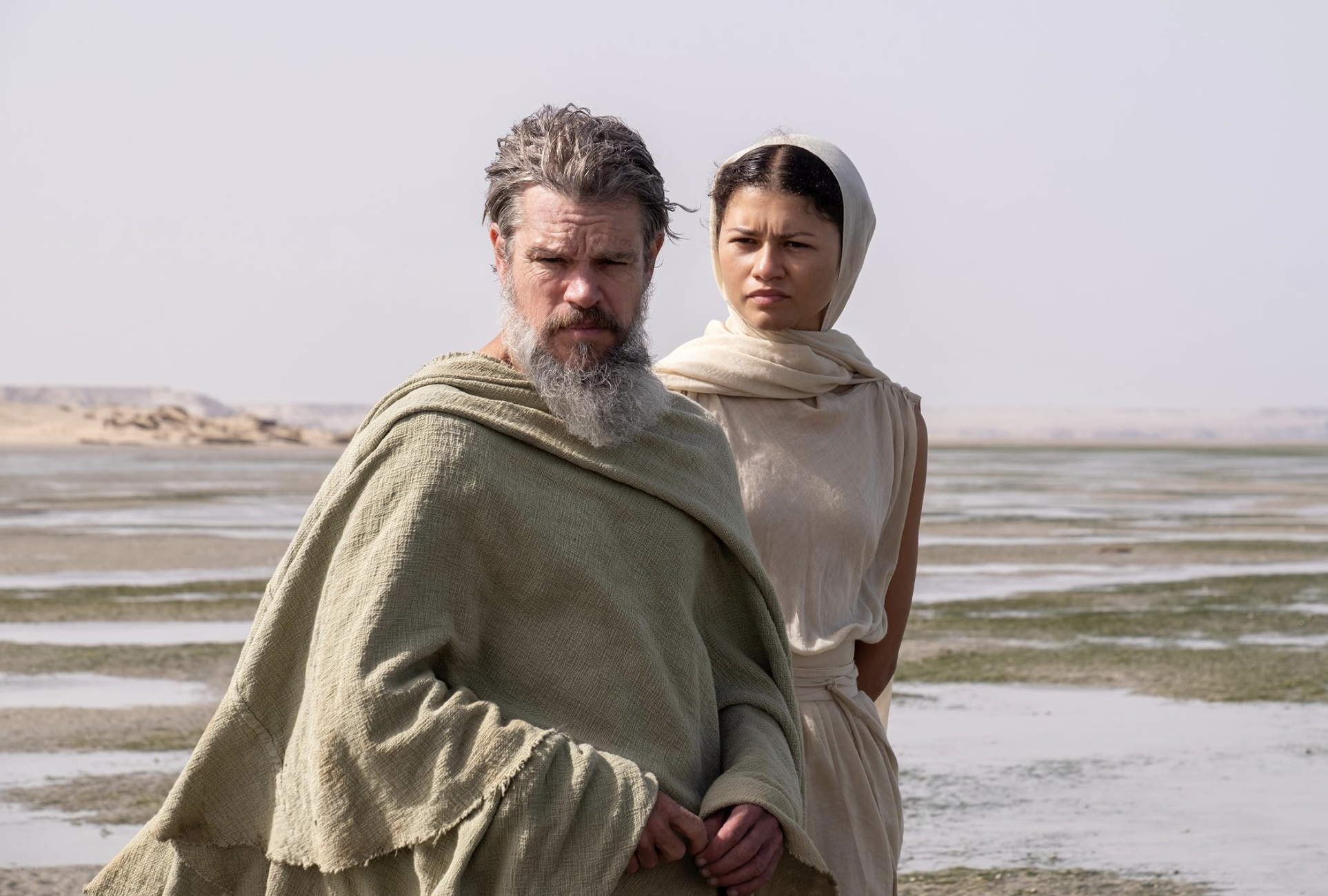
*Review contains some spoilers and the writer is an English major who has studied “The Odyssey” numerous times*
Director Christopher Nolan’s seafaring blockbuster “The Odyssey,” an adaptation of the Homerian epic and a foundational text synonymous with the high school English class, is entertaining, but not intellectual. Nolan does not reinterpret the nearly 3,000-year-old text, instead he simplifies everything that makes the long-studied story and its cast of characters interesting.
For one, Matt Damon’s Odysseus is too likable and uncomplicated. In Homer’s epic, Odysseus is characterized by his complexity and multifacetedness; he’s cunning and intelligent, but flawed. His flaws define and shape him, and cause his prolonged journey home. Nolan allows some Odysseus-related flaws for the sake of the plot; like the poem, it is his unnecessary arrow that blinds the cyclops Polyphemus (and results in his being cursed by Poseidon).
The film also discarded memorable scenes that showcased Odysseus’ shrewd intelligence (and why he is backed by Athena on his journey home). It also disregards some of his blunders, such as when Odysseus told the Polyphemus his name is “Nobody,” and when the giant is blinded and screaming “Nobody is killing me,” he is left alone by the other cyclops, allowing Odysseus to escape. Odysseus ends up ruining this plan by gloating and yelling his name and address as he leaves.
Nolan focuses heavily on ethical morality through the image of the Trojan horse, a wooden behemoth rising out of the sandy shore that breached the walls of Troy under the guise of a gift and thereby violating and breaking Zeus’ law, a golden rule repeated like a mantra throughout the film. The breaking of Zeus’ law is the harbinger of civilizational decline and kindles a crisis of ethical morality for Odysseus. He is burdened and tormented by psychological guilt and goes into self-imposed exile with wife Penelope (Anne Hathaway) at the film’s conclusion, leaving the Ithican throne to his son Telemachus (Tom Holland), a twist original to the film.
Women in “The Odyssey” aren’t given the space or lines to be interesting beyond the roles they play for men. By simplifying Odysseus’ relationships with Circe (Samantha Morton) and Calypso (Charlize Theron), Penelope’s role is diminished beyond that of a woman yearning behind a screen. Even Circe — whose performance by Morton is one of the best in the film and who molded Odysseus’ men into pigs in an act of visceral body horror before finally encountering the late-arriving Odysseus — is simply another obstacle.
Nolan’s film is more based on “The Odyssey,” rather than a faithful adaptation, and not without its flaws, but incredibly entertaining — the plot and pacing moving quickly enough to offset the nearly three hour run time. It’s a good movie, but not a good adaptation.
6 or 7/10
The blinding is very necessary…. Also in the epic poem…
Of course it isn’t a faithful adaptation. He is turning a 12,000 verse poem into a movie. Were you expecting a six hour movie?
This is an interesting criticism because The Odyssey really lives or dies on Odysseus being more than a straightforward hero. His intelligence, vanity, mistakes, and talent for talking himself into trouble are what make the journey so memorable. If Nolan’s version smooths those rough edges away, the spectacle may be impressive while the character feels strangely thinner. Still, I’d be curious to see how the film handles the emotional side of the voyage. After a debate like this, a little downtime at https://leoncasino-french.net/ sounds like a reasonable way to reset.
This movie is worth watching, according to concrete contractors in pearland! Odysseus is characterized by his complexity and multifacetedness; he’s cunning and intelligent, but flawed. His flaws define and shape him, and cause his prolonged journey home.
Nolan’s take on The Odyssey sounds interesting because adaptations always reveal what a filmmaker thinks matters most in the original story. I read the poem in school, and the parts that stayed with me were the strange encounters, long absences, and complicated choices rather than a simple moral lesson. I also tend to compare how films are discussed across different viewing platforms, and I have saved pages like https://directv.pissedconsumer.com/customer-service.html while sorting out streaming and TV options. For me, the best adaptations leave enough ambiguity for viewers to debate the characters instead of telling us exactly what to think.