
Pitching for the big leagues: The impact of UCSB alumnus Shane Bieber on baseball’s biggest stage, the World Series.
By Caleb Chao, Arden Chen, Yang Zhou and Hannah Nguyen
July 5, 2026 at 8:36 pm
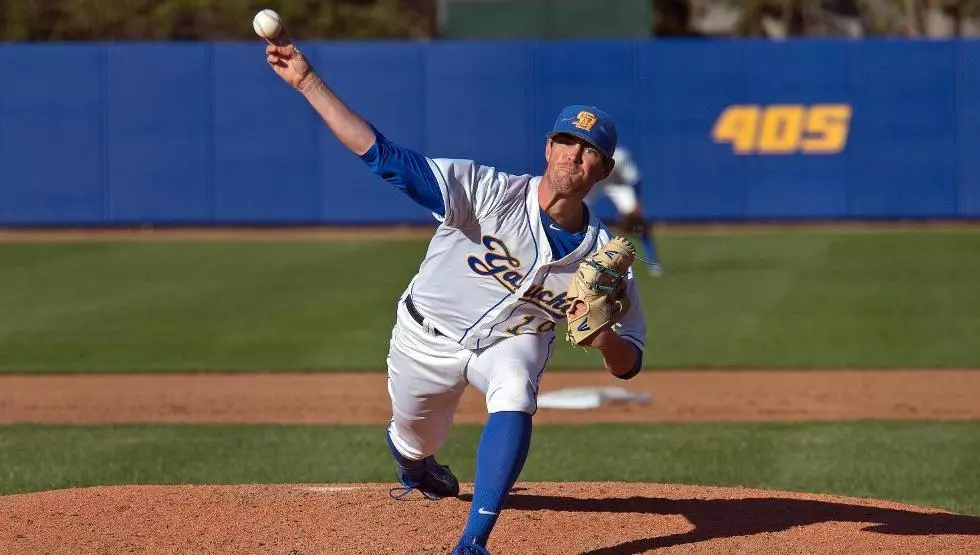
Last year, more than 50 million baseball fans across the world came together to watch the World Series. While witnessing the Toronto Blue Jays and the Los Angeles Dodgers face off in seven nail-biting games, Gauchos had their eyes on Shane Bieber, a pitcher for the Blue Jays and a UC Santa Barbara alumnus.
Before the stadium lights, Bieber’s journey to Major League Baseball (MLB) began small, starting his freshman year as a walk-on player at UCSB in 2014.
Despite entering the program as a walk-on, the UCSB coaching staff quickly recognized Bieber’s potential, noting his ability to strike out six hitters for every walk and his low earned run average (ERA) of 2.06.
An “Earned Run Average” (ERA) is a statistic measuring how many “earned” runs a pitcher gives up per nine innings. A smaller valued ERA is generally considered better.
Andrew Checketts, the head coach of the UCSB baseball team since June 2011, comments on Bieber’s start in Gaucho baseball.
“I saw him late in the summer before he started his freshman year and felt pretty confident that he was gonna be on the team and be a contributor based on what I saw then,” Checketts said.
By the end of his first year, Bieber had become the No. 3 starter for the Gauchos, an uncommon position for someone that was a walk-on at the beginning of the year and didn’t receive scholarships to play.
During his junior year, Bieber became the ace for the baseball team, starting as a pitcher and helping the team to its first College World Series. Jonathan Mendez, 2026 junior infielder on the UCSB baseball team, felt inspired by Bieber’s run to the College World Series.
“[W]e’ve only had one College World Series team, and it was surrounded by him, and that being our ultimate goal, like it’s fun to watch, knowing it’s definitely attainable,” Mendez said.
Checketts also commented on Bieber’s performance at the College World Series and his quick development.
“He was our Friday ace that year. The year before he was on our [20]15 team, which hosted a regional … And he had been our Sunday starter that year. So, he moved from his sophomore year being the Sunday starter to being the Friday ace,” Checketts said.
In Checketts’ perspective, Bieber’s calm composure on the field aided in his success during the College World Series and during particularly high stakes moments.
“He was able to pitch deep in games. He was a strike thrower. He could pitch with traffic, runners on base, low pulse guy in big moments, was able to keep his poise. And you’ve seen that throughout the rest of his career,” Checketts said.
According to Checketts, Bieber’s consistency and attitude have also contributed to his strong performances on the field.
“He shows up and he’s the same guy consistently,” Checketts said. “[H]e’s a talented pitcher with feel, but he’s been able to turn that talent into real skill … and that takes dedication and work ethic and consistency.”
When his senior year rolled around, Bieber was drafted by the Cleveland Indians in the fourth round of the 2016 draft, cutting his senior year short.
Bieber spent around two years in the minor league before being called up to the major leagues in 2018. In his first rookie season, Bieber put up impressive stats, including a 4.55 ERA and a 95 mph fastball. This showcased the potential he had from college baseball at UCSB in which he had a 2.73 ERA and 44 starts as the pitcher.
From a coaching point of view, Bieber’s uptick in pitching speed has been a progression built through consistency.
“He had command, he had projection. The velocity just hadn’t really ticked up quite yet. And it started to tick up his freshman year and then he’s added consistently over his career up until the first couple of years of pro ball …” Checketts said.
In his second MLB season, Bieber was named to the All-Star team, winning the All-Star MVP award, and eventually receiving the Cy Young award, one of the greatest honors bestowed upon pitchers.
Following a loss to the New York Yankees in the 2020 Wild Card Series, and his win of the Gold Glove Award in 2022, Bieber was off and on the field dealing with injuries involving his arm. In 2024 his season was cut short, when it was announced that he would undergo Tommy John surgery, which is a surgery relating to his arm.
Recently, Bieber joined the Blue Jays in July 2025, when he was traded from the Cleveland Guardians for Khal Stephen, who was the No. 5 prospect from the Blue Jays. Leading up to the World Series, Bieber pitched to a 3.57 ERA.
Shang Lou, a fourth-year physics major, sums up Bieber’s growth from college to pro baseball.
“A low start does not limit the ceiling, as long as you are willing to put in the work and improve,” Lou said.
Heading into the World Series, Bieber did not pitch for the first three games because he was scheduled to start in Game Four. However he was prepared to be a relief pitcher during the 18-inning marathon of Game Three.
In Game Four, Bieber was the starting pitcher for the Blue Jays and held down a crucial win, helping the Blue Jays tie the series.
Checketts described how Bieber was able to pull through in the game against the Dodgers.
“He’s done that all through pro ball or even that start against the Dodgers. It’s not going great for him early and he’s able to keep his poise. And next thing you know, he gets a W…” Checketts said.
Through 81 pitches in Game Four of the World Series, Bieber made his presence known against the Dodgers, holding down the mound for more than five innings.
During the World Series, Bieber used a variety of different pitches to confuse the Dodgers’ dugout and limit hits on the ball.
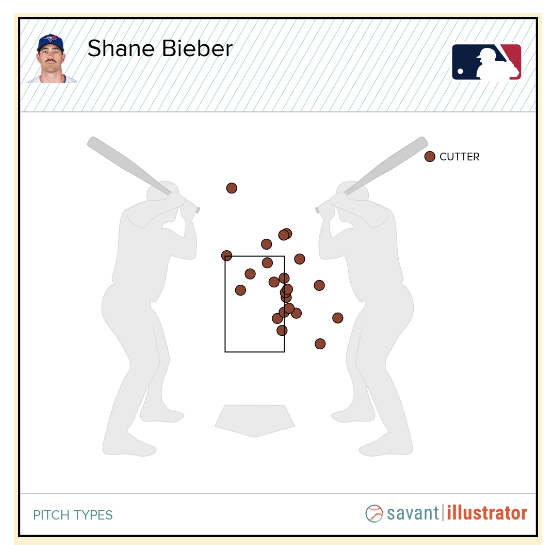
One of his primary pitches was the cutter, which he threw 27 times during the game. 17 of those pitches landed in the strike zone, giving the pitch a strike rate of roughly 63 percent.
Mendez described what he liked most about Bieber’s pitching.
“Honestly, everything about it. I mean, he’s obviously an elite pitcher in [the] MLB, and those guys compared to the guys we’re surrounded with, obviously there’s some room between them …” Mendez said.
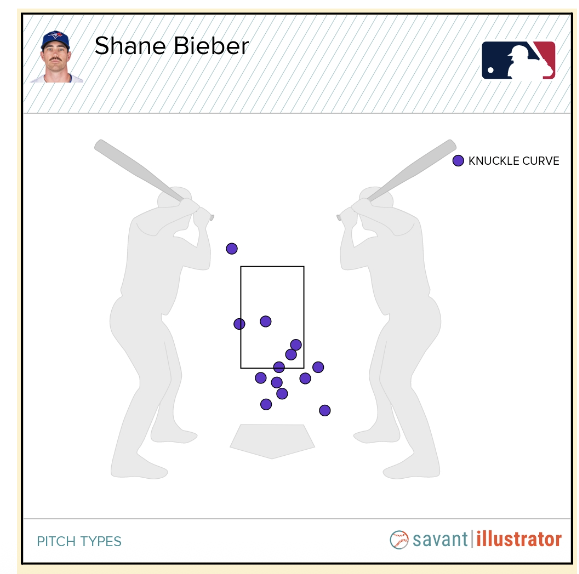
Another pitch was Bieber’s knuckle curve, where he pitched at the bottom of the strike zone, with nine of the pitches being called a ball.
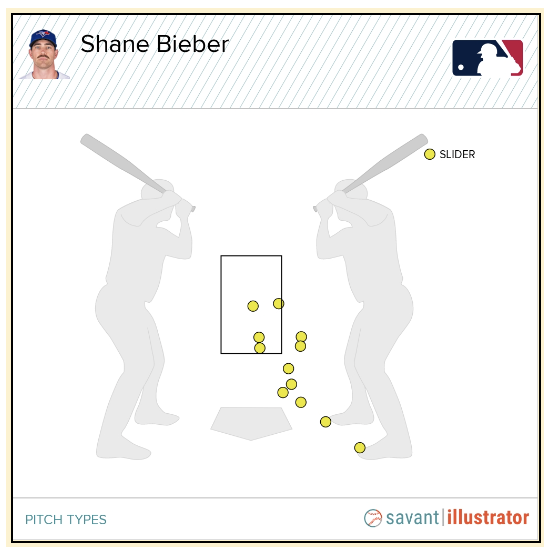
Bieber’s slider was also used similarly to the knuckle curve, in which it would drop out of the zone in its trajectory. However, unlike his knuckle curve, Bieber’s slider tends to move to the right.
Kellan Montgomery, 2026 senior pitcher on the UCSB baseball team, talked about what part of Bieber’s game he liked the most.
“I think even just watching him as a kid, he’s always been more of like a pitcher. I think a lot of guys are throwers, and you know … he’s a master at his craft … he’s an amazing strike thrower … And just the way he goes about his work, and … the way he carries himself on the mound, is really fun to watch,” Montgomery said.
As the main pitcher for Game Four, even though Bieber wasn’t throwing insanely fast pitches (fastball being 93 mph), Bieber was still able to fake out his opponents on the edge of the strike zone, the ideal region for pitchers to aim for.
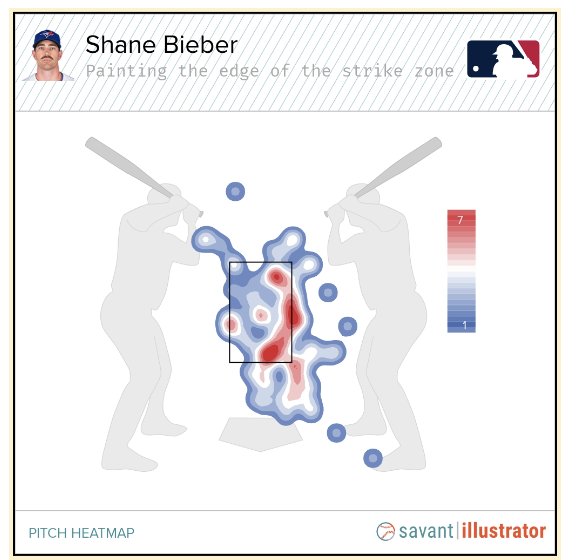
During Game Four of the World Series, Bieber’s calm and composed pitching struck out one of the Dodgers aces Shohei Ohtani — widely regarded as one of the greatest baseball players of all time — twice. Bieber’s efforts paid off, giving the Blue Jays an advantage throughout the game.
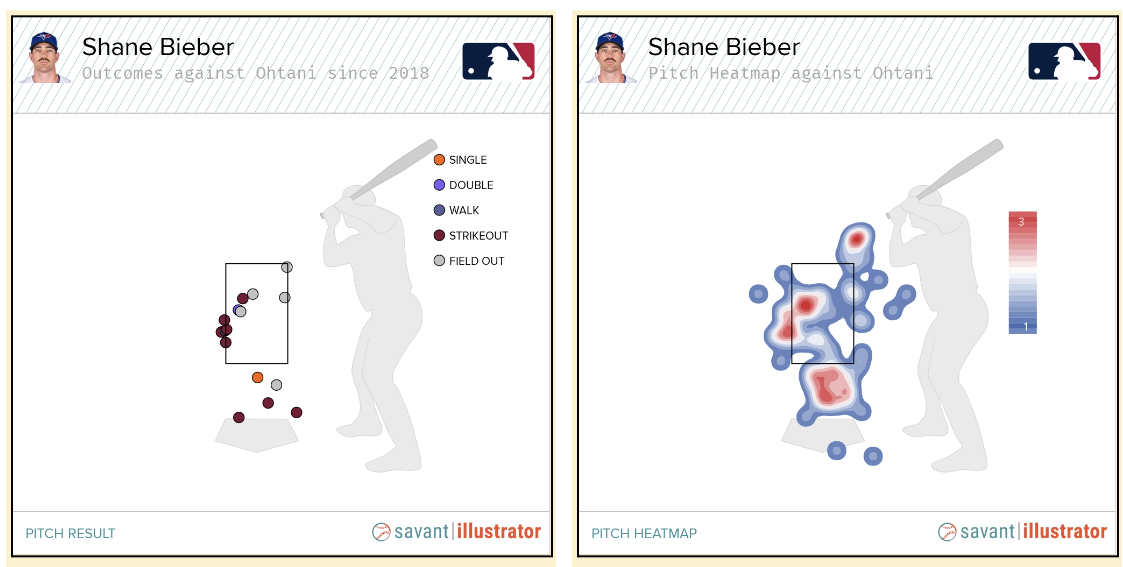
Bieber has faced Ohtani in multiple matches since 2018, during which he pitched differently against Ohtani than the normal hitter, aiming at the outside of the zone (left side from the catcher’s point of view) instead of the inside zone. In total, Bieber has struck Ohtani out eight times and even got four field outs.
For Mendez, seeing a fellow Gaucho in the World Series was motivating.
“Yeah, honestly, it’s pretty great knowing that there’s guys from this program that are making it to the top, and obviously everybody here that’s their goal, individually …” Mendez said.
Montgomery shared a similar perspective, citing Bieber as an inspiration as he pitched for the UCSB baseball team.“It’s pretty surreal,” Montgomery said. “[W]earing the same uniform that he wore in college is pretty awesome.”
From his dominant college days at UCSB to commanding the mound on baseball’s biggest stage, Shane Bieber’s impact on the World Series cements his legacy as a true big-league ace. His journey proves that reaching the absolute top requires precision, strategy, and performing under immense pressure.
Watching a master pitcher operate at the highest level delivers an unmatched thrill. If you want to bring that same high-stakes excitement and premium entertainment into your own downtime, step up your game at one-dun.co.nl Experience elite entertainment where every move counts!
I know it was shortened but if you go by ERA+ his 2020 season was probably the second best in the modern AL for a starter after Pedro Martinez. He was 173% better than an average pitcher.
93 mph and still making MLB hitters look silly lol. Walk on to World Series pitcher is crazy. @pizza edition
It’s always interesting to see a university alumnus make an impact at the highest level of professional sports. I came across kingmaker casino while reading more about Shane Bieber’s career and his path from UCSB to Major League Baseball. Reaching the World Series stage is a huge achievement and must be especially exciting for the UCSB community to follow.
the Tommy John comeback makes it even better. –scratch geometry dash
It’s pretty impressive how quickly Shane Bieber went from being a walk-on at UCSB to becoming the team’s Friday ace. The jump from a Sunday starter to leading the rotation a year later says a lot about how quickly he developed, and the comments about his calmness in big moments are interesting too. I also like the connection between his college career and the inspiration it gives current Gauchos players who are hoping to reach the College World Series themselves. While reading through his story, I also came across https://spinbara-bet.net/.