
Project Reboot encourages students to “Hang up to Hang out”
By Lucy Wellons
June 16, 2026 at 10:00 am
Project Reboot, a student-led digital wellness movement and campus organization, encourages students to break unhealthy smartphone addictions, reduce screen time and reclaim their focus, suggesting “it really is that damn phone.” The UC Santa Barbara Chapter has hosted several events this spring quarter to create a community of people dedicated to creating healthier relationships with digital technology.
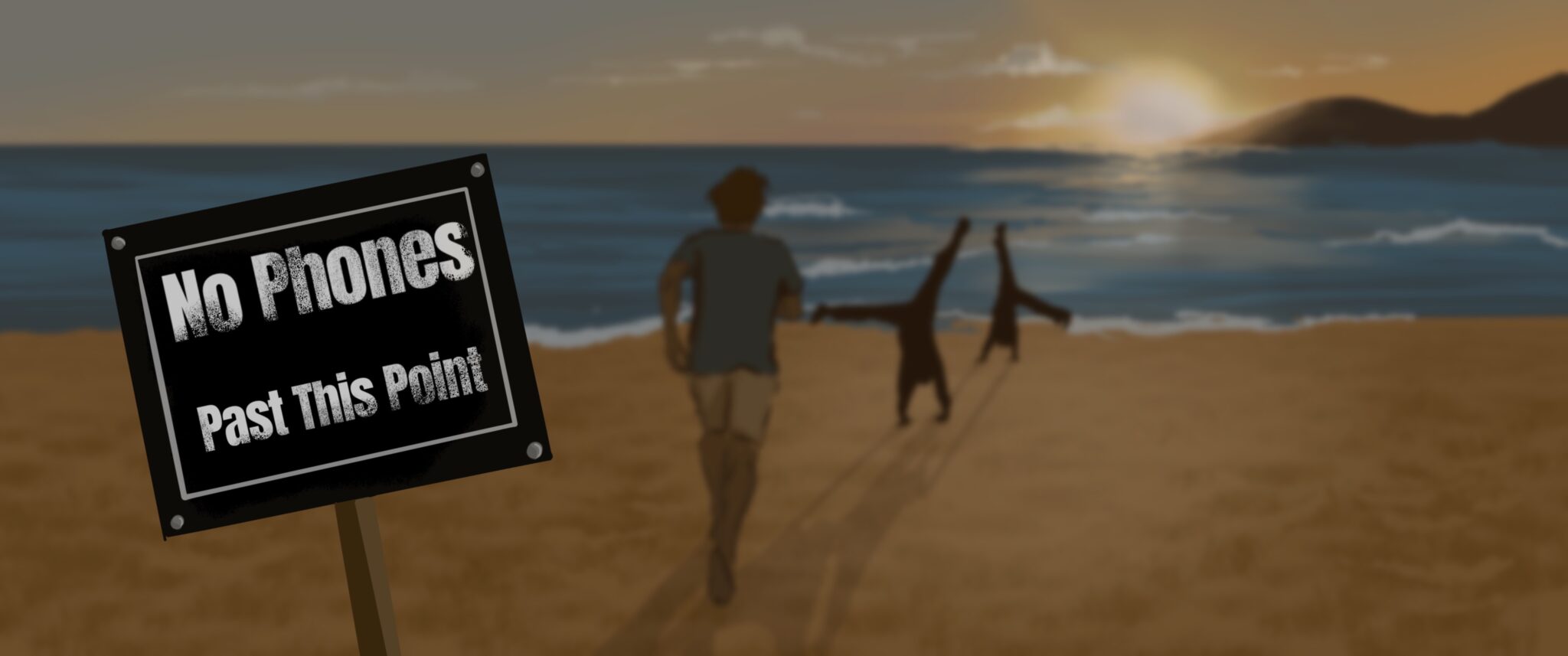
The project was initially launched by Dino Ambrosi, a self-proclaimed former “tech-addict.” According to his website, Ambrosi developed an addiction to technology during his freshman year at UC Berkeley, averaging over four hours a day on apps like Instagram and YouTube as a response to boredom, stress and anxiety.
“My smartphone, once a tool that enhanced my life, became a digital pacifier I used to numb discomfort. In addition to consuming so much of my time, my phone addiction damaged my academic performance, cut into my sleep schedule, and diminished my attention span. The most dramatic consequence, however, was on my identity and self-esteem,” Ambrosi stated on his website.
After taking a semester off to intern for a tech startup in New York, Ambrosi “hit reset” and focused on exercising, reading, meditating and reforming his relationship with technology.
Upon Ambrosi’s return to Berkeley, he created and taught a semester-long course to help students set informed intentions for their technology use. He stated that his experience teaching the class is what drove him to pursue spreading his knowledge through Project Reboot.
“The course is a condensed version of the transformation that I went through during my time away from school,” Ambrosi stated on his website. “I want to help others build healthy tech habits. Project Reboot is my effort to spread the content of the course to a broader audience through school engagements, consulting, and boot camps.”
Grace Kehr, a second-year zoology major, is the new president of the UCSB chapter of Project Reboot, which started in Spring Quarter 2025 and has been ramping up events under Kehr’s leadership this past quarter.
“I heard about it because my best friend is on the exec team at Berkeley, and she was always talking about how awesome and fun it was there, and how they hosted all these phone-free parties, and they did meditation retreats together, and they had an entire class organized around it,” Kher said. “We’re just trying to get off the ground here and get more people involved.”
As president of the organization, Kehr said she hopes to build a campus community centered on more intentional technology use and in-person connection.
“It’s all about just tech intentionality, getting off your phone and becoming more connected to the people around you. We’re just trying to battle late-stage capitalism — having big tech is just very all-consuming,” Kehr said. “The whole idea is that our generation is the most connected to each other through social media, but we’re actually the least connected in terms of being able to socialize with each other and being able to form real connections and relationships.”
With the advent of the internet and educational learning tools, technology has become rapidly more integrated in U.S. classrooms. The global education technology market was valued at $187 billion in 2025 and is predicted to reach $214 billion in 2026. Kehr commented on the ramifications of being exposed to technology throughout early education.
“I think our generation is very reliant on it because we’re raised with it. It’s all that we know, especially in college. You can’t be in college without a computer, you can’t be a STEM [(science, technology, engineering and mathematics)] major without an iPad nowadays,” Kehr said. “I think it’s ingrained the most deeply within us.”
This quarter, Project Reboot has organized a series of phone-free events aimed at encouraging students to disconnect from technology and engage with others face-to-face. Some activities they have hosted include yoga in the park, sunset DJ sets, hikes and meditative walks. The group also recently hosted its first major social event, “DETOX DISCO DAYGE.”
“All the events are just geared around activities that are outside with people and not on your phone,” Kehr said. “There’s not really a distinct type of event that we do. It’s all just chances to get outside and spend time off your phone.”
Project Reboot also recently coordinated a blind dating event to replicate meeting someone “the old-fashioned way.” Participants filled out a Google form and were paired up with a compatible match, equipped with 36 questions to “fall in love.” The event also paired up platonic matches for those not looking for romance.
“[The event] was just an opportunity for people to meet outside of dating apps in a fun, organic way to combat the fact that our generation is going on less dates and meeting people in person less,” Kehr said.
First-year communication major Vivien Colwick participated in the blind date event, and described her experience positively.
“I saw a blind date Project Reboot poster in my dorm hall, and I was curious as to what that was. I had heard about sunset DJ things that they’ve put on or sunset yoga, but I’ve never attended any of that stuff. The blind date looked intriguing, so I had to scan that QR code,” Colwick said. “It was a fun new experience. I’m all about trying new things and doing things that maybe push me out of my comfort zone, and that was exactly what it was. I think that was really awesome.”
Colwick described her relationship with her phone and technology, reflecting on the role that they play in her daily life.
“My attitude is always that my relationship could improve because I don’t think it’s healthy to be on our phone as much as we all are, and personally, every time I go on my phone, I’m like, ‘Why did I just go on my phone?’ I even forgot the reason why I was opening my phone, and now I’m just scrolling,” Colwick said.
Colwick praised the event, noting the novelty of how it offered students an alternative way to form connections outside of the social pressure and algorithms associated with dating apps and social media.
“I think it’s a cool way to bring people together that isn’t like — I guess that’s their point — that isn’t like social media, or you meet them through friends, it’s totally this separate environment and system in which you can create friendships or romantic relationships that’s very personal and focused,” Colwick said.
Kehr described her own negative relationship with social media platforms like Instagram and TikTok and how it inspired her to take a lead with Project Reboot’s UCSB chapter. After realising her habits were unhealthy during the COVID-19 pandemic, Kehr decided to make a change.
“I was just realizing that it made me less motivated, it was just super addictive, I was more distracted,” Kehr said. “I’m very [cognizant] of how it’s affecting me, and it’s still hard. I still am not perfect at it, but I have apps like Clearspace to help me mitigate my time with technology and my time on screens, and it’s not perfect, it’s not where I want it to be, but I’m definitely very aware of it, and things like Project Reboot keep me accountable for trying to be an example.”
Kehr voiced her hope that Project Reboot will create a space for people trying to rethink their relationship with technology and find a supportive community with like-minded individuals.
“I would just like it to be a way that people can spend time off their phones and with friends and meeting people at our events and just spread awareness about how technology and phones are all-consuming and have a generally negative impact on our social relationships and our relationship [with] our community,” Kehr said. “Just being a resource to people, a way to kind of hold yourself accountable and be in a community with people that all realize that screen addiction is something that’s taking away our time.”
Project Reboot raises an important point—many of us don’t realize how much time we spend on our phones until we try to disconnect. Even taking a short break from constant notifications can make a real difference in focus and well-being. When I want to relax online in my free time, I sometimes visit roulettino before putting my phone away again.
Project Reboot is tackling something a lot of students quietly struggle with, and the blind dating event is such a clever way to recreate real-life connection without algorithms deciding for you. The point about being the most connected generation yet the least socially connected hits uncomfortably close to home. Some people go the other direction and simplify their tech setup entirely, and UleFone reviews https://ulefone.pissedconsumer.com/review.html cover rugged, budget-friendly phones that strip things down to the essentials. Whether it’s a phone-free hike or a simpler device, the goal is the same: reclaim attention for the people actually in the room.