
Student study alleges “blatant abuse” by law enforcement during Deltopia 2025
By Levi Kauffman and Lucy Wellons
May 6, 2026 at 10:00 am
In the aftermath of Deltopia 2025, two UC Santa Barbara students conducted a survey on interactions with law enforcement during the weekend-long event. The study reports alleged incidents of racial and gender-based targeting, excessive force and a general lack of concern for real safety from law enforcement.

The study was conducted by UCSB alumni Grace Kish and Rya Bonavia in collaboration with former External Vice President for Local Affairs (EVPLA) Owen Myers and Associated Students (A.S.) Office of Attorney General (OAG). The survey collected around 500 anonymous responses from attendees of Deltopia, the yearly unsanctioned street festival that was banned this January. Survey questions asked respondents about their demographics, how they felt about various statements and allowed for written elaboration for certain answers.
Due to the anonymous nature of the survey responses, its findings reflect subjective experiences, not verifiable incidents. Any and all data collected by the survey is based on perceptions, and therefore cannot make definite conclusions about the actions of law enforcement during the event.
In the study, the researchers also noted how negativity bias — the tendency for people who had negative experiences to participate in the survey — may have played a role in the data that they collected. They also acknowledged their own personal biases going into their research.
“As I was writing I tried not to say exactly what I’m feeling as a person, as a woman, as a student in Isla Vista and reading these reports and hearing things. So I definitely think I did have bias against the police interactions,” Kish said. “But I think the way in which I try to channel my writing was as flat as I possibly could.”
Despite the inherent limitations of testimonials, the researchers emphasized the value of their findings.
“But even just the fact that people are saying this without me adding any of my own opinion, it means something,” Kish said. “That these people [are] feeling these things, that they’re feeling that they’re being discriminated against, that they feel like there’s no safety resources. That is something in itself.”
Across responses, the researchers noted a pattern of I.V. residents experiencing “blatant abuse … unnecessary arrests, rude behavior and predatory practices” when interacting with law enforcement.

Several testimonies alleged gender- and race-based targeting by law enforcement. 35% of respondents answered “yes” to the question “Do you believe police disproportionately targeted specific racial or ethnic groups during Deltopia?” with an additional 43% answering “unsure.” The study also noted a theme of aggression from law enforcement, reporting 42% of respondents witnessed or experienced excessive force while 49% did not.
“[People of color were] being mistreated and more aggressively interacted with in all accounts I witnessed than their white counterparts during Deltopia. I witnessed White people with entire bottles of alcohol open in public being calm spoken to while Black and Hispanic students were physically subdued for verbal interactions,” one testimony read.
Following Deltopia 2025, some community members voiced concerns that “women were being targeted by police and arrested disproportionately.” According to the study, when asked, “Do you believe police disproportionately targeted those of a specific gender or sexual orientation?” 22% of respondents answered “yes,” 28% answered “no” and 49% said they were “unsure.”
“I cannot emphasize enough how uncomfortable and terrifying the police’s strategy for creating safety through arresting intoxicated young women is. Even if done with good intentions, the result is abysmal and decreases trust between police officers and women. I can think of better alternatives, such as having officers help intoxicated young women find their friends or sit them down with female community officers that actually increase the safety of young women,” one testimony read.
At a 2025 I.V. Community Services District (IVCSD) meeting after Deltopia, then IVCSD President Spencer Brandt alleged that I.V. Foot Patrol (IVFP) Commander Garrett TeSlaa told him a part of IVFP’s strategy “was to detain women in particular that were suspected of being under the influence.” TeSlaa denied this claim, stating that their strategy was “not just for females, it was for everybody.”
Deltopia has historically seen a spike in emergency medical calls, with 2025 seeing 130 total. One testimony claimed that when officers arrived to help a person collapsed in a driveway, they were not equipped with Narcan. Santa Barbara Sheriff’s Office (SBSO) policy requires personnel to carry Narcan when on patrol.
In a statement to the Nexus, UC Police Department (UCPD) said it has “zero tolerance for misconduct, including rude behavior, mistreatment of others, and excessive force,” and “is committed to providing safety services equally, fairly, objectively, and without discrimination toward any individual or group.” The statement also claimed that while UCPD fully investigates all complaints, it “received no complaints related to the 2025 time period and made no arrests in Isla Vista.”
“In addition to all UCPD officers being professionally certified by California’s Commission on Peace Officer Standards & Training (POST), the UC Santa Barbara Police Department is also an accredited law enforcement agency through the International Association of Campus Law Enforcement Administrators (IACLEA),” the statement read. “UCPD personnel are required to complete a robust program that includes trainings on Procedural Justice, Racial Profiling & Diversity, De-escalation Communications, Implicit Bias, Trauma-Informed Interviewing, Crisis Prevention, Cyber Security, and Sexual Harassment.”

SBSO said that while it appreciated the “time and effort” taken to compile the information, it raised concerns about the study’s methodology.
“The report itself acknowledges its key limitations. The findings are anonymous, non-scientific, subjective and based on a voluntary, self-reported survey prone to negative bias,” the statement read. “The Sheriff’s Office holds its personnel to high standards of professionalism. We expect our deputies and allied law enforcement officers to carry out their duties with integrity, respect, and sound judgment, particularly in dynamic events such as Deltopia. We take any concerns regarding police conduct seriously. The Sheriff’s Office remains committed to continuous constructive dialogue with the community, including students, partner organizations and Isla Vista residents.”
The study also measured respondents’ views on suspending restorative justice during Deltopia weekend. Respondents were asked how they felt about the statement “I believe that the suspension of restorative justice positively impacts safety,” and 42% strongly disagreed, 19% disagreed, 26% were undecided, 9% agreed and 4% strongly agreed.
“The reality is that the people who live in IV and go to UCSB are not the ones causing issues, and I feel like suspending restorative justice has barely any effect at all on limiting citations at Deltopia because people who do not live in IV most likely won’t come back to participate in the program regardless. All it does is punish IV residents by removing a measure for them to make up for a mistake that is most likely small that they didn’t mean to do,” one testimony read.
Data and testimonies also displayed frustrations with a lack of community input on law enforcement policies. When asked if respondents felt their voices were considered in discussions about law enforcement on Deltopia, 43% answered “Never,” while 22% answered “Sometimes” and 3% answered “Always.”
“Though evidence enough to a lack of student participation, what’s even more telling is the 31% of students who said they were unsure. Such ambiguity could point to both an intentional disregard for student voices — i.e. people are unaware because law enforcement does not give them the opportunity to be aware — or a lack of interest on the students’ part,” the study stated. “In any case, it would be beneficial to incorporate students more into future conversations on the topic.”
Many students and student leaders, including A.S. EVPLA E.J. Raad, strongly opposed the 2026 Deltopia noise ordinance, arguing that student input was not sufficiently considered.
Responses also indicated that the large presence of law enforcement during the weekend “makes, to some extent, students and community members feel unsafe and perhaps targeted.”
“Rather than accurately assess the situation, local authorities appear to anticipate illegal behavior from every and any pedestrian. Officers are thus quick to make skewed assumptions about participants’ behavior, often conflating any form of beverage consumption or impropriety (though not illegality) with the negative perception of Deltopia– leading to a perhaps inflated number of citations, arrests, or general interactions,” the study stated.
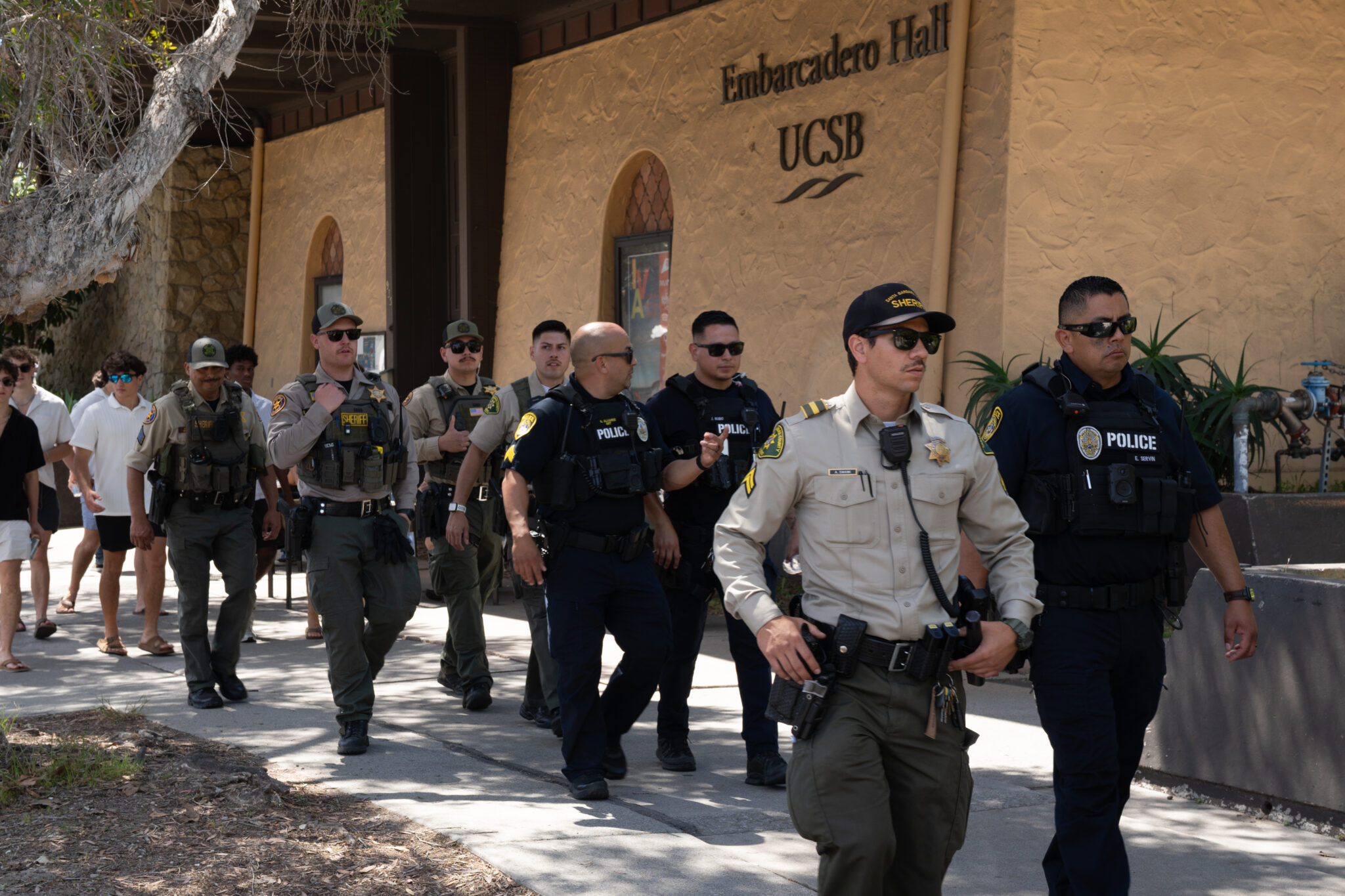
To improve law enforcement interactions, the study suggests establishing “Deltopia-specific behavior training,” which Kish said would entail teaching officers to approach interactions with less “harshness and forcefulness.”
The study also called for a “proper balance” between safety services and police numbers. The researchers said that participants called for fewer officers and greater collaboration with student organizations, as well as enhanced access to safety resources such as EMTs, medical tents, water stations and clear communication.
Researchers called upon law enforcement and the community to increase transparency and accountability. It continued by saying that this would allow I.V. to “balance any celebration with safety,” ensuring that law enforcement “serves the community rather than alienating it.”
The researchers held that their findings were still relevant to students and the community, despite the fact that Deltopia is effectively banned due to the noise ordinance.
“Cancellation does not erase patterns, concerns, or community experiences that were identified. The data reflects broader trends in public safety and community response that extend far past a single event, such as awareness of policy and experiences across demographic groups,” the study stated. “Community feedback provides valuable insight into trust and the effectiveness of current communication. Even in the absence of Deltopia, this information can guide improvements in outreach strategies and long-term safety initiatives.”
A version of this article appeared on p. 1 of the May 7 print edition of the Daily Nexus

It all boils down to this one simple undisputable fact—they’re jealous of you, students, and your position (potential) in life’s inexorable trajectory. Be careful!
You can access the evolutionary history of my thought processes throughout the past (12) years:
Google: michael w reilly-daily nexus.
See where I’ve planted my gauntlet on the significant issues of the day.
I welcome your feedback@mikey0079@hotmail.com. Let’s talk. Don’t be shy.
Don’t let the Magadonians scare any of you. They will be ancient history come this November and go the way of all the dinosaurs. Democrats in California will once again triumph in the Governor’s race although this primary will be close in June.
The Republican power grab that was executed by the Supreme Court decision just yesterday will ultimately backfire—“the hand that giveth can also take away!”
This is no “earth shaking” decision as the mainstream press now asserts—
that’s bullsh..!
The Christian Nationalists are in a self-induced state of emotional euphoria
over this! Listen to the talking-heads of their ilk–it’s hilarious! As Joel Osteen says, “Praise the Lord and pass the collection basket!”
He didn’t even allow the many homeless people suffering from the local hurricane that hit there into his megachurch for shelter! Some Christian he really is–his words ring hallow. He’s a hypocrite and Jesus railed against hypocrites. It’s not a church, it’s a “non-profit corporation” very much like the Catholic Church. Be very wary of these perverted men. They want to enslave your minds, not liberate your psyche. The “Living Christos” left the church centuries ago at the Council of Nicea (circa 325) and what’s left now are just simple bones buried beneath Peter’s Dome. Do they speak now to… Read more »
Those of you who believe in the actual resurrection of Jesus as depicted in the Gospel of John are in error, for he first rose up and then died.
“God is dead. We killed him.”
I align with the views championed by Elaine Pagels.
Gnosticism “attracted women because it allowed female participation in sacred rites.”
Anyone out there interested in BeamMeUpKIrk,com? I maintain a high-bar sales price. I think in due time I will develop this one. Contemporary issues now demand it.–perhaps initially install a Google word press app on this domain. Remember, it was registered in August of 2025. Charlie Kirk was murdered the next month. Cosmic synchronicity/awareness at play here again?
We our democrats hear in Santa Barbara and we our sick and tired of these FoxNews-whaching republitard police coming into are community and inforcing Trump’s will on are democracy. We must stand up and DEMAND that the police our DEFUNDED now. The redneck write-winger’s what support these evil cops should NEVER be allowed to vote. IT TAKE’S A VILLIGE: VOTE DEMOCRAT
Are you really just another Republican troll posing as a Democrat for your sinister ongoing propaganda ploy? I sense this is the case. That is my existential question for the day.
Please rebut in your “creative literary prose,” much like the Gospel of John rebuts the Gospel of Thomas or your words are essentially meaningless drivel.
Hymns sung in Christian evangelical groups pique scientifically measured brain wave activity in the hypothalamus region of the brain, anchoring a “highly emotional collective certainty” to their myopic world-view from a sociological perspective. Second existential question for the day: From strictly a neurological perspective, is this merely a form of “religious psychosis?” Where is the line drawn here between reality and hallucination? From a purely scientific viewpoint they are the “lunatics” a very direct antithesis of gunzel Trump’s view. The brain wave activity generated by Joel Osteen’s ilk is much higher than those encountered through meditative and breathing techniques, Which… Read more »
“The Jacobin Democrats of today are systematically destroying the legacy of the Democratic Party. Their model is not the American Founding, but
the radical mandated equality–and violence–of the French Revolution. This “event” will be a seminal “event” in American history for it is inexorable. It’s in the cards as a ” high potentiality.”
The existential quest for this moment:
Hence, from this day forward, there shall be a new term
for the “Rise of the Antichrist.”
It shall be called ” The Quickening.”(TM)
It shall embody the totality of my concepts previously mentioned.
iTheQuickening.com.
I own it. Like fine wine fermenting, I shall develop this one in
due time. It is domain speak solely for the internet version of The Quickening. Correction: “The Quickening”(TM) is a falsehood. The correct (TM) version is: iQuickening.com (TM). This one is the more “potent electrical force.”
Transcendental Meditation (TM) is primarily characterized by high power Alpha-1 (8-10 Hz) brain waves.
Did you read today on the MSN portal about Xueqin Jiang—China’s Nostradamus?! I entirely align and embrace the potentiality of his perspective amidst The Quickening.