
“Wuthering Heights” Replaces Feeling with Lust
March 30, 2026 at 9:00 am
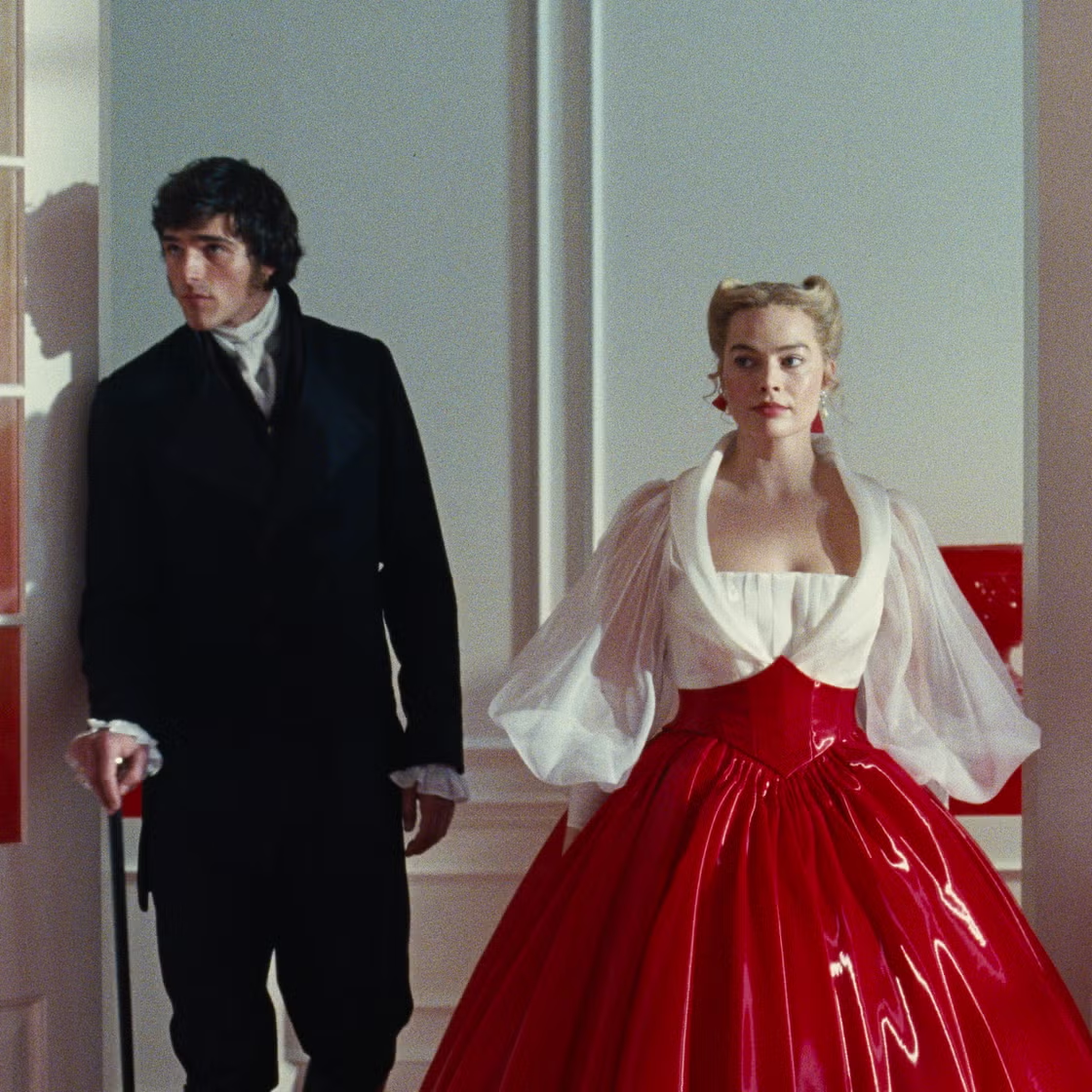
Emerald Fennell’s “Wuthering Heights” is less of an adaptation and more of a sanitized imitation of Emily Brontë’s 1847 novel.
To apply Fennell’s fantasy of what she believes the twisted Gothic romance should be, there were major plot changes to the film that removed the novel’s thematic nuance. Essentially, turning a nightmare of a romance (if you can call it that) into “the greatest love story of all time.”
Margot Robbie’s childish Catherine Earnshaw, over twice the character’s age (15 to her 35), is convincing enough that the viewer doesn’t give it a second thought. Jacob Elordi’s role as the foundling Heathcliff is overshadowed by major novel diversions (for the reader at least) and Fennell’s failure to thematically enclose his character.
The reader knows Heathcliff only from how other characters describe him, and his race is a long-debated topic by readers and Brontë scholars alike, intentionally left to the reader’s interpretation. Brontë isn’t explicit in her labeling of him, but much of the novel’s plot revolves around Heathcliff as the “other,” distinctly separate from society even outside the Wuthering Heights estate. Fennell’s version of “othering” is tied to class (similar to her previous film, “Saltburn”), but she fails to fully follow through with it; she essentially footnotes the major plot point to focus on lust.
As a consequence of removing almost all of the novel’s thematic nuance, Heathcliff’s character suffers. He’s inadvertently portrayed as a desperate loser whose pseudo-revenge plot by marrying Isabella Linton (Alison Oliver) to “torture” Cathy is intended to be a sort of yearning, but falls short of a real emotional connection. Heathcliff is a deeply troubled and nuanced character, but in Fennell’s version, he is a brooding, sensual mimic of the character.
Where larger meaning failed, cinematography was beautiful and lushly intricate. Fennell’s greatest strengths as a filmmaker lie in her use of morbid, uncanny detail to illustrate very human emotions and desire. Crushed egg yolks and bubbling dough, a room with wallpaper modeled after Robbie’s own skin — veins, freckles and all.
Thrushcross Grange, the Lintons’ manicured estate, is a feast for the eyes, with impressively garish details (Edgar Linton made his fortune in textiles afterall) permeating throughout. It provides a stark comparison to the dark, windswept estate of Wuthering Heights. The surrounding moors are foreboding and untamed, paralleling the dichotomy between Cathy’s emotional desire and actual situation.
As the climactic tension increases upon Heathcliff’s return, the fog and atmosphere of the moors begin to overtake the Linton estate.
The plot chronology was confusing. Once Cathy and Heathcliff age up, there is no sense of time and little elaboration. Fennell focuses mostly on style and little on actual substance. The film is engrossing and thoroughly entertaining, with humorous moments intertwined (Isabella and the dolls, need I say more), but it has so many loose ends that the film ends with the viewer emotionally unchanged.
She attempts to tie mutual obsession with erotic desire, but there’s a disconnect; it’s not passionate. There’s no burning and longing; it’s all physical lust. It lacks the emotional weight that an adaptation of the powerful and emotionally charged “Wuthering Heights” should possess.
Fennell’s interpretation is like the novel in name only and best enjoyed if the viewer forgets that it’s meant to be an adaptation at all.
5/10
In Ragdoll Hit, every movement is unpredictable, making each fight both challenging and hilarious..
I think this review makes a fair point about how difficult it is to adapt a complex novel like Wuthering Heights. Strong cinematography can create a powerful atmosphere, but character depth and thematic nuance are just as important. I enjoy reading thoughtful film analysis like this. When I’m not exploring movie reviews, I often relax with SoFlo Wheelie Life, a motorcycle stunt game focused on wheelies, balance, and skill-based progression.
Anomalous Coffee Machine is a one-of-a-kind horror game with a tense atmosphere and simple but eye-catching graphics. Players guide an expedition through the environment of a faulty coffee machine, encountering time-limited events and obtaining limited rewards. The ominous sound design, paired with the fast-paced gameplay, adds suspense as you investigate the story behind the strange coffee machine.
I appreciate this review of Emerald Fennell’s “Wuthering Heights.” It’s interesting to see how the film diverges from Brontë’s original themes. While the cinematography sounds stunning, it’s disappointing that the emotional depth of the characters seems to be lost in favor of a more superficial portrayal. I’ll keep this in mind before watching sports games!
This review captures the common struggle of adapting classic literature to film, especially when the source material is so rich in thematic nuance. It’s interesting how often adaptations focus on superficial aspects like lust over deeper emotional connections, which can leave the audience feeling unchanged. For creators, capturing the right atmosphere is key, but so is ensuring the subject matter resonates emotionally, much like how photographers need to ensure their product images are clean and distraction-free to effectively convey their message.
remove unwanted content naturally
Oh, so we’re critiquing doomed romance as mere lust now? That’s a spicy take. It makes me wonder—if we stripped away the moors and the ghostly wailing, would the *feeling* even survive the translation? Maybe the real test is how we define rare emotional depth. Speaking of rare finds, Krillion | Daily Trivia Game Where Rare Answers Win makes me question if my trivia answers are as original as I think.
Fennell flattening Heathcliff into lust is the part that actually bothered me. The novel’s othering is the whole engine; once that’s a footnote the romance just looks expensive. I reread a chunk on a slow day out in Phuket with Rent Yachts Thai and the class stuff in Brontë hits harder when you’re not watching a perfume commercial.
The movie trades the book’s weather for heat. After I left the theater the dryer started throwing a code, so I started at AppliRoot instead of guessing.
Brilliant point about Fennell stripping the novel’s toxicity to create a palatable romance. It’s frustrating when adaptations sanitize the source material’s core themes. <a href=”https://195-0.com
“>195-0</a>
The complaint about lust replacing feeling is fair, though I would argue the novel invites it. Bronte writes obsession rather than romance, and every adaptation that softens Heathcliff into a love interest ends up with a story that does not hold together. The interesting question is whether a faithful version could find an audience at all, given that the marketing has to promise something the book never delivers.
One more thought on the adaptation problem. Every version has to decide whether the moors are scenery or a character, and the ones that treat the landscape as mood lighting lose the thing that makes the book claustrophobic. The 1992 film is the clearest example, beautiful to look at and completely weightless. For anyone comparing versions side by side,
AppliRoot
keeps a running list that is more useful than the usual ranking posts.
The argument that the adaptation trades interiority for heat is fair, but it is worth remembering the novel is also colder than people remember it being. What gets lost is not the feeling so much as the cruelty, which is what made the thing unsettling in the first place. I reread it on a week on the water with no signal and it is a different book without interruptions.