
What Makes ‘A Real Pain’ Real: An Evening with Jesse Eisenberg
July 2, 2026 at 11:42 am
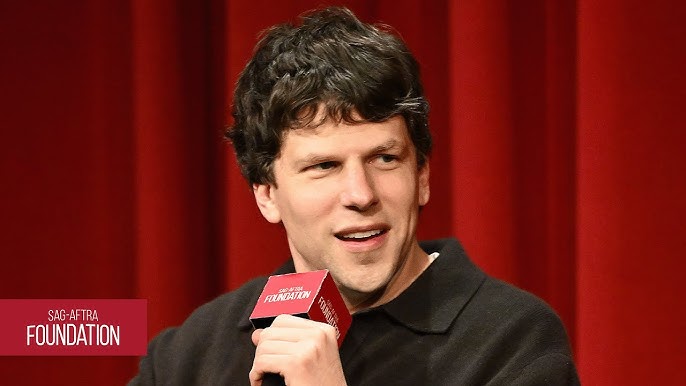
The UC Santa Barbara Associated Students Program Board hosted a screening of the Academy Award-winning film “A Real Pain,” followed by a conversation with writer, director and actor Jesse Eisenberg. Students filled Campbell Hall on June 2 for the sold-out event. After the credits rolled, Eisenberg enthusiastically took the stage to discuss the making of his film, creative process and challenges.
The evening consisted of an interview-style conversation that prompted Eisenberg to recall key moments in the film’s creation, including his influences and comparisons to his other work. It was then followed up by a Q&A from audience members.
Eisenberg rose to fame for his role in the 2009 comedy-horror film “Zombieland,” and later starred in director David Fincher’s critically acclaimed 2010 film “The Social Network.”. Eisenberg has since become a filmmaker himself, making his directorial debut in 2022 with “When You Finish Saving the World.”
Eisenberg opened the conversation by explaining how he balances humor with dramatics in “A Real Pain.” The film follows two cousins, Benji and David, as they embark on a Jewish heritage tour of Poland in honor of their late grandmother.
“I’m interested in kind of bleak things, but the only way I can communicate that is with humor,” he said. “I try to find the intersection of [bleakness and comedy]. And that’s my sweet spot.”
He emphasized that his childhood experiences have had a significant impact in shaping his creative approach.
“I’m a depressing person, but I grew up in a culture and family where, if you’re not funny, you’re dead to us,” Eisenberg said.
This intersection between comedy and bleakness is what Eisenberg believed was the thesis statement of “A Real Pain.”
Eisenberg then discussed the contrast between Benji and David in the film. He explained how he relates to David, who he portrays, while Benji, played by Kieran Culkin, is not like him at all.
“I admire people [like his character]. They’re charming, and they’re interesting, and their unique situations immediately feel comfortable,” he said. “Like, if you’re in a room with somebody like that, you immediately feel seen, and you immediately feel like you can say anything and be safe. But I don’t think it’s a healthy way to live.”
Eisenberg then compared how he and Culkin approached acting in completely different ways.
“[Culkin] just does not preplan or think a word [before], and to me I would feel so worried going to a set without having thought about it a million different ways, and without having done some research,” he said. “[Culkin] lives with the assumption that he’ll be great anyways.”
Eisenberg recalled a humorous exchange with Culkin during filming.
“He [said], ‘I’ll be better if I don’t [research]. My character doesn’t know about the history there? So why would I know about that?’ I was like ‘Well your character would know your lines.’” The crowd erupted in laughter.
He then reflected on how his Jewish heritage shaped his approach to writing “A Real Pain” and its mentionings of the Holocaust.
“When [the characters] go to the house at the end, I actually went to that house 20 years ago. My wife and I went to look at it because we were in Poland. I remember thinking that I should be crying here. I should be getting the dirt from the ground and wiping it on my face, the prodigal son has come home. [But,] I just felt nothing,” Eisenberg said, adding that the experience felt surprisingly ordinary.
He went on to explain the rawness he wanted to capture in the film.
“99% of [Holocaust movies] show [emotions] that I just don’t believe actually happens, where people will have this overwhelming, cathartic sense of coming full circle, and they realize that their family’s life meant this thing,” he said.
Eisenberg communicated his emotional intentions when writing “A Real Pain.”
“Well, actually, maybe your family’s life meant nothing. Maybe they were just killed, and that was it, and it’s awful. And I wanted to try to express a story that expresses what I would consider to be something a little more authentic to the human experience rather than something familiar to the movie experience.”
Eisenberg described the struggle to get rights to film in Poland. Because the film includes a scene of visiting a concentration camp, they needed to get permission to film there. After promising to respect the site, Eisenberg was allowed to film there and described the experience as surreal.
“It’s just this crazy experience of taking [Majdanek concentration camp], this place of horror, where my family died, and then trying to turn it into this strange version of a Hollywood movie,” he said. “To turn it then back into this thing of earnestness, which is a movie that’s earnest. But you go through this very awkward period, where you’re turning it into essentially a commercial shoot.”
Eisenberg then connected “A Real Pain” to lessons he learned directing “When You Finish Saving the World.”
“When I was hearing [feedback] from people watching the early cuts of [‘When You Finish Saving the World’], they said ‘No one’s gonna like this. Your characters are so unlikable.’ And so I was freaking out,” he said. “So I had this desperate hunger and desire to write something where the characters are more likable. [‘A Real Pain’] is my version of that, where even though Kieran [Culkin’s] character is kind of obnoxious, this is my version of the most likable people.”
Before the conversation came to an end, Eisenberg mentioned his upcoming directorial role in an untitled musical film. He had always wanted to direct a musical but was always told his music was bad, so the plot of the film involves a musical with bad music.
“I reverse engineered my dream with the smallest amount of talent possible. And this would be my goal in the future, minuscule pockets of talent I have I would try to use them to my full advantage.”
The event concluded with an audience Q&A session, giving attendees one final opportunity to hear Eisenberg reflect on his career, creative process and future endeavors.
He went on to explain the rawness he wanted to capture in the film, challenging conventional portrayals of Holocaust memory . “99% of [Holocaust movies] show [emotions] that I just don’t believe actually happens, where people will have this overwhelming, cathartic sense of coming full circle” . Eisenberg communicated his emotional intentions when writing ‘A Real Pain’: “Well, actually, maybe your family’s life meant nothing. Maybe they tipsport were just killed, and that was it, and it’s awful. And I wanted to try to express a story that expresses what I would consider to be something a little more authentic… Read more »
I would consider to be something a little more authentic fix website and to the human experience rather than something familiar to the movie experience.