
Suyan Wang for Student Advocate General
April 20, 2026 at 11:00 am
The Daily Nexus endorses unopposed third-year sociology and history of public policy and law double major Suyan Wang for Student Advocate General.
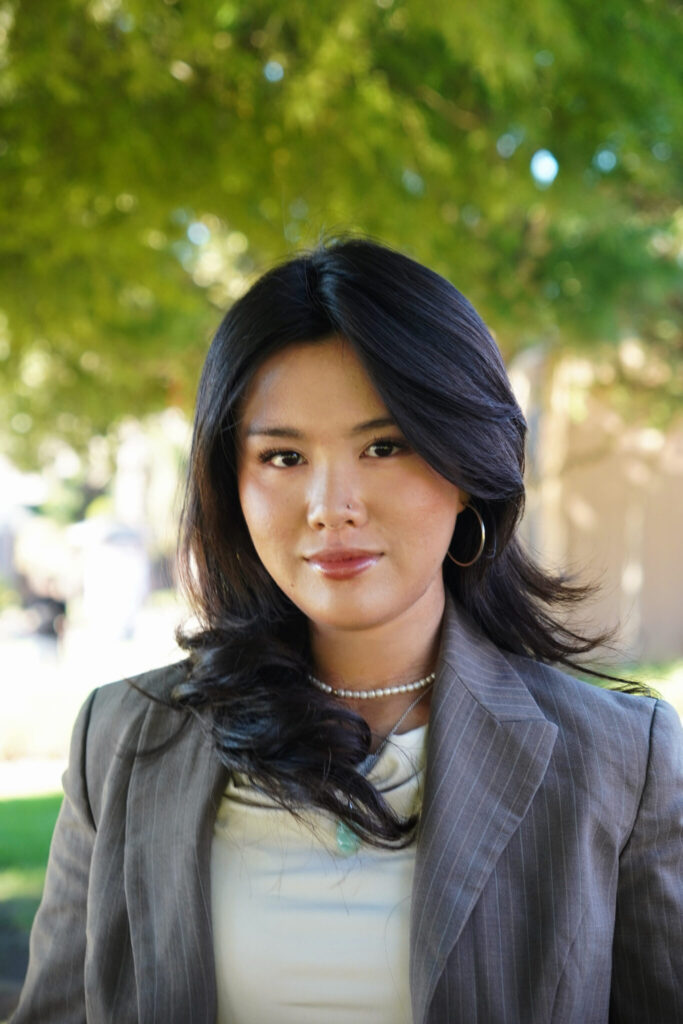
The Student Advocate General (S.A.G.) serves as a liaison between the University and the student body. The nonpartisan role advocates to administration on behalf of students, provides confidential support and educates the student body about university resources. The S.A.G. also works with the Office of the Student Advocate (OSA) to handle student casework typically relating to academics and finances.
The Nexus believes that Wang’s current role as the OSA’s chief of staff and nearly three years of experience within the office provide her with the skills to succeed as S.A.G., including managing over 20 team members and maintaining a passion for public interest work.
“I started exploring what public interest really means to me — I just got really interested. I think it’s something that truly aligns with my passion,” Wang said. “I love people. I love talking to people, and I definitely love advocating for people as well. I love advocating for myself, and that kind of branched out to advocating for everyone.”
In addition to experience within the OSA, Wang also serves as a Boards, Committees and Units (BCU) chair of the Global Gaucho Commission (GGC), the international student advocacy branch of UC Santa Barbara’s Associated Students (A.S.). She emphasized that this role gives her experience in working with marginalized communities that would be beneficial as S.A.G., which the Nexus agrees with. Wang said she strongly believes that A.S. should provide more financial support to marginalized groups, although she admitted this is out of her jurisdiction as S.A.G.
According to Wang, when she began working at the OSA during her freshman year, there were only around “four to five caseworkers,” which has now grown to 20 staff members. Despite this expansion, Wang said there is “unfinished work” within the office that she aims to tackle if elected as S.A.G., which influenced her decision to run for the position.
Wang aims to expedite communication with University departments while handling issues that may concern students and casework. In the past year, Wang has repeatedly requested meetings with the Office of Student Conduct to discuss student misconduct cases dealing with artificial intelligence (AI).
“We were defending students who were accused of violating AI policy when there’s no AI policy. So I actually asked for their AI advisor, the officer that actually has jurisdiction on this,” Wang said. “I requested a meeting with her repeatedly, so that is just something that I’ve been doing, but I will expand this to a greater scope.”
An additional goal Wang has is to increase transparency around the University’s policy updates and resources by publishing new information on the OSA’s website and social media. She reflected that in the past, the University has been “horrible” at communicating policy updates to students, and she will resolve this by regularly creating “digital media” to inform the student body on University policies.
“I’m hoping to establish a section [on our website] that’s just S.A.G. updates on university policies,” Wang said. “If there is a policy change like when the [Title IX] office renamed itself, nobody is looking at that, but we are, and we will write that down.”
Wang also hopes to prioritize defending student rights through the OSA and hopes to improve the office so that UCSB students can have the “best student advocate office” in the UC system.
According to Wang, she will have conversations with UC Berkeley and UC San Diego’s student advocate offices to learn more about their systems and apply changes to UCSB’s OSA. Wang noted that UC Berkeley has a “very established casework system” and will study its policies on casework reflection, analysis and trends to apply them as S.A.G.
Wang will also strive to increase the intake language options that students have, enabling the office to “assist as many students as possible.”
Another objective Wang aims to achieve as S.A.G. is to implement a uniform AI policy reflected across all class syllabi. She mentioned that she is currently researching the policies professors have already implemented but recognizes this goal may be difficult due to differences in opinions that professors have on AI, depending on their field of study. The Nexus is concerned by the possibility of blanket AI statements being implemented, but we are confident in Wang’s ability to understand the nuances of each department’s needs.
Wang emphasized that she will carry on initiatives from the 2025-26 S.A.G., fourth-year psychological & brain sciences major Sydney Bivins, by expanding educational workshops, including those that raise awareness on resources for transfer, international and disabled students.
“I’m hoping to do that more in the fall quarter, so students are aware of what’s going on right off the bat,” Wang said.
Wang emphasized that as S.A.G, she will ensure that every student has access to suitable representation and hopes students recognize the resources available to them through the OSA.
“No student tuition goes to waste. That’s a big overarching goal for me. I want everyone to understand that their tuition is not going to waste and they can actually utilize this service whenever they want to,” Wang said.
Despite Wang running unopposed, the Nexus believes she would be a worthwhile candidate under any circumstances. We believe her transition to the S.A.G. position is a natural progression from her work in the OSA, alongside her general commitment to supporting students.
Hi everyone! I found this site through a tip on a lifestyle blog while looking for a new way to spend my leisure time. I’d been having a really tough run of luck lately and was almost ready to give up, but then I gave casoola casino a try. To my surprise, I hit a winning streak that not only covered all my previous losses but also left me with a very decent profit. I’m really happy with the result, especially since the site runs so smoothly and the atmosphere is quite lively.