
Research in Review: Vernal pool restoration, infant edibility expectations, mind wandering effects on recent memory
April 13, 2026 at 10:12 am
Restoration of vernal pools
A recent paper authored by UC Santa Barbara doctoral student alum Joanna Tang and professor Carla D’Antonio in the Ecology, Evolution, and Marine Biology department, focuses on studying the interactions between native and exotic species in vernal pool wetlands. Vernal pools are temporary bodies of water that are created due to indentations in the ground, where water accumulates for short periods of time throughout the year. These areas are often widely composed of non-native exotic grasses that die and accumulate as “thatch.” This thatch can create greater fire hazards, perpetuate cycles of greater density of non-native grasses and suppress the growth of native plants.
The researchers conducted a five-year study at vernal pools in the Del Sol Vernal Pool Preserve and Camino Corto Open Space in Isla Vista. They sought to test different methods of thatch removal and disturbance to measure its effect on native plant species. Three conditions were tested: raking and removal of thatch, raking without removal (disturbance) of thatch and a control with no disturbance. Additionally, the treatment groups were seeded with native plants.
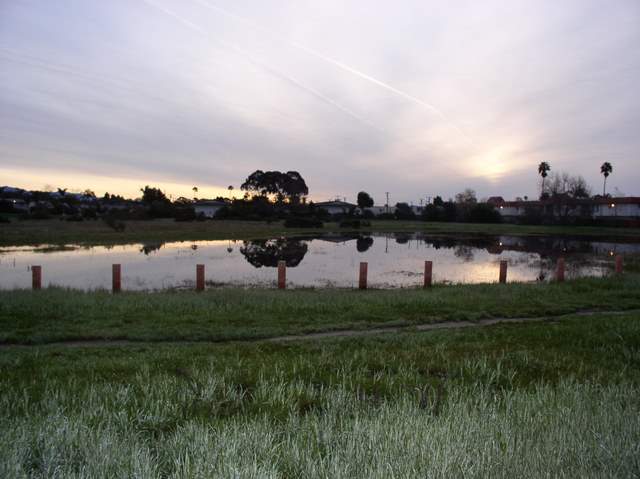
Researchers utilized community-based support to help with the physical work of this project, with over 40 undergraduate students participating. While removal did help decrease the amount of thatch buildup, the growth of native plants seemed to mainly depend on other factors such as rainfall, seeding and environmental conditions. While there was an increase in native plant diversity four years into the project, the researchers were unable to determine if this was the result of heavy rainfall or continued thatch removal and native seeding. Either way, these findings highlight that restoration projects may require multiple attempts over years for environmental conditions to be optimal for successful restoration.
Infants expect plants to be edible
An article co-authored by Camille Rioux and UCSB Psychological and Brain Sciences assistant professor Annie Wertz recently published findings on a study exploring infants’ expectations around edibility. Researchers set up three experiments to determine whether 6-month-old infants spend more time looking at adult actors who consume expected versus unexpected objects. Both experiments included two models: edible fruit presented on a realistic fake plant and edible fruit presented on an “artifact” constructed of materials like wire and paper in a shape vaguely resembling a tree.
In the first experiment, an actor ate a piece of fruit from either the realistic fake tree or the artifact model. A control condition was also included, in which the actor placed the fruit from either the realistic plant or the artifact behind their ear instead of eating it. Infants looked at the actor for longer when they ate the fruit from the artifact, suggesting a greater sense of surprise. There was no significant difference between the time the infants looked at the plant versus the artifact in the behind the ear control condition, indicating that it was not an interest in the artifact that led to the greater time. This suggests that 6-month-old infants might have an established belief that plants are more likely to be edible than artificial objects.
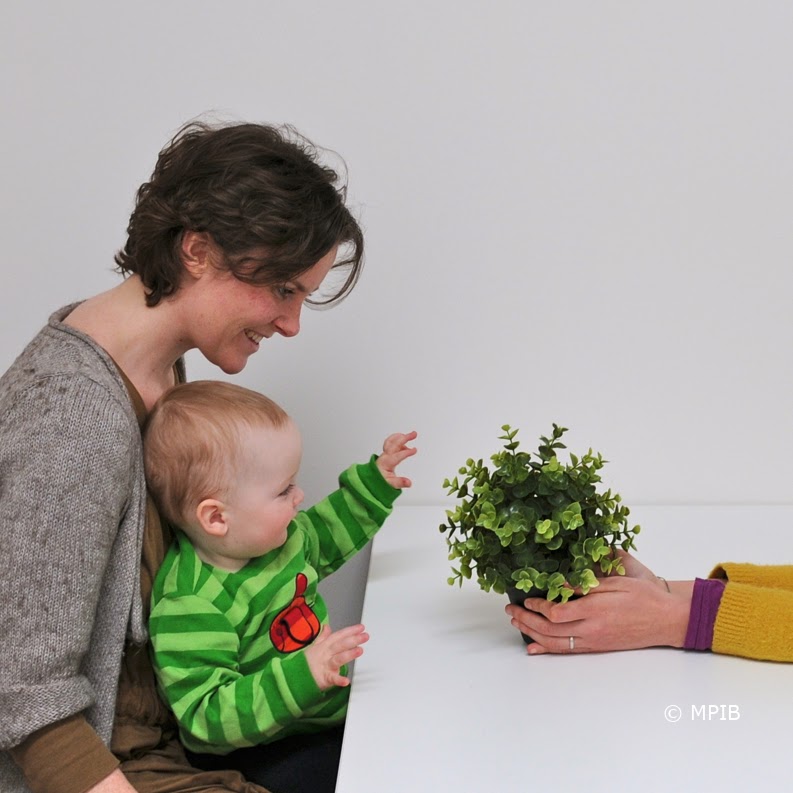
In the second experiment, researchers were trying to determine if it was the leaves or fruit specifically that the infants expected to be edible by separating them into different conditions. For the fruit, the time the infants looked at the fruit picked off a regular vine or artifact vine led the researchers to report inconclusive results. The infants’ did not have clear expectations of either being more likely to be edible. There was no difference between the time infants looked at actors eating the artifact bundle of leaves or the real leaves.
In a third experiment, researchers tried another variation to study if infants expected specifically the leaves or the fruit to be edible. They did this by picking fruit or leaves respectively from a bigger plant and plant-like artifact and measuring differences in duration of infant gaze. The results of this experiment also showed no significant difference between the two conditions.
Overall, findings suggest that infants are more likely to expect food to come from plants than artificial synthetic objects. However, researchers did not find evidence that the infants were more likely to anticipate specific parts of the plants to be edible, such as leaves or fruit. Based on these results, the researchers concluded that most eating habits and cues are not innate. However, the expectation that food was more likely to come from plants than their artificial counterparts may indicate that evolutionary plant foraging diets may have shaped developing infants’ knowledge of food.
Mind wandering affects memory encoding
A recent paper published by Shivang Shelat, a graduate student in the Department of Psychological and Brain Sciences, studies the effects of mind wandering or task-unrelated thoughts (TUTs) on memory.
Researchers presented participants with a series of images that had been pre-established to have either high or low memorability. As each image was presented, researchers placed probes designed to assess task-unrelated thoughts by asking participants to reflect on whether they were focused on the image or thinking about their personal worries, daydreams, everyday tasks, their state of being, the external environment or another category not listed. Findings revealed that both the low memorability images and task-unrelated thoughts were associated with participants being less likely to recall images. However these factors appeared independent of each other, indicating that these two processes may be distinct from one another when it comes to memory coding.
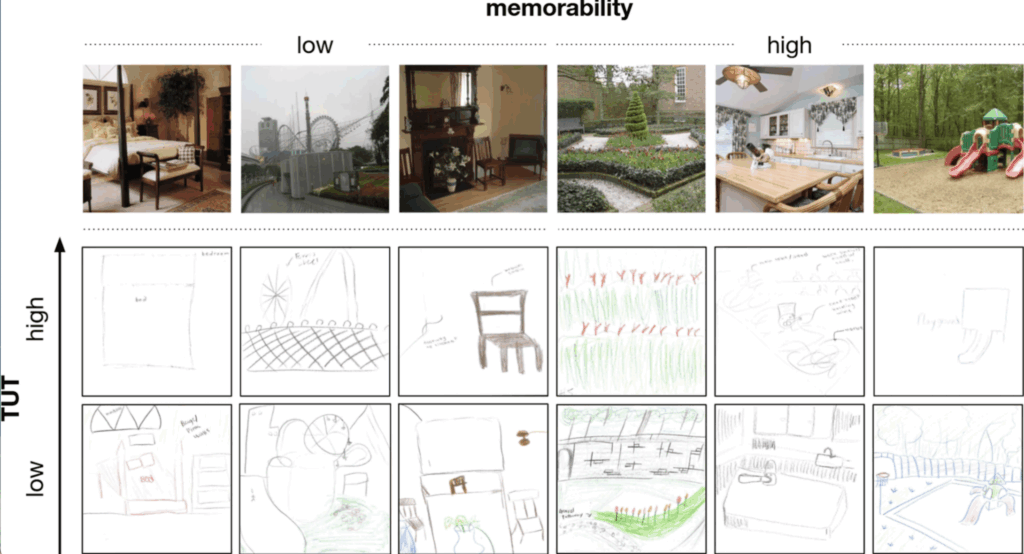
In a follow-up experiment, researchers tested free recall, which they defined as the number of objects they drew from memory relative to the number of objects they drew when copying the scene directly. Participants were shown a new series of images divided equally between low and high memorability. In between prompts, a probe question asked how focused participants were during each image. Participants were later instructed to draw scenes they’d been presented from memory. Finally they were provided with the image again to copy in order to provide a control on how the participant perceived the scene. Similar results were found with TUTs decreasing free recall, as well as greater memory associated with the high memorability images. However, this second experiment also demonstrated that TUT seemed to decrease free recall for the highly memorable scenes, but not the low ones.
This study provides further research into memory encoding and the effects of distractions during this process. As memory is an essential part of human cognition and functioning, this study provides more insight into the potential detriment of task-unrelated thoughts and distractions in everyday life.
Really fascinating mix of research topics. I especially found the section about mind wandering and memory interesting since it connects so closely to everyday life. Articles like this make complex research feel much more accessible and engaging to read.
drift hunters
Fascinating research! These studies on vernal pool restoration, infant food expectations, and memory encoding highlight the complexity of ecological, developmental, and cognitive processes. Great work revealing how subtle factors shape outcomes. lfi clicker
Really enjoyed the variety of research highlights, especially the section on vernal pool restoration and its environmental impact. Reading about habitat conservation also brings attention to practical water management, and Zodiac Pool Systems has useful solutions that support cleaner and more efficient aquatic environments.
That’s a fascinating trio of research topics! The infant edibility expectations sound particularly intriguing. I wonder if there’s a study on how often people’s minds wander during a game of Basket Random
This is a fascinating trio of topics! I particularly found the research on vernal pool restoration quite compelling, given its ecological importance. It makes me wonder if there’s an Eaglercraft mod out there that lets you build and manage your own virtual vernal pools, maybe even with some creative world-building for unique biomes
I’m particularly intrigued by the ‘infant edibility expectations’ – that’s a phrase I haven’t encountered before. It makes me wonder about the deeper psychological or anthropological implications. As for mind wandering, it reminds me of how easy it is to get sidetracked when trying to focus, much like navigating the tricky levels in Run 3 where one wrong move can send you tumbling.
This is an interesting collection of research topics, especially the work on restoring vernal pools and supporting native plant communities. It’s encouraging to see research highlighting practical ways to protect ecosystems and better understand human behavior. Even fields as different as a chiropractor naples practice can benefit from evidence-based research and careful observation.