
SBIFF 2026: Closing night premiere of ‘Laundry’ — a devastating depiction of apartheid South Africa
February 25, 2026 at 2:22 pm
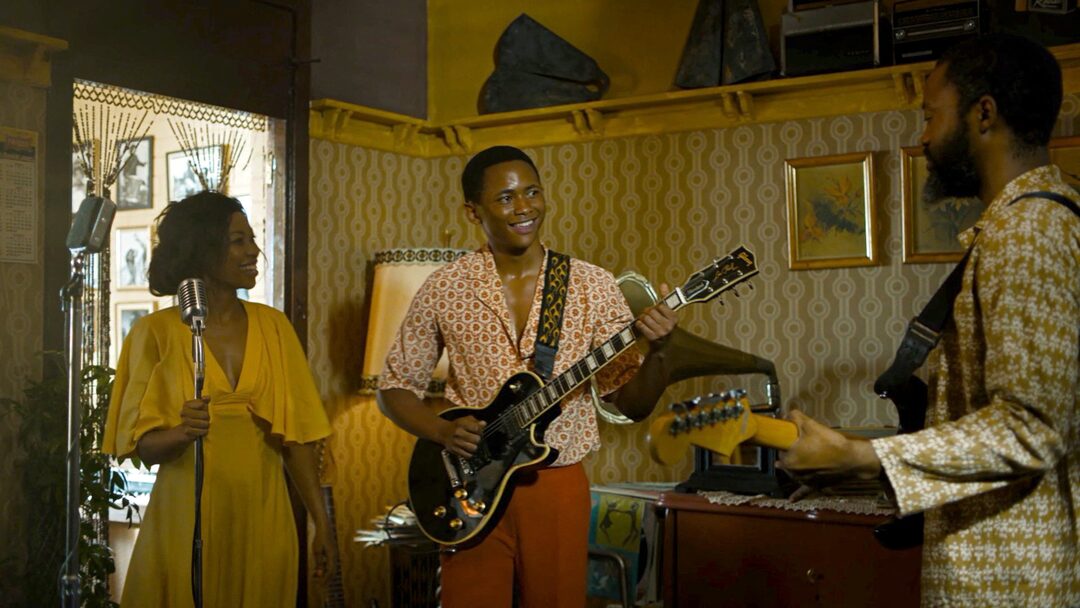
The 41st annual Santa Barbara International Film Festival concluded with the United States premiere of “Laundry (Uhlanjululo)” on Feb. 14 in the Arlington Theatre.
Before the screening, Santa Barbara International Film Festival (SBIFF) Development Director Benjamin Bhutani Goedert highlighted prior SBIFF events and thanked everyone that made the festival possible. “Laundry (Uhlanjululo)” Director Zamo Mkhwanazi then briefly walked on stage to tell the audience to “enjoy the viewing.”
Mkhwanazi is a Johannesburg-based filmmaker whose previous two short films, “The Call” (2015) and “Sadla” (2019), focus on themes of oppression and family related to apartheid South Africa. “Laundry (Uhlanjululo)” is Mkhwanazi’s feature length directorial debut and tells the story of Khuthala (Ntobeko Sishi), a talented young musician caught between his dreams and his father’s laundry business, in 1968 Johannesburg.
When Khuthala’s father Enoch (Siyabonga Mlungisi Shibe) is arrested for offending a white man, Khuthala, his sister Ntombenhle (Zekheteholo Zondi) and his mother Magda (Bukamina Cebekhulu) work to free Enoch and maintain their laundry business within a system built to oppress them. Khuthala also seeks to go to America with the singer Lilian (Tracy September) to pursue his dream of becoming a musician and escaping the constant danger of living in apartheid South Africa.
Sishi is the standout performance of the film, convincingly playing a young man made to feel second class his whole life but finds an escape through music. The visceral emotion he expresses while playing electric guitar enhances the vibrant mixed jazz-rock soundtrack.
The film sets up what audiences may expect to be the central conflict from the opening moments. Khuthala’s guitar is the first thing heard, but soon it becomes drowned out by the sounds of washers and dryers, auditorily creating a struggle between the two life paths that lay before him. However, it soon becomes clear that this conflict is made secondary by the inescapable oppression of the apartheid regime.
Despite the seemingly endless sacrifices Khuthala makes throughout the film, often putting him in moral conundrums, there is always something else that can be taken from him. In 1968 Johannesburg, the government constantly made new laws and changed old ones to oppress the native Black South Africans. The film doesn’t shy away from depicting this, putting the audience in the shoes of those who experienced oppression on a daily basis and making the helplessness of the situation felt at the human level.
Enoch’s “native exemption medal,” given to him before South Africa left the British Commonwealth in 1961, becomes useless when white government officials decide it is. Black men are subjected to humiliating strip searches in order to obtain a domestic travel pass. Khuthala and Enoch can’t even walk around the neighborhood where their laundry and home is at night because it’s a designated white zone.
Specific moments like these, alongside the wariness Black characters feel when they’re forced to constantly walk on eggshells around white characters, keep audiences on edge at almost all times.
However, the oppressiveness of the time, emanating from sterile government buildings and dark jail cells, is broken up by moments of genuine joy and escape in characters’ warmly lit homes. Around the halfway mark, Khuthala plays a song with Lilian and her band vaguely similar to Pink Floyd’s “The Great Gig in the Sky.” When Lilian screams, it’s the scream of an entire people yearning to be free.
“Let us be,” she sings again and again while Khuthala energetically plays the electric guitar.
These moments of levity are only passing, and characters must soon return to their cruel reality. Considering apartheid would not end for another 26 years, the painfully dark ending, driven home by Sishi’s phenomenal acting, feels fitting.
While this year’s SBIFF has highlighted giants of the film industry, closing with “Laundry (Uhlanjululo)” shifted the focus to a young director telling a story not often told. At a moment in American history where struggles under oppression feel all consuming, a film about a different time in a different country, where personal conflicts were made secondary by daily oppression is very timely.

Pourquoi s’encombrer de sites lents alors que l’on peut accéder à l’essentiel avec une efficacité redoutable ? C’est en ouvrant https://turbo-winz.fr que j’ai réalisé à quel point une ergonomie simplifiée pouvait transformer une simple session de jeu en une véritable réussite. J’y ai découvert des titres que je ne connaissais pas encore et l’un d’eux m’a permis de repartir avec une somme rondelette en seulement quelques clics.