
Celebrated, but still unseen
By Claire Kim
May 14, 2026 at 9:00 am
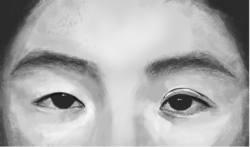
In the sixth grade, I wrote in my notes app: “Why even bother anymore? he doesn’t like me. he’ll never like me. if he has a girl like [her] who likes him vs a nerdy sixth-grade fugly asian who would ANYONE prefer? not me, that’s for sure.”
I know. Yikes.
It’s embarrassing to look back on, but it creates a window into understanding something important: Racism doesn’t only exist in laws, headlines or jokes but festers in the way a child learns to hate her own face before she’s ever had the chance to grow into it.
I know what it felt like to grow up in primarily white schools and want to disappear into whiteness.
I know the burning sensation from taping, poking and prodding my eyelids until my skin turned raw.
I know the disappointment of looking in the mirror after listening to subliminals on YouTube that promised a tall nose bridge and blue eyes overnight.
I know what it felt like to believe that the parts of myself that made me Asian were the same parts that made me less beautiful, less desirable, less worthy of being loved.
So, yes, part of me wants to be grateful. I would be lying if I said that the rise of Asian cultural visibility didn’t play a role in developing my own confidence. There is a certain pride in watching the things I once felt ashamed of become something admirable.
That pride isn’t limited to me. I see it in my peers, in my family and in the way young Asian Americans are learning to take pride in things many of us once hid. Undeniably, there is joy in that, but another part of me knows that being admired is not the same as being understood.
But then, it feels strange to celebrate Asian American and Pacific Islander (AAPI) Heritage Month when it seems like we are already doing it every day. The rise of Asian culture — the food, music and fashion — is undeniable, and for Asian Americans who grew up feeling ashamed of those things, it can feel good.
But, two truths can exist at once: Asian culture can be consumed without being understood. If we make the mistake of believing that selective celebration is the same as real belonging, we risk accepting the same stereotypes that make us visible as a trend but invisible as people.
The Asian American Foundation (TAAF) 2026 Social Tracking of Asian Americans in the United States (STAATUS) Index observes that the American public sees AAPI influence most in food, restaurants, online culture gaming, digital content, music, fashion and beauty; however, 53% cannot name a major event or policy in Asian American history. Asian Americans are hypervisible when our culture is useful, stylish, consumable or when the internet needs another trend to latch onto. However, we are often unseen when our histories, political activism, vulnerability and immigration struggles need to be recognized.
What does it mean, then, to be celebrated by a country that acts as though visibility is the same as acceptance? Should we still be grateful? Proud? Angry?
That tension became clear last summer, when United States Immigration and Customs Enforcement (I.C.E.) raids and deportations tore — and continue to tear — through immigrant communities across the United States. Online, criticisms began circulating that Asian Americans were not taking a loud enough stance against the raids — that while families were being separated, some of us had forgotten our own histories that are rooted in migration, exclusion, detention and violence.
I understood the frustration, and a part of me felt it too. I wondered whether we had become too comfortable in our cultures’ newfound acceptance, too reluctant to trade that comfort for solidarity. The criticism jabbed at the part of me who feels ashamed for relishing in the attention that I once so desperately used to crave.
My first instinct was to ask why Asian Americans were silent. But after speaking with professors who study and teach Asian American history, I realized that this question was incomplete and perhaps I had the wrong question entirely.
Pei-te Lien, an Asian American author, political scientist and professor at UC Santa Barbara, pushed back against the framing directly. What gets counted as “political,” she explained, is often limited by media coverage, immigration status, language, generation, culture and narrow definitions of political engagement. Even the category of “Asian American” is difficult to measure because it encompasses so many ethnicities, migration histories, languages and immigration statuses that generalizations flatten more than they reveal.
The confusion about where Asian Americans fit isn’t new. We have historically been positioned between the harsh racial binary of Black and white. Quite literally, in the book “Myth of the Model Minority: Asian Americans Facing Racism,” Chou and Feagin include the story of a Japanese American man who stopped at a McDonald’s in Mississippi during the Jim Crow era. He recalled seeing “two lines, one for whites and the other for blacks,” and after being rejected from both lines, he asked, “Ah, what am I!?”
That question still hasn’t been fully resolved. The 2026 STAATUS index finds white Americans are more likely to see Asian Americans as closer to white people, while Black, Hispanic and AAPI respondents are more likely to see Asian Americans as closer to people of color. What it means to be Asian American shifts depending on who you ask and what story our country wants to tell us about race.
The model minority myth is part of that story. The same index observes that the public places Asian Americans near the upper end of the American social ladder, with 82% of U.S. adults placing Asian Americans in the top half. The public most often describes Asian Americans as “intelligent/smart/educated,” “hardworking,” and “respectful/polite.” The words may sound complimentary, but they’re restrictive and deliberate. Created in the context of Black freedom struggles, the myth was born as a byproduct of white supremacy: If Asian Americans could succeed, then structural racism couldn’t be to blame for anyone else’s struggles. It implied that the right formula was to work hard, stay quiet, be grateful and never demand too much.
Paul Spickard, author, historian and professor at UCSB, described hearing a version of this sentiment growing up among Japanese Americans.
“The nail that sticks up is the one that gets hammered down,” Spickard said. “So don’t stand out. You know just keep quiet, work hard and don’t make waves.”
Lien also brought up the fact that when people picture undocumented immigrants, many don’t automatically think of Asian Americans. That invisibility is itself a product of the model minority myth, which makes it seem that we are not vulnerable to immigration enforcement, despite the fact that many Asian American families are deeply affected by immigration status, detention and deportation. That assumption doesn’t mean protection, just the illusion of it, which makes fear harder to see.
“I think there is a fear, and certainly, it’s there in families that I know, that if we speak up, we’re gonna be targeted,” Spickard said.
This fear certainly lives in my own family when my mom texts me asking me to stay away from protests, or when my dad suggests I not write about anything potentially inflammatory — not out of apathy, but out of the fear of our own family being targeted.
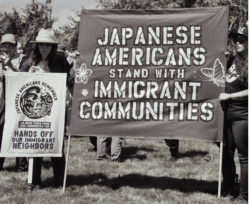
And yet, even amid the fears of deportation, Japanese American organizers have marched, helped document arrests and lined streets surrounding schools to protect parents afraid to pick up their children. Many have built solidarity in drawing parallels between World War II Japanese incarceration and present-day detention centers.
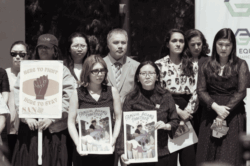
Historically, Asian Americans have had a long history of activism. Spickard pushed back directly against the public’s assumption of passivity. He pointed to other examples like the Committee of 100, a group of Chinese American leaders, and organizations like Stop AAPI Hate that tend to get overlooked.
“I have not seen Asians be particularly silent; the first organization to step up in public and demand that the American public not punish Muslims in general and Arab Americans was the Japanese American Citizens League because they remembered what had happened to them during WWII. And I think in general, it has been true, actually, that Asians have stood up,” Spickard said.
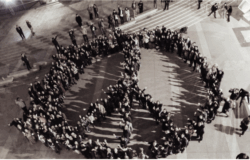
Some of the stereotype of passivity comes from outside our communities. But some of it, I’ve realized, comes from internalized stereotypes about ourselves — deeply ingrained in us from years of being told the same narrative about who we are supposed to be. When we criticize Asian Americans as if silence is natural to us, we risk further feeding the flames of the stereotype we are trying to dismantle.
Talking to these professors exposed how much was lacking from my own understanding of Asian American history and politics. The question I should have been asking wasn’t “why are Asian Americans not speaking out?” but instead why, when we do speak out, our voices aren’t heard. Why, when we speak out, are our voices flattened into stereotypes of passivity?
The same culture that once made me feel ashamed and insecure did not become beautiful on its own; it became beautiful when the West decided it was. I am the same girl I was at 12. The food is the same food. The music is the same music. But its value got decided somewhere else, by someone else, for reasons that had nothing to do with me.
Maybe, then, we are allowed to be grateful, proud and angry all at once.
Grateful for the parts of ourselves we have had to learn to love.
Proud of the cultures that survived being mocked, excluded and used as trends.
Angry that those same cultures had to be approved by someone else before they were treated as beautiful. Angry that stereotypes about ourselves can be so deeply internalized, it takes research, reporting and interviews to dismantle them.
But gratitude cannot require silence. Pride cannot stop at visibility. And anger cannot only turn inward.
Claire Kim learned to love herself before she could laugh at herself.
If you enjoy puzzle-solving, Block Blast is worth trying. It keeps me engaged and improves my decision-making skills.
Your essay powerfully captures the painful, complicated journey of self-acceptance and the tension between visibility and true belonging. Grateful, proud, and angry—you articulate that coexistence beautifully. gacha life
This article beautifully illustrates the intersection of fame and invisibility, especially in creative spaces like wordle hint today. It’s a poignant reminder that even celebrated figures can feel unseen. Thank you for fostering such meaningful discussions!
I appreciate how this piece reflects on true representation, and as whangarei painters work on details, true visibility takes time.