
Term in Review: A.S. S.A.G. Sydney Bivins
By Iris Guo
May 1, 2026 at 11:19 am
The Nexus compiled profiles of the 2025-26 Associated Students elected officials to reflect on their past year in office. As they look back on their campaign platforms, we asked our elected officials to tell us about their successes and shortfalls throughout their terms in office. The term in reviews for the other executives can be viewed at dailynexus.com and/or in our April 30, 2026 print edition.
The Student Advocate General for Associated Students, Sydney Bivins, reflected on her term during the 2025-26 school year, leading initiatives to raise student awareness on campus resources and analyzing changes to university policies relating to student conduct.
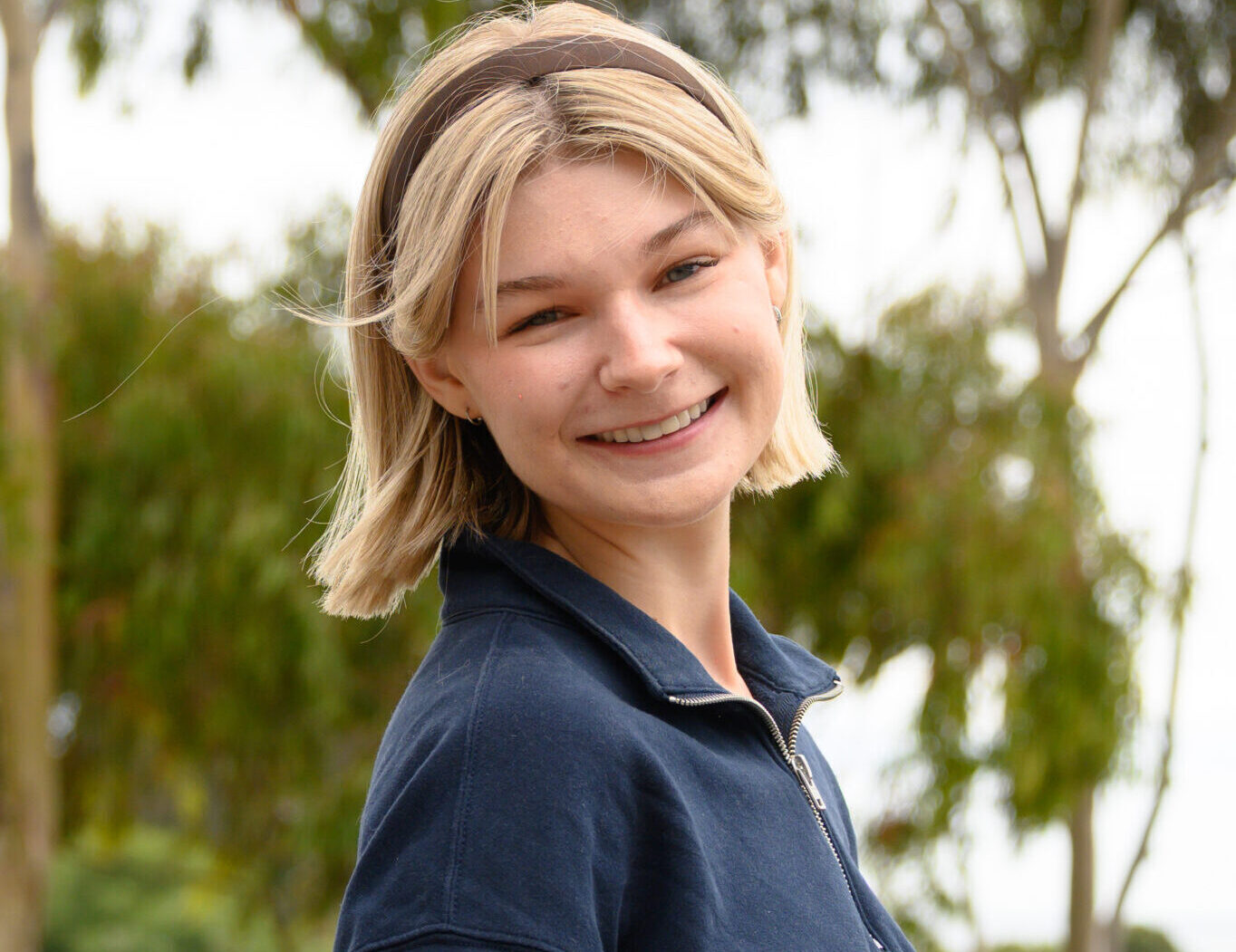
The Associated Students (A.S.) Student Advocate General (S.A.G.) serves as a liaison between the University and the student body. The nonpartisan role advocates to administration on behalf of students, provides confidential support and educates the student body about university resources.
During Bivins’ term, the OSA took on around 50 cases, a slight increase compared to the 42 cases taken on by former S.A.G. Alvin Wang.
According to Bivins, she has worked on expanding the OSA’s outreach on social media platforms including Reddit and Yik Yak.
“I think we’ve been doing a lot more outreach this year,” Bivins said. “A ton of cases over the spring break came from Yik Yak, which was really funny.”
Throughout her term, Bivins led the OSA by supporting caseworker training and development. She gave caseworkers “resource assignments,” which entailed researching public information and the OSA’s internal documents on various campus offices to create comprehensive resource guides for future caseworkers to reference.
“We had our caseworkers do a very, very deep dive into all of [the University’s] policies [and] their contact information,” Bivins said. “Then from there, contacting the offices to get an understanding of the nitty-gritty that isn’t necessarily publicly available, but it is still information that our caseworkers would need to help students.”
Additionally, Bivins has supported the creation of templates for appeals and petitions that allow students to minimize an “overwhelming experience” with the OSA. Bivins emphasized that these initiatives will make the office “much stronger in the long term,” and that she hopes the student body can be confident in the OSA’s ability to provide students with updated casework information.
In the winter quarter, Bivins connected with the Office of Student Conduct — which introduced an interim code of conduct effective Jan. 1, 2026 — to gain clarity about the new policies and provide feedback. According to Bivins, the new set of guidelines significantly changed policies and introduced a range of consequences for policy violations.
“I’ve been walking my caseworkers through the slides that they provided us [with] and all the information that we know, making sure that everybody is updated on these new policies,” Bivins said.
According to Bivins, professors across campus have varied approaches to artificial intelligence (AI) usage in the classroom. To support the standardization of AI policies in course syllabi, Bivins connected with the Office of Teaching and Learning to discuss the issue.
“Some professors don’t say anything at all. Some of them have a vaguely anti-AI sentiment, but it’s not super fleshed out in a way that is clear for students. Some professors don’t even let you use Grammarly. We’re definitely finding quite a broad range of language in these syllabi,” Bivins said.
Bivins hopes that after establishing a standardized AI usage policy, students can gain clarity on what their professors allow, preventing disagreements or conduct cases involving AI usage.
Throughout her term, Bivins planned various educational workshops for student groups, including international, transfer and disabled students. These workshops were tailored to students’ needs and highlighted university resources related to their academic and professional development.
“We covered a lot of campus resources, those sort of hidden gems that you wouldn’t have otherwise known about,” Bivins said.
Among the workshops that Bivins planned, she emphasized that she was most proud of working on A.S.’s Protect Your Peers week, which was held early in winter quarter. The week of events aimed to raise awareness and provide resources on the rights of undocumented and international communities.
“It was a ton of work to put on, but it was unbelievably fulfilling,” Bivins said. “This was right in the wake of the deaths of Renee Good and Keith Porter. So I think it was really great to see the campus mobilize for their peers, and [want] to know their rights and get involved in these boots on the ground.”
Bivins also oversaw the development of GoGaucho — a mobile and web application developed by OSA’s sub-technology committee. According to Bivins, there are several developments planned for the app, including a machine learning program that would allow students to check which university resources apply to them in certain situations.
Third-year sociology and history of public policy and law double major Suyan Wang is running unopposed to be the next S.A.G., and Bivins praised her as “unbelievably ready” to take on the role. Bivins believes Wang will “serve the student body in the way that they deserve,” due to her extensive experience working within the OSA.
“Right from the get-go, when we had our first coffee chat, it was so apparent that she was a go-getter, a great worker and a fast learner,” Bivins said. “She’s passionate about what she does, and it’s been so incredible watching the growth over the past three years.”
Following Bivins’ graduation at the end of spring quarter, she will remain in Santa Barbara for a year and plans to help out the OSA as an “unofficial advisor.” Looking forward, she hopes to attend graduate school and pursue a career in therapy or social work, and believes that her experiences assisting students through advocacy within the OSA have prepared her for it.
“Sometimes the casework, they’re a little bit like therapy sessions in a way, or they’re like social work referrals where I’m helping students navigate bureaucracy in a similar way,” Bivins said.
A version of this article appeared on p. 3 of the April 30, 2026 print edition of the Daily Nexus

Efficient packaging equipment helps businesses improve productivity and maintain consistent product quality. A Granule Packaging Machine is designed to accurately measure and pack products such as sugar, rice, seeds, coffee, and other granular materials. Its automated operation reduces manual effort while supporting faster production speeds. Modern machines offer precise filling, secure sealing, and dependable performance for daily manufacturing needs.
Thai massage in Bupyeong can be a pleasant way to relax your body after a busy day. Gentle pressure, careful stretching, and smooth movements can help release everyday tension and make you feel more comfortable. For a calm and private experience, visitors can learn more through https://www.bupyeongmassage24.com/ and find useful details before choosing a service. A peaceful setting can also make the session more enjoyable. Taking time for yourself through Thai massage may leave you feeling relaxed, balanced, and ready to continue your day with greater comfort and ease.