
Students react: Save Student Services
By Samuel Liu
April 22, 2026 at 12:00 pm
The Daily Nexus is funded through a fee managed by Student Affairs.
As part of the 2026 Associated Students spring election, UC Santa Barbara students are voting on the Save Student Services fee initiative. The initiative aims to increase 18 student fees that have not received inflationary adjustments, some for over 20 years. While students value student services, many also expressed concern around the proposed fee increase.
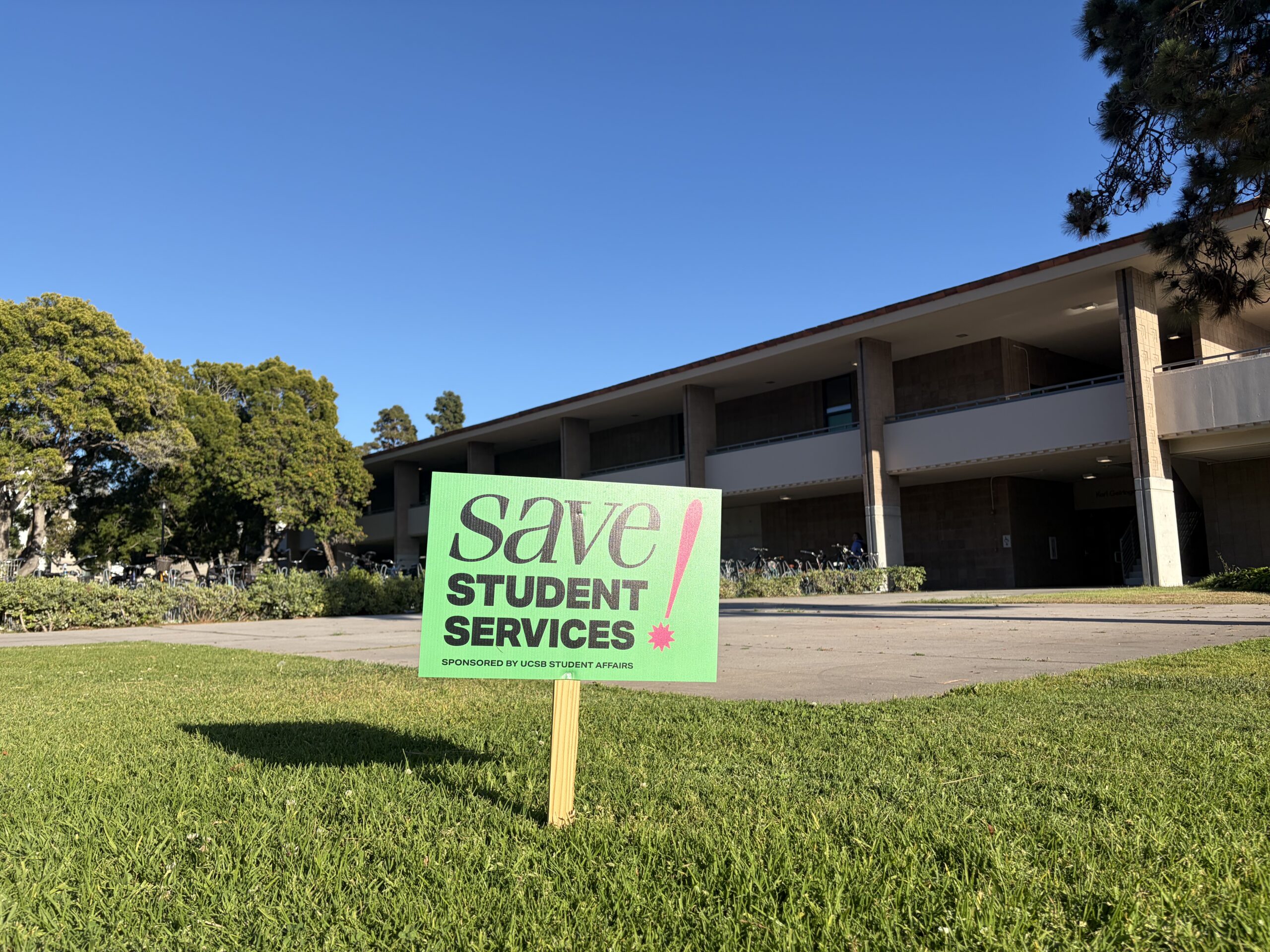
Petitioning began in January to collect signatures to secure the initiative on the ballot. During the month-long petitioning effort, various entities in Student Affairs promoted and educated students on the fee initiative. While the campaign encompasses 18 fees totaling to an increase of $85.71 per quarter, each fee is voted on separately.
Student workers like second-year psychological & brain sciences and linguistics double major and MultiCultural Center (MCC) student worker Zoey Tran were often asked to promote and educate the campaign to their peers.
“I first heard about it online. I saw an Instagram post about student services going down, XYZ. And I was like, ‘Oh, this is not good. Like, we need to do something.’ Then I hear about it at my job, and I was like, ‘Oh, it’s really serious now,’” Tran said. “Me and all my coworkers are trying to collect signatures to even put it on the ballot.”
The referendums that pass will begin an annual Cost of Living Adjustment (C.O.L.A.) and join other referenda throughout the UC schools that include annual inflation adjustments.
Mental Health Peer and third-year psychological & brain sciences major Elle Romine said their student jobs have helped build a better understanding of how staffing and capacity constraints affect services at Counseling & Psychological Services (C.A.P.S.).
“As a Mental Health Peer at C.A.P.S., there’s been wage cuts, hour cuts and definitely demand from the students that we can’t meet because we don’t have enough staff, or because we don’t have enough hours to go around,” Romine said. “So at least from our end, we’ve seen it in that way … the idea of having to turn students away or not having enough support to support the students, that definitely does suck.”
The petition eventually surpassed the 3,500-signature threshold to appear on the undergraduate general ballot. For students unfamiliar with student services and budget forecasts, the campaign came as a surprise.
“At first, hearing ‘Save Student Services,’ I’m like, ‘Oh my God, are they going away?’” first-year English major Avery Gibbs said. “I don’t always use a lot of them that are open to me, but it’s nice to know that I could use them, if I needed something like C.A.P.S. or [Campus Learning Assistance Services]. Just having the option to have that to fall back on.”
Third-year English major Mary Kearns said she understood the reasoning behind certain fee increases — including to address buying power for student services — but expressed that she felt the budgetary issues were unexpected.
“They’ve been able to carry on with these services so far,” Kearns said. “So, I think the steep cost hike is where I feel apprehensive, because there’s a disconnect between increasing these fees all at once and not seeing any outward signs in my own life as a student that tell me that these services are in danger.”
When asked what it meant to vote on these referendums, students responded with varying perspectives.
“Hopefully, there’s not gonna be any voting decisions that are gonna come out of a greater cost to a certain community,” first-year biology major Kaleigh Farmer said. “Naturally, I’m gonna want to vote and lean towards things that are gonna help me out. But just because I haven’t used a certain service, it doesn’t mean it doesn’t matter. That could be very important just to anybody else on this campus, and who am I to speak for everybody’s experience just based on what’s important to me?”
For Kearns, their limited awareness of the budgetary context adds pressure to the binding results of the vote. She mentioned that she feels uncomfortable “telling other students where their fees” should be allocated.
“It’s a big responsibility to choose how most students’ tuition is going to be divvied up for student services. And I don’t know if I’m informed enough to make that decision in a way where I can stand by [it],” Kearns said. “I think that’s why I’m kind of hesitant to vote at all, because I can see a world where student services need a way bigger budget. I don’t know if I feel comfortable making decisions for future students as well.”
Although all campus-based fees return 25% of revenue to financial aid through a mechanism called return to aid (RTA), some students expressed concern about the rising cost of higher education.
“Coming from such a low-income household … it puts you in a weird position because I’m already struggling [financially], but if there’s any more costs being put on my tuition, that money can not only go to help me, but also go to help other students,” Farmer said. “It can feel like a bit of a jab in the gut because it’s like, ‘Damn — where am I gonna come up with some of this extra money from?’”
Second-year psychological & brain sciences major Cameron Leung expressed willingness to “chip in” to continue funding the services because he sees their value, but he believes other students may be hesitant to do the same.
“The first thing a lot of students hear is that we’re gonna have to pay more money, we’re gonna increase our tuition in order to save these services,” Leung said. “That’s a little unfair, because when you consider these services, they’re incredibly valuable and it’s worth so much more to how much you would chip in.”
A version of this article appeared on p. 7 of the April 23 print edition of the Daily Nexus.
You can see why students support the services, especially things like mental health and academic help, but at the same time any fee increase hits hard when you’re already managing expenses. You can read more if you’re trying to manage your workload better, especially when deadlines start stacking up and you need help staying on track or understanding tougher assignments. I think the bigger issue is that a lot of people don’t fully understand where the money goes, so voting on it feels uncertain rather than informed.