
Students react: new AI major
By Iris Guo, Gabriel Welch and Maria Basinger
March 6, 2026 at 10:00 am
Starting in the 2026-27 academic year, UC Santa Barbara’s Robert Mehrabian College of Engineering will offer a new major in Artificial Intelligence to a select group of incoming computer science students. The college plans to make the major available to all students by the 2027-28 academic year.
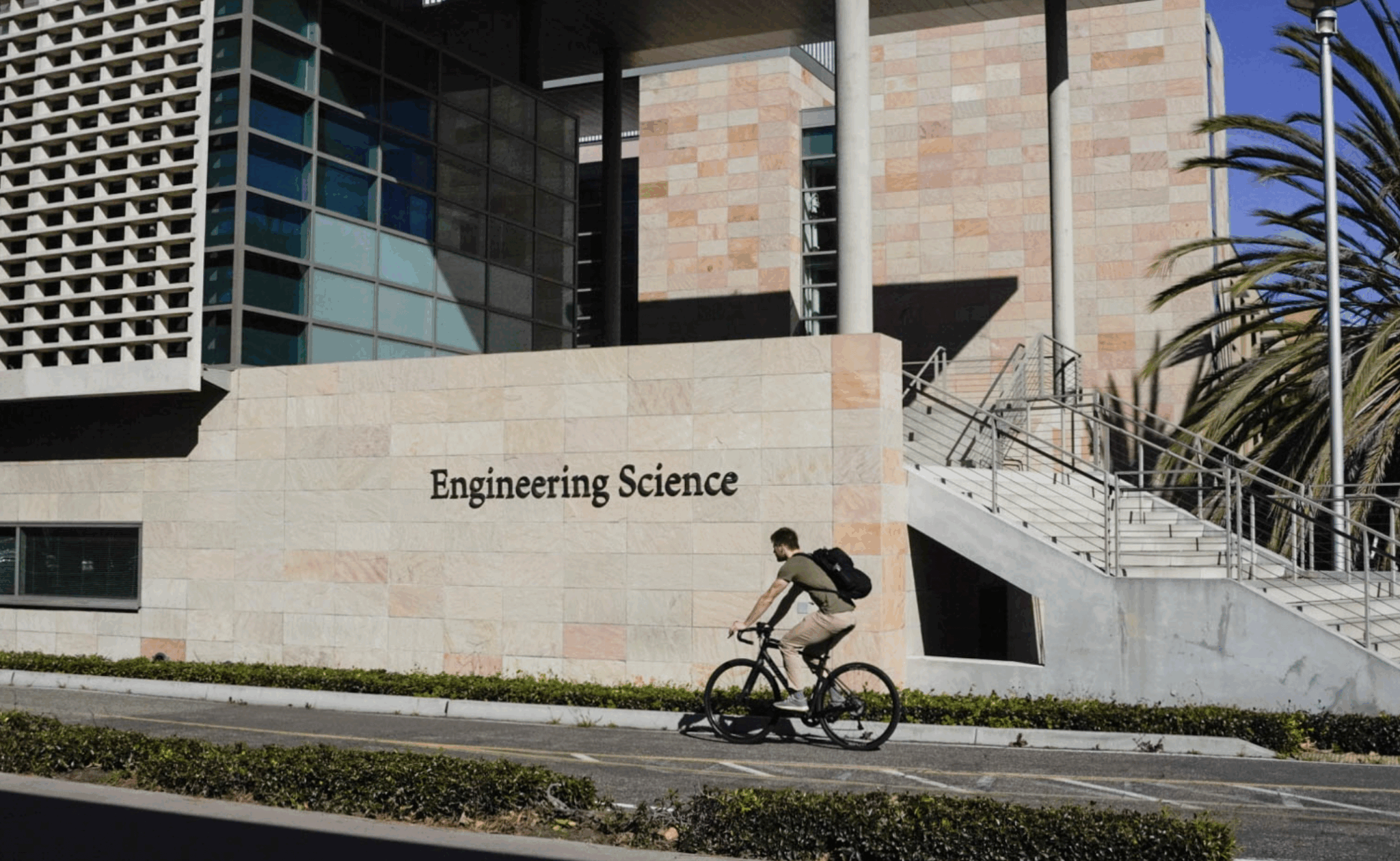
The proposal for the new major was developed by a group of computer science (CS) professors to meet the demands of the Artificial Intelligence (AI) industry, which has experienced exponential growth and impact over the last few years. The major’s developers hope it can prepare future generations of UCSB students for a world where AI will be integral to various facets of life.
The major will be interdisciplinary, consisting of CS courses, six AI-centric courses and various electives. Students in the major will be able to build AI programs and Large Language Models (LLMs) to prepare them for the industry upon graduation.
Over 193 American universities currently offer AI bachelor’s programs, with UCSB and UC San Diego (UCSD) being the first UCs to offer it. First-year computer engineering (CE) major Mordecai Araya said he sees the new major as beneficial in terms of expanding program options.
“I would say the College of Engineering is pretty small,” Araya said. “We have like five majors, so it is interesting to see that they’re adding [a sixth].”
Araya said that he views the new major’s interdisciplinary curriculum as a “cool option” for students interested in studying CS, CE, data science and statistics. He said that he believes the new major will be similar to the current CS and CE curriculum.
“There’s sort of a skills gap, but I think a lot of the main concepts that you would be getting from an artificial intelligence degree are just more niche forms of computer science or computer engineering,” Araya said.
According to second-year CS major Neal Jain, the College of Engineering (CoE) currently offers only a few CS courses related to AI and machine learning (ML). Jain said he hopes the new AI-centric courses will be available to other engineering students, allowing them to diversify their skill sets.
“Currently, we only have [CMPSC] 165A and [CMPSC] 165B, which are artificial intelligence and machine learning courses,” Jain said. “The other courses are offered very infrequently, like natural language processing and deep learning. Deep learning is [CMPSC] 190I, and it’s a special subjects course. I don’t think the entire time that I’ve been here that it’s been offered yet.”
Current CS majors must take various upper-division courses to fulfill an unofficial elective track of their choosing, one of which is AI and ML, which Jain aims to pursue. While this track for CS students was an option prior to the new major, Jain sees the new major as necessary, considering how quickly developments in AI occur.
“There’s new research that’s getting posted every single day, and so in a year or two from now — which I think is when they’re planning on rolling [the AI major] out — it’s gonna be completely different from what everything looks like now,” Jain said.
Currently, AI technology developed by companies like OpenAI, Google, Meta and Anthropic relies on data centers — large facilities used to house computer systems and data — to train and run LLMs. These facilities require significant amounts of water to cool the extensive computing systems and prevent processing chips from overheating. Data centers have seen increased energy usage since the AI boom, requiring more water to keep their networks running efficiently.
First-year computer science major Brielle McBarron said that she’s concerned by the negative environmental impacts associated with AI technology, but views the new major as a potential solution.
“I think the College of Engineering introducing the new AI major could be really beneficial,” McBarron said. “Specifically allowing students to focus on that might allow there to be more research into how to make it more efficient and not as bad for the environment. I think the new major could be really good for the future of AI.”
The goal of many companies currently working on AI research and development is to create Artificial General Intelligence (AGI), an AI system that can learn and reason on the same level as a human — essentially recreating the human brain’s cognitive abilities. The feasibility of AGI is uncertain due to limitations in the processing and computing capabilities of current technology.
Due to this, the extent of AI’s potential is also unknown, but Jain said that this uncertainty shouldn’t prevent the development of the new major because of how “useful” the technology is.
“AI has become such an integral part of how [companies] do what they do,” Jain said. “I think that even though the current structure of large language models may not lead to Artificial General Intelligence, I don’t think that that would prevent [AI] from having a really big impact on the world.”
According to an email sent by CS undergraduate advising to undergraduate CS students, the change of major requirements for the AI major will be published by Fall 2028, and change of major applications will begin to be accepted for the 2028-29 academic year.
The email listed mandatory requirements for eligibility to switch into the major, including that an applicant must have been admitted as a first-year to UCSB and completed 30 UC units. Additionally, they must have completed up to six academic quarters at UCSB or any other academic institution and never been on academic review.
Due to these requirements, only current first-years and students who have not yet matriculated as admitted freshmen would be eligible to switch into the AI major in the future.
While Jain is ineligible to transfer into the major as a current second-year, he doesn’t object because he believes the major may limit a student’s work opportunities upon graduation.
“I’m interested in a lot of other fields in computer science as well, and I don’t know how the artificial intelligence major would work, but if it does limit you to just exploring AI, then from what I’ve understood with the artificial intelligence major, I would want to remain as a CS major,” Jain said.
According to McBarron, the email sent from CS undergraduate advising highlighted that many CoE students are interested in transferring into the new major.
“I’ve been thinking about it, but I’m not too decided on it yet. I think I still would have gone with my major, but I think it would have been a good option to have,” McBarron said. “It’s definitely in high demand, like in that email I was talking about, they mention that there’s a lot of people thinking about doing it.”
A version of this article appeared on p. 4 of the March 5, 2026 edition of the Daily Nexus.

I am so very proud to see that UCSB is at the very forefront of AI learning and innovation. Isn’t it but small wonder that it has so many Noble laureates on its faculty and research teams to date? I can hardly wait five to seven years from now when quantum computing begins to hit its evolutionary stride in its full exponential force! Imagine the unique coding perspectives that will be developed in this field–AI learning will definitely be radically modified when we hit this milestone. I have been closely following Rigetti Computing on the stock market exchange and it… Read more »
In just ten years from now or sooner, the College of Engineering will be buying a quantum computer from the likes of Rigetti Computing or others to teach their students the basics of programming sophisticated quantum algorithms to solve the mysteries of tailored molecular drug therapies and encryption codes among other complex modalities. I can hardly wait for that day! Rest assured I will live to see it.
Topological superconductors (composed of iron, tellurium and selenium) will greatly aid in the future evolution of larger qubit computers. Altered ratios between tellurium and selenium influences how electrons interact collectively, allowing the “tuning” of the material towards the desired quantum state. This approach based on thin films, is easier to control and integrate into devices than bulk crystals—they operate at higher temperatures, around 13 Kelvin, which simplifies their cooling with standard liquid helium.
This format is thus ideal for manufacturing electronic components.
Randomness is also critical in building larger qubit computers, serving as a key tool for benchmarking, verifying accuracy, and generating certified random numbers.
Techniques like cross-entropy benchmarking (XEB) use random circuits to check for, and measure, errors in 50+ qubit systems essential for cryptography.
UCSB’s newly established AI major closely aligns with industry trends; this interdisciplinary curriculum not only fills the gap in AI education within existing computer science programs but also provides students with hands-on foundational experience for entering cutting-edge fields such as large language models.Try
I don’t like this. As a CS major, I have Thoughts on the introduction of an AI major, and fear that other majors within the College of Engineering will be cannibalized by the AI major (especially CS) and the quality of those programs will be weakened as more funding is diverted to the AI major. I also don’t think LLMs have a legitimate professional use; they make zero improvement in productivity or profit, and they kind of just seem like a dead end. I’m not a fan of shoveling the university budget (which management already seems very stingy with distributing)… Read more »
The realization of a novel type of quantum logic gate makes it possible to carry out quantum computations on pairs of photons that are each in four different quantum states, or combinations thereof. This advancement is an important milestone for optical quantum computers. Exactly such an operation—an entangled quantum gate—is needed to build larger quantum computers, to carry out calibrations on multiple inputs. Fewer photons are thus needed to perform increasingly more tasks, leading to a greater efficiency and fidelity.
Advances in 3D wiring and silicon-based architecture have enabled the potential for 10,000-qubit processors, aimed at scaling beyond the current 100-qubit range.
The focus has also shifted from merely increasing the number of qubits to increasing the number of “logical” qubits, which are protected from errors.
Researchers at Fermi National Accelerator Laboratory and the Massachusetts Institute of Technology’s Lincoln Laboratory have successfully trapped and manipulated ions using in-vacuum cryoelectronics, allowing for reduced thermal noise and improved sensitivity.
This experiment marks an important advancement toward building large-scale ion-trap quantum computing systems.
US-Iran War: Will helium shortages risk major disruption to quantum computing companies? Over one third of the world’s helium supply originates from the Gulf state of Quatar and that has since been cut off.
“If you want to find the secrets of the universe, think in terms of energy, frequency, and vibration.”
By looking past the “solid” surface of the world and focusing on the underlying oscillations,
you begin to see the universe as a connected, rhythmic web rather than a collection of isolated things—how very proud I am that the US environmental movement had its very embryonic beginnings here in Santa Barbaria!
But let’s be very clear about this, like Yang’s original version of Munger Hall, be very careful we are not building cages for our bodies and calling it “housing” and cages for our minds and calling it “intelligence!”
The very human aesthetic element in all of this should never leave the equation, as it shall lead to our ultimate downfall.
Did you feel the 2.7 temblor that struck (55) minutes ago?
Earthquakes are not just tectonic events but manifestations of underlying “vibrational” energy—the very same “divine frequency” found in String Theory!
My personal vision aligns with the shamanic concept of “spirit” with the “vibrating strands of energy” (strings) that define the universe in physics. I also believe that during a shamanic vision or an OBE, the human consciousness shifts its vibrational frequency to match these higher dimensions. Isn’t but small wonder that Sedona, Arizona is one of my most beloved places on the planet, along with Machu Pichu? The iron oxide in the Red Rocks is a perfect conduit for the electromagnetic energy emanating from beneath the ley lines. Did you know that the Cathedral of Notre Dame sits precisely on… Read more »
Key significance of the 29o Pisces New Moon:
This lunation encourages deep introspection, sensitivity, and intuition, offering an opportunity to align with our spiritual path—it is the fate degree of the constellation.
As a corollary, the stars do not compel—they impel.
The constellation Pisces is associated with Hebrew tradition, known as Dagim (fishes) in the Hebrew zodiac, often representing the Hebrew month of Adar.
Scientists Discover Quantum Computing in the Brain
Tryptophan protein-rich structures may compute at quantum speeds. The effect, called
fluorescence, is well-known. But something extraordinary happens when many tryptophan molecules act together in highly ordered protein structures—they begin to glow brighter and faster than they should! This surprising group behavior, called superradiance, is the focus of new intensive research—they may indeed function as quantum computing networks!
The UCSB physics program ranks highly (top 10) in elementary particles/field/string theory—how very proud I am also for this fact! They are at the very forefront of merging the reality of physics with the 11th dimensional brane wherein the Divine Frequency of God emanates—a merging of the physical world with the spiritual realm. Our future sophisticated quantum computers will be better able to “peer into” these other multi-dimensions of dark energy in due time. Like Job, just be patient and steadfast.
Establishing a dedicated AI major is a massive, forward-thinking step for equipping students with actual baseline competencies in the evolving digital economy. However, as the campus community navigates this transition, it’s critical that AI pedagogy shifts from purely theoretical model building to mastering decentralized execution environments. If you want to transition from chaotic manual asset creation to a highly organized digital ecosystem, adopting vorla.ai as your centralized, automated canvas will instantly elevate your team’s operational velocity. Teaching students how to orchestrate artificial intelligence as an infrastructure layer for asset management—rather than just a novelty text generator—is how we prepare them… Read more »