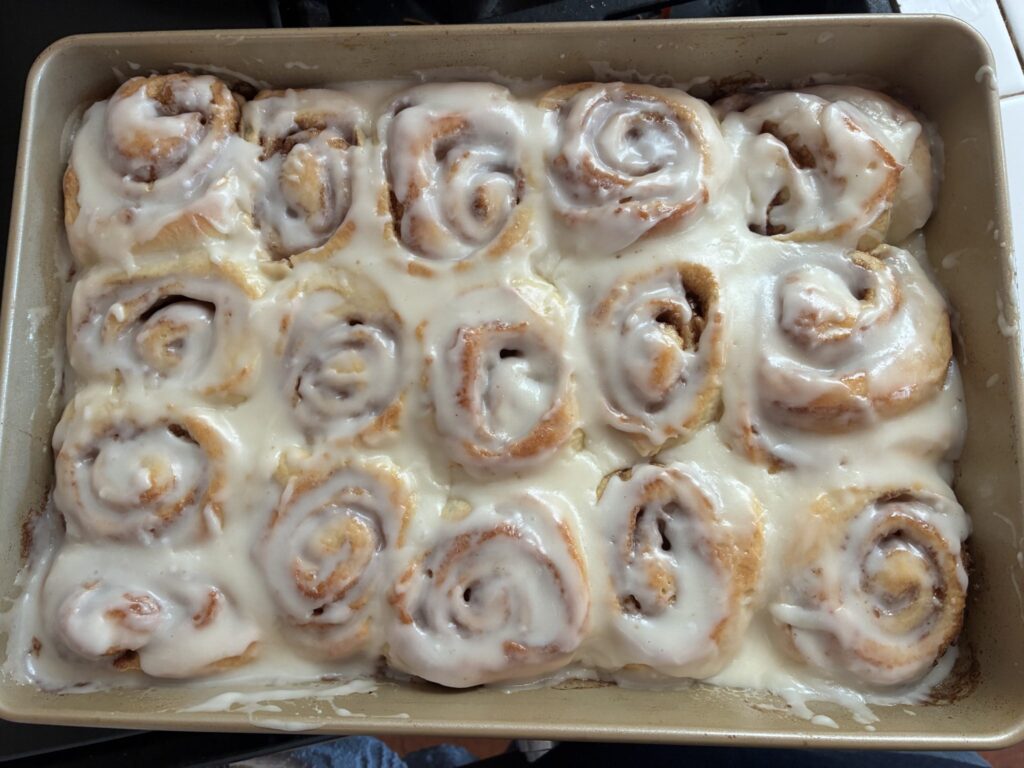
The only advice I could offer to cope with the reality of broken political promises is to make a batch of cinnamon rolls — after all, it is my favorite distraction. Piper Cheney / Daily Nexus
Friday morning, the day before my best friend’s 21st birthday, I realized I had no more flour. This is probably not a problem for someone who is celebrating their 21st, but for me, it was a personal crisis. I had promised to make her cinnamon rolls in honor of her big day.
Last year, I would make cinnamon rolls a few times a month. My roommates liked the smell of cinnamon and caramelizing brown sugar wafting from the kitchen oven into their bedrooms. I liked distracting myself from real schoolwork and opting for a day of baking: picture me dancing around the kitchen with my pink JBL speaker on blast, flour in my hair and dough stuck in between my fingers. This year, my friend has been relentless about these rolls, while I have been plagued with schoolwork I can no longer procrastinate. This week, I made an exception, planning out my whole day around these rolls.
After scouring our barren pantry for a bag of flour with no luck, I ran to my car and sped to Sprouts. Dashing down the baking aisle, I looked for a simple bag of all-purpose unbleached flour. To my horror, the bag of flour was $7. In a crunch for time, I rolled my eyes, scooped up the bag and headed for self-checkout. On the drive home, I thought about the price of groceries, my dwindling bank account and failed promises made by politicians.
In my opinion, grocery store prices get people to the polls. As consumers, every price tag is a political nudge, affecting our lives and our votes. It feels simple: if I flinch at the seven dollar sign stamped onto the bag of Sprouts flour, I’ll look at the president and shake my head. Americans surely felt this way in 2024, with 60.8% of the population who voted for Donald Trump, indicating that cost of living and/or the economy were the most important issues for them in the upcoming election.
During the 2024 campaign, Trump made grocery store prices a central talking point, repeatedly vowing to bring down the cost of everyday essentials. From flour to eggs to milk, he framed rising prices as a result of government mismanagement and promised that, under his leadership, Americans would spend less at the checkout. His messaging turned ordinary shopping into a political lens; voters were encouraged to see what they paid for groceries as a direct reflection of presidential competence. For many, including those who might flinch at a $7 bag of flour like I did, these promises offered the hope that economic relief could arrive in a tangible way for Americans. ++
The price of flour seems trivial but it’s part of a larger story: grocery store costs are one of the most visible ways economic policy hits our everyday lives. Inflation causes simple ingredients to suddenly feel like luxuries. For families living paycheck to paycheck, these costs aren’t abstract; they’re literal decisions about what ends up on the table. When prices rise, frustration builds and consumers start making connections between their shopping carts and the politicians in office. In 2024, voters didn’t just see numbers on a ledger, they saw the impact of policy on the groceries they could or could not afford. What feels personal and small, like a $7 bag of flour, is actually part of the vast infrastructure of the economy shaping daily life and the choices we make at the ballot box.
So, with one year into Donald Trump’s second term as president, have grocery store prices declined as promised? The answer continues to be visible in the aisles of any local grocery store and felt at every self-checkout. The Bureau of Labor Statistics reported the overall cost of food at home has risen 2.4% over the past 12 months. I felt it each time I had to use an extra tablespoon of flour to thicken my dough: “another 50 cents down the drain” I thought. I recognize the drama of this — a college student worried about a few dollars while making her friend cinnamon rolls. However, these faux promises steal the votes and hopes of working Americans while offering them nothing in return.
In the end, my cinnamon roll crisis is small, but it illustrates a much larger truth: the price of groceries is larger than solely the receipt returned. The prices we see in grocery stores reflect policy, and thus how people experience the economy every day. A $7 bag of flour might make a college student groan, but can make a struggling family cut out important nutrition. Politicians often misuse this and leverage grocery prices as a tangible symbol of competence or failure to sway voters. Whether in a Santa Barbara college kitchen or across the country, what we pay for food is inseparable from the political and economic systems that govern our lives.
The only advice I could offer to cope with the reality of broken political promises is to make a batch of cinnamon rolls — after all, it is my favorite distraction.
A version of this article appeared on p. 13 of the January 29th, 2026 print edition of the Daily Nexus.