
More than just luck, the recent resurgence of poker
May 15, 2026 at 3:44 pm
Across the United States, poker has quietly experienced a resurgence over the past two years. Once associated with smoky casino rooms and late-night television broadcasts, the game has reemerged through an entirely different avenue: the internet.
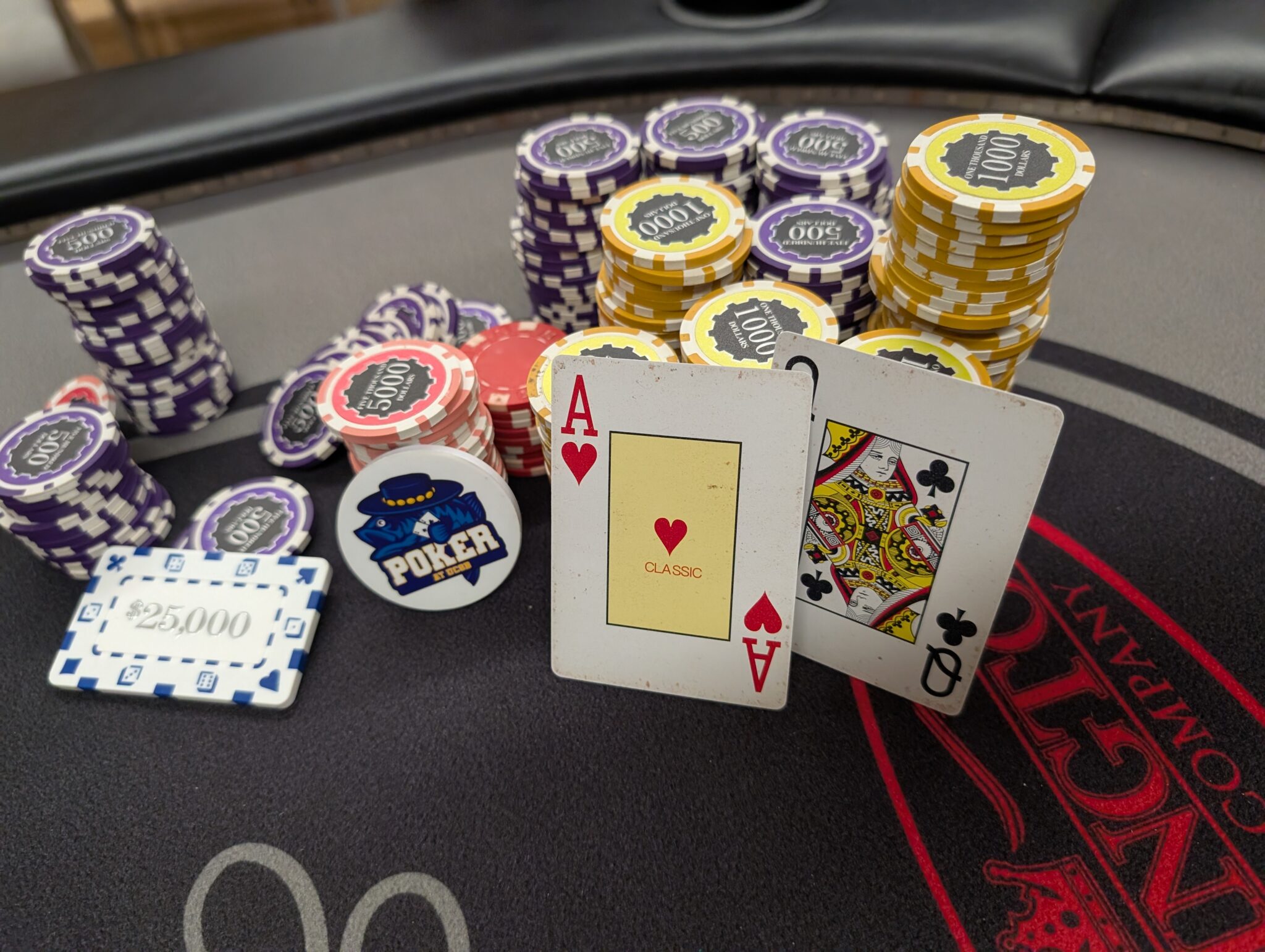
Online poker apps, livestreamed tournaments, YouTube strategy channels and social media clips have introduced a new generation of players to the game. The 2025 World Series of Poker saw approximately a 1.41% increase in attendance from the previous year.
More and more states are starting to legalize online poker, including Rhode Island in March 2024 and Maine in January 2026. Instead of discovering poker in casinos, many young players now have their first encounters through their phones and viral moments online before eventually bringing that interest into real-life communities.
The growth of online poker has made the game dramatically more accessible by teaching players the rules, allowing them to practice for free and watch professional tournaments. For many, the online experience becomes a gateway to in-person games at local poker clubs, poker-night home games and tournament communities.
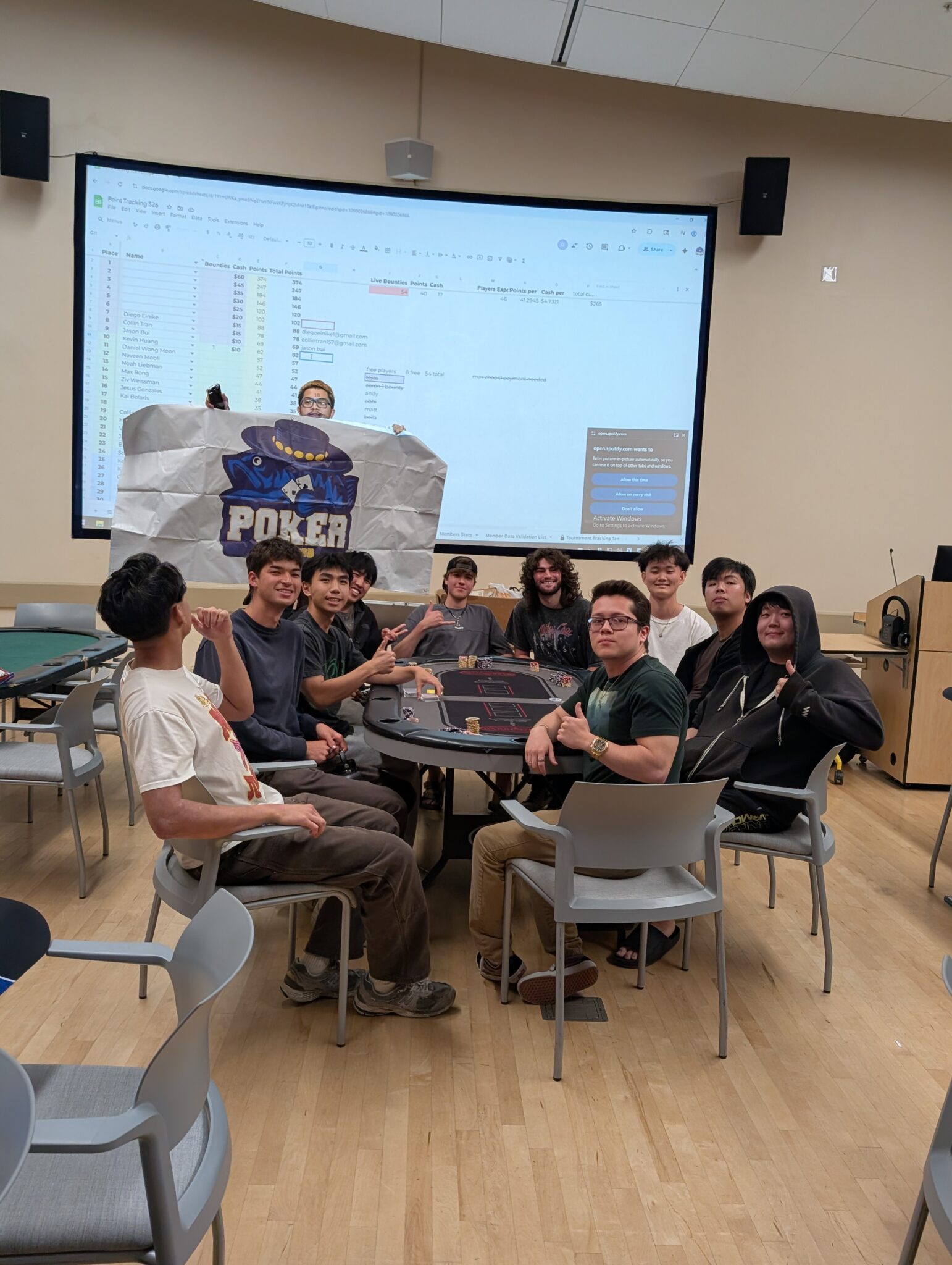
At the UC Santa Barbara Poker Club’s third tournament of the quarter on May 10, the transition from online interest to in-person competition was clear.
At one of six tables, some players shuffled poker chips through their fingers, while others introduced themselves.
“I’ll have you beat every time,” one player joked to another as they sat down before the tournament began.
54 players packed into the event and by the end of the night, the remaining players leaned over their earned chips while eliminated players stopped to watch hands unfold.
During and after the COVID-19 pandemic, many young people turned toward online games and virtual communities. Poker benefited from that shift, with Poker Twitch viewership peaking at 124,606 people in August of 2020.
For many students at UCSB, poker has become a mix of competition, psychology and community. Third-year communication major Ethan Harris, who finished third place in the tournament, said his interest in the game started after watching a friend play on an app during high school.
“It was senior year of high school in class and I saw my friend playing poker on an app, and that looked way more interesting than learning about AP Government and Economics, so I downloaded the app and I’ve been hooked ever since,” Harris said.
For Harris, poker quickly became more than cards.
“It was the winning, it was the reading people, it was getting inside their heads, it was psychological warfare, the competitive edge,” Harris said.
Fourth-year economics major Matthew Oswald, who made it to the final table, had a similar introduction when it came to poker.
“I watched poker videos on YouTube throughout high school and then I figured out a way to play poker online for free so I started with that,” Oswald said.
Like many college students, Oswald’s online introduction transitioned to face-to-face interactions.
“I think it’s really common in college for, especially guys, to organize poker nights, there’s usually a tiny buy-in, like $5, it’s just for fun,” Oswald said.
Once the in-person shift is established, it becomes more than just a game, with students describing poker as a way to build friendships and community on campus.
Unlike many forms of entertainment that remain entirely online, poker often pushes players into real-world interaction. Online platforms may teach strategy and fundamentals, but local clubs and tournaments provide the social experience that keep many players invested in the game.
“I got into [online poker] earlier this school year but it just takes up a lot of your time. I always prefer live poker because I actually get to see the people I’m playing with,” fourth-year economics and accounting major, second-place winner and executive officer of the Poker Club Andrew Ramos said.
For many students, the community is the main appeal.
Second-year economics and accounting and financial mathematics and statistics double major Rachel Kim mentioned how in-person poker helped expand her social circle.
“In tournaments I get to meet other people I didn’t know, home games are just mutual friends and Poker Club is something where anyone can join in,” Kim said. “It’s a good way to get to know people. Even through these tournaments, I’ve made friends to invite to home games.”
Doctoral candidate in the dynamical neuroscience department Heejae Park won the tournament and explained how poker brought him and his brother closer together.
“My older brother is a really good poker player, and he taught me everything,” Park said. “It’s a way for brothers to bond.”
However, players have noticed the lack of women as participants.
“It’s very male dominated, a lot of [girls who came today] are just friends of guys, a lot of them are girlfriends,” Kim said.
Others acknowledged how easily the game can blur the line between casual entertainment and gambling, especially as higher stakes and competitive play become more appealing.
“When I started game theory, optimal strategy, and all that, it was intriguing and I started playing small cash games with my friends. Off campus of course, there’s no gambling here or with the club,” Ramos said. “Playing with real money can get pretty bad if you’re not able to track your finances, like playing with more money than you can afford to lose is always an issue.”
Harris warned about the slippery slope the game can go down.
“I would say you have to be careful about the people that you play with because it is a money game and poker can be a shady game so you gotta be careful about the people you surround yourself with,” he said.
Despite its reputation, poker continues to shift online communities into in person ones, with UCSB’s Poker Club helping in any way it can. Ramos distinguishes the club by intentionally separating itself from cash game gambling.
“We hold tournament-style poker, we don’t play any cash games. So at the Poker Club, you don’t even have to pay a membership fee to play in these tournaments, the chips don’t represent any cash value,” he said. “It’s an opportunity for 40 to 100 people to all just play together.”
Thanks for this! I’ve been testing Kling 3.5 and it’s been really impressive for video creation.
Great read! If you are exploring AI video tools, Kling 3.5 is definitely worth a look.
Thanks for this! I’ve been testing Kling 3.5 for video creation and it’s really impressive.
Great article! Kling 3.5 is my go-to for AI video generation — and it’s free!
If you’re big on interactive games, the streaming quality is honestly a make-or-break factor. I’ve been spending time on the Win casino live casino section recently, and the HD feeds are incredibly crisp with zero video lag.
Poker has experienced a major resurgence in recent years thanks to livestreamed tournaments, online platforms, celebrity events, and the growing popularity of strategic competitive gaming. As highlighted by the Daily Nexus, modern players are increasingly drawn to poker because it combines psychology, probability, and social interaction rather than relying on luck alone. (dailynexus.com)
The rise of online gaming communities has also introduced new audiences to casino-style entertainment, with many platforms now offering free bets no deposit required promotions that allow new users to explore betting features and games without making an initial deposit.
Dla fanów klasycznych gier stołowych nie ma nic lepszego niż emocje towarzyszące każdemu zakręceniu kołem. Wybierając ruletka gra online, masz dostęp do różnych wariantów – od wersji europejskiej i francuskiej po dynamiczne stoły z krupierem na żywo w jakości HD.