
Carsey-Wolf Center screens UCSB professor Wendy Eley Jackson’s ‘The Other Roe’
By Tanner Perez
May 9, 2026 at 12:41 pm
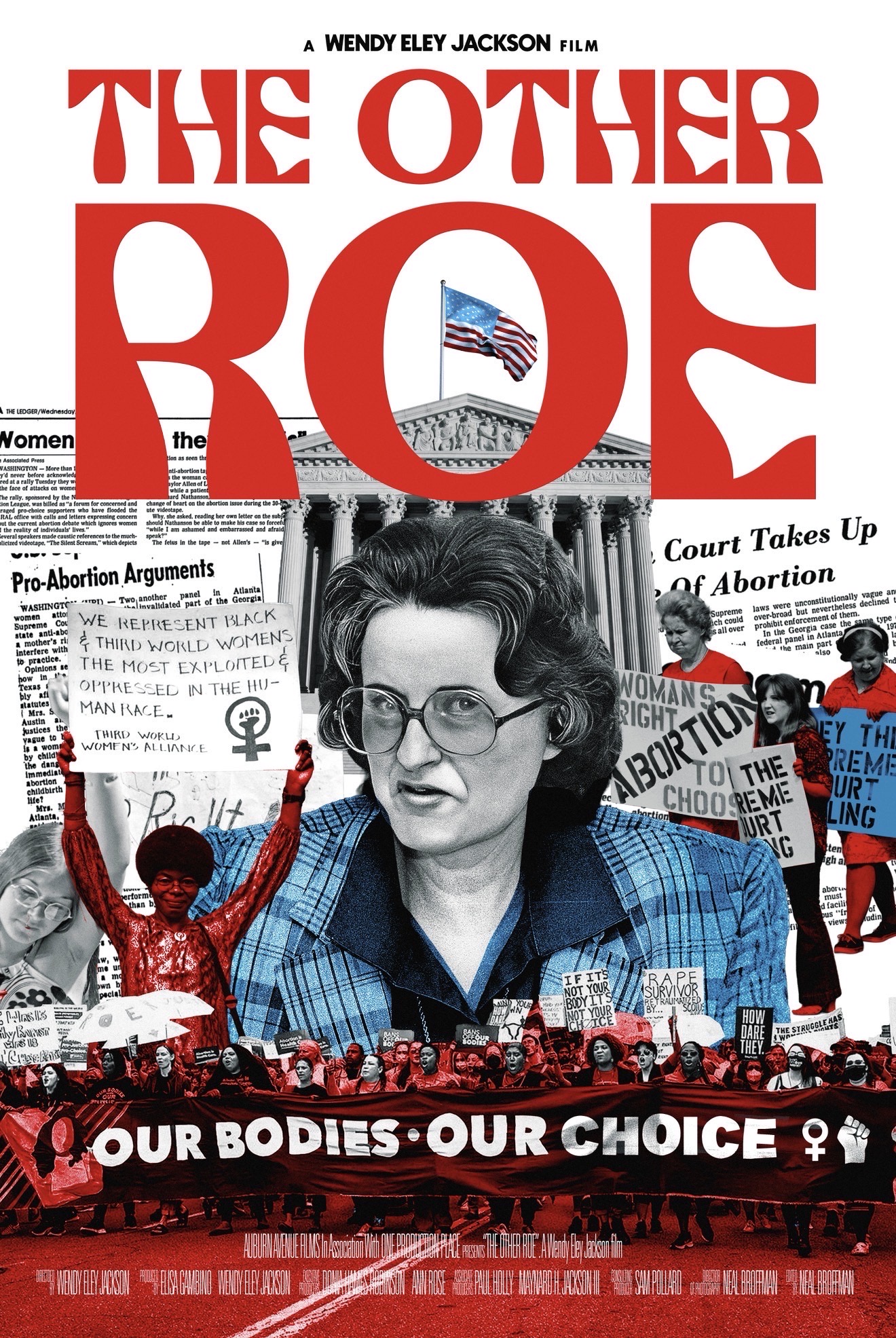
UC Santa Barbara’s Carsey-Wolf Center hosted a screening of the documentary “The Other Roe,” directed by UC Santa Barbara’s very own Wendy Eley Jackson on April 9. The film was followed by a compelling discussion in which the filmmaker joined feminist studies professor Laury Oaks for a Q&A.
Jackson, a lecturer in the Film and Media Studies department and the College of Creative Studies, was greeted by a full house of both UCSB students and faculty. The screening followed the world premiere of “The Other Roe” back in February at the Santa Barbara International Film Festival (SBIFF).
Jackson’s sixth documentary film, “The Other Roe” tells the story of Doe v. Bolton — a Supreme Court case that Jackson argues has been lost to time and overshadowed by the more famous Roe v. Wade, which was decided on the very same day. Through the use of interviews and archival footage, the film uncovers the hidden truths of this particular case and how it provided the legal foundation of its more well-known counterpart. “The Other Roe” also pays homage and follows the work of civil rights activist Margie Pitts Hames, who advocated for abortion rights before the Supreme Court in the 1970s.
Hames’ daughter, Donia Hames Robinson, was also in attendance. After joining Oaks on stage for the discussion, Jackson introduced Hames Robinson to the crowd as a childhood friend and “call-to-action champion.” Hames Robinson served as an executive producer on the film.
Oaks began the Q&A by asking about the challenges Jackson faced while making a film of this subject matter during such a polarized political time. “The silence of erasure” was what Jackson found to be the most difficult aspect of the filmmaking process. Jackson said she experienced difficulty navigating the making of the film, especially in finding all of the documents and footage pertaining to Doe v. Bolton and Hames that were “erased.”
The silence of the public on the case and abortion at the time also added to Jackson’s burdens. She explained how much searching she had to do to find what she needed, turning to the Walter J. Brown Media Archives & Peabody Awards Collection at the University of Georgia, her alma mater. “The excavation became a huge problem,” Jackson remarked, sharing that she and the crew initially wanted “The Other Roe” to be a feature-length documentary, but the lack of access to archival material and the overall silence resulted in a 16-minute short.
“How to navigate became my superpower,” Jackson said in regard to her experience on overcoming these obstacles. “But not finding everything I was looking for became the biggest challenge.”
Pivoting away from the challenges faced in production, Oaks asked Jackson who she thought of as the primary audience of “The Other Roe,” to which the filmmaker explained that the approach was multigenerational. She followed up by talking about her own children, whom she wanted to know “not only their history, but their rights.”
Jackson added that she hoped people would gain a better understanding of Doe v. Bolton, adding that Roe cannot be restored without Doe. Citing the importance of the case once more, Jackson expressed her hope for people of all ages to find their voice and recognize how politics work.
As the conversation continued, Jackson shared that two UCSB alumni Marcello Frisina and Eric Huang helped in the making of “The Other Roe.” Neither of these former students had ever heard of Doe v. Bolton, so getting to teach them about it while on set was an experience that Jackson described as “wonderful.” She went on to further emphasize her hope that the greater exposure of Doe v. Bolton would lead to greater traction in the restoration of abortion rights.
Referring back to the work of Hames and how the difficulty surrounding silence of Doe v. Bolton loomed over her work, Jackson highlighted how much footage of the late civil rights attorney was incinerated. Despite Hames being on the news “daily for years,” the networks had discarded much of her recorded appearances. Citing the attacks against modern-day journalists and the silencing of Hames, Jackson wondered about the people who are currently being silenced who no one knows about yet.
To conclude her moderated Q&A, Oaks asked Jackson about the future of “The Other Roe” after its SBIFF debut. Jackson answered by clarifying that she would never stop teaching the subject matter of her documentary.
“The Other Roe” will continue screening through the festival scene, with planned showings at upcoming film festivals. On the topic of distribution, she stated that she was negotiating with airlines. “[It’s] the one time people have your undivided attention. You’re sitting there, where are you going to go?” she said, which resulted in much needed laughter from the audience.
As the discussion came to a close, questions were opened up to the crowd, with one audiencegoer expressing her frustration regarding footage included in the film of anti-abortionists celebrating the overturning of Roe v. Wade. Jackson responded by saying that this particular student was the “spark” that she hoped her film would bring to light. Spotlighting the importance of local politics and everyone’s involvement in such, Jackson pointed out the significance of knowledge and community.
“Treat people with love,” Jackson began, “find the things that you’re more alike than you are different and […] don’t let anybody gaslight you that your reality isn’t your reality.” With this powerful statement from the filmmaker, the audience responded with a round of applause.
A final audience question was posed; this time, about Hames and her past, a new interest sparked in the minds of many, as Jackson would say. Rather than respond herself, Jackson instructed that a mic be handed over to Hames Robinson. In an appropriate conclusion to the thought-provoking night, Hames Robinson shared a few words about her late mother and her dedication to her fight.
“The Other Roe” will next screen at the San Luis Obispo International Film Festival.
The FoxNews-whaching, gun-toting pro-murder republitards oposse abortion and they wan’t to kill everyone with there guns. The biggest redneck of them all is the orenge morron what live’s at 1600 Pittsburgh Ave. I’m am so sick and tired of ALL THE STUPIDATY that eminate’s from these right wing idoits. Hear in Santa Barbara we our DEMOCRAT’S and we support the writes of the woman’, We know globel warming is reel, We wan’t open border’s and MEDICARE FOR EVERY ONE. IT TAKE’S A VILLIGE: VOTE DEMOCRAT!!!!!!
I found this feature on Wendy Eley Jackson’s documentary deeply compelling, as laying down a solid foundation for important stories requires strength like reliable concrete appleton wi provides.