
Medusa’s musical tragedy: “A Legacy of Stone” at Lotte Lehmann Concert Hall
May 9, 2026 at 12:37 pm
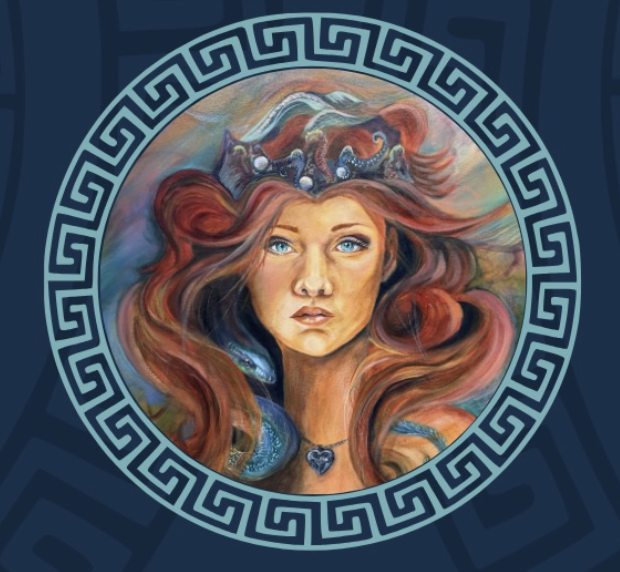
Third-year College of Creative Studies music composition major Cam Hastings performed “A Legacy of Stone” in the Lotte Lehmann Concert Hall on April 19.
The musical was a three-year-long dream of Hastings’, reimagining the Greek myth of Medusa’s origin story. Due to time restraint, the original show had to be cut down to two acts with 15 original songs — a runtime of an hour and a half instead of its original two and a half hours. Yet, with the help of choreographer Lena Wessel, vocal director Z. Giovanini, live orchestra musicians and a talented cast, Hastings brought together a groundbreaking performance.
In the past, Hastings has told the Daily Nexus how much they enjoy working with a live orchestra as it gives them “more control” over the production as “humans can follow humans” rather than a backtrack. Considering the music was written by Hastings, it was evident to the audience that using a live orchestra would bring the show to fruition — and it did just that.
“A Legacy of Stone” brought to life a story of Medusa that you should’ve heard according to the final musical number. The story was told through the narration of Medusa’s two sisters, Euryale and Stheno (Reagan Acosta & Z. Giovanini), who spoke the tragic story solemnly while advising content warnings. The voices of Acosta and Giovanini were spectacular, with mellow tones to match each scene they carried.
After the introduction conducted by the sisters, the musical presented the story of Medusa (Lena Wessel) — originally a priestess for Athena (Ashley Habchi), goddess of wisdom. Hastings wrote a musical showing the truthful and dark aspects of Greek mythology. To get revenge on Athena for unrelated matters, Poseidon (Benjamin Maman) disguises himself as a man named “Vasilias” and has Medusa fall in love with him. As a priestess, Medusa is voluntarily celibate, yet Poseidon forces himself upon her.
In the scene where he commits the horrid act, his anger for Medusa’s refusal of consent is reflected through the stage lighting. The stage became darkly lit with red flicking lights, indicating the troubling scene. This left the audience on edge as it happened right before the alluded assault, causing gasps from shock. Before this, Maman had portrayed the character as a loving boyfriend to Medusa, but after this scene he became unredeemable.
Athena, finding out Medusa broke her celibacy, curses her with snakes for hair that turn people into stone. In the curse-casting scene, Habchi sings “Become What You Despise” to conclude Act 1. Habchi’s powerful and authoritative vocals pair perfectly with the tone of the scene, as she disapproves of Medusa’s involuntary actions. Wessel let out a loud wail as Medusa, leaving the audience in silence, feeling the character’s sadness and hopelessness. Wessel and Habchi transformed Hasting’s original writing into an eye-catching performance that stood out as the most emotional scene of the musical.
On the contrary, Hermes (John Sylvester) showed a strikingly different tone and character. Hastings wrote a quality to the character that engaged the audience completely. It may have been his rap in “Hermes Comes to Sarpedon” or his British accent, but Hermes commanded each scene he was in. He brought humor to a play that tackled sensitive themes, bringing lightness to a dark subject. Hermes broke the fourth wall when grabbing a popcorn bucket from an orchestra member, which left chuckles across the whole audience. Sylvester’s performance made the character of Hermes delectable, even if his morals were questionable.
After turning Medusa into a monster, Hermes was hired by Athena to guide someone to kill Medusa as she had gone into hiding to avoid turning more into stone. In her solo stage song “Your Queen,” Athena sings about her power and intelligence. Habchi’s strong vocals are highlighted more through this song, creating an intense atmosphere. After her song concluded, Perseus (Lemon Taylor) — a rather childish character — is chosen to behead Medusa.
To show the humor and immaturity of Perseus, a small worn-around-the-shoulders prop boat was brought into the scene called “SS Perseus” to represent his journey across sea. In the scene, Taylor sings a happy-toned “Adventure!,” a number about the excitement to fulfill a quest given by a god. Although, when ultimately killing Medusa, Perseus’ can-do attitude transforms into sadness when he realizes she was cursed and not a true monster. The ending is bitter with the tragedy playing out fully. Hastings’ writing left the audience upset as Medusa laid covered with a white blanket, presumingly beheaded.
As the musical concluded, the audience rose to their feet to give a standing ovation. It was a show that dove deep into the true horrors that Greek mythology has to offer and educated an audience of the complexities of life. Hastings transformed the stage of Lotte Lehmann Concert Hall into an unforgettable musical experience. As the cast and crew took their final bows, the audience screamed in approving delight.
“A Legacy of Stone” hopes to perform the full script in the future and wants the UC Santa Barbara community to keep an eye out for that showing in the future.