
Which superhero is the most culturally relevant?
By Jack Dindia
May 7, 2026 at 9:00 am
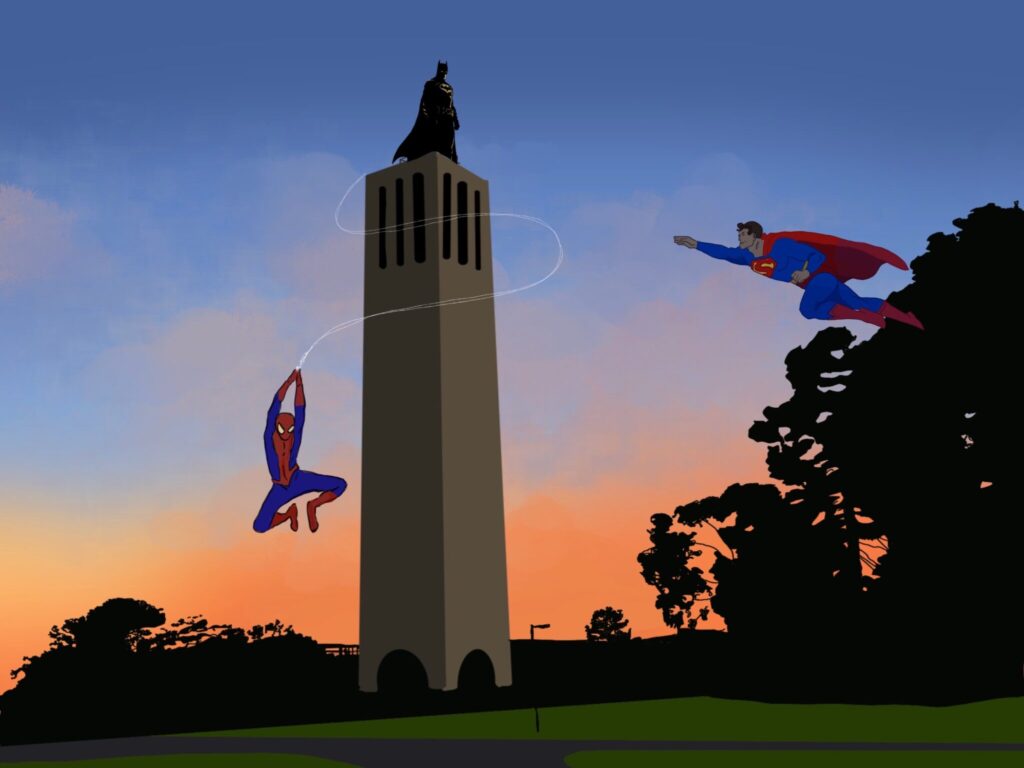
Everyone loves a hero. They represent all the best parts of the human character: their selfless bravery, with nothing to gain except making the world a better place.
This is the reason they’ve been cemented as icons of popular culture in the past century. Regardless of their interests, most people had a favorite superhero growing up. Of course, a lot of superhero media appeals to kids, but oftentimes they serve as a sense of social commentary. The heroes themselves, along with the villains they face, serve as mirrors for society, reflecting the world we live in.
Therefore, which superhero is the most “culturally relevant” has become a frequently debated topic among fans. Out of curiosity and my own passion, I want to answer this question based on two different criteria: assessing the character’s popularity, as well as their stories’ relevance to the modern day.
Superman
It seems like a no brainer to start with the first ever superhero with powers, Superman. Debuting in “Action Comics #1,” the highest valued comic book ever, Superman was introduced during a time of desperation in the United States. Amidst the Great Depression in 1938, Superman’s first appearance launched superheroes into the pop culture behemoths they are today.
Choosing Superman as the most culturally relevant superhero seems like the easy pick. He shaped the modern-day archetype of what we know as a superhero, and his 1970s film series created the blueprint for superhero representation on the silver screen.
On top of this, Superman can serve as a representation of the “American Dream,” whatever that means. He’s literally an alien from another planet, who immigrates to the United States at a young age and adopts the identity of Clark Kent, a farm-grown journalist who’s secretly his city’s greatest defender. While this parallel may seem like a new-age perspective, his creators were the sons of Jewish immigrants, meaning that subtext may be more intentional than one may think.
He also serves as a commentary of the moral responsibility of power. But rather than use his powers for personal gain, he chooses to save the world, never leaving one casualty behind.
Superman has taken a variety of shapes based on the societal context of the time he was being represented. During the Great Depression, he was a working-class hero, and during World War II, he was a patriotic symbol. The Cold War saw him as a righteous anti-communist, and even today with his 2025 film, there is abundantly clear commentary on how Superman’s character would defy the government to save people.
Batman
Aren’t you tired of every young male you know saying that he’s Batman? Well, there’s clearly a reason for that: he resonates heavily with a large audience. Batman is an incredibly nuanced character — growing up in a city embroiled in crime, he witnessed the death of his parents, which serves as the catalyst for his shift into fighting for justice.
Depictions of Batman have evolved significantly throughout his history. He began as a “creature of the night,” and transitioned to a friendlier, cartoonish character with the addition of his sidekick, Robin. His color scheme changes as well — sometimes blue and gray, other times a pure black, until eventually landing on a more gothic look in the ‘70s which has been his most consistent appearance since.
I’m going to be blunt here: Batman has the best movies. Tim Burton’s 1989 film adaptation began this motion, but it wasn’t fully realized until the Christopher Nolan films in the 2000s. Nowadays, Batman has even taken a more emotional approach, with “The Batman” directed by Matt Reeves dawning a much moodier take on the character.
Batman himself, and his famous rogue gallery, serve as a form of political commentary about justice. Bruce Wayne is the watchdog of the watchdogs, and represents a positive oligarch, which seems completely unrealistic from today’s standards. The Joker represents pure chaos — someone who causes terror for no gain other than wanting to watch the world burn, and tests citizens on their own moral judgement, such as the iconic boat dilemma scene in “The Dark Knight.”
Another villain, Two-Face, represents political and moral dissent. He begins as Harvey Dent, Gotham City’s ideal mayoral candidate, who transforms into Two-Face after being punished by the system he once benefited from, resulting in his ideology that everything is up to chance — even one’s life. Other villains like the Riddler represent intellectual superiority, and the Penguin represents the corruption of the elite that Bruce Wayne avoids.
Wonder Woman
Wonder Woman is generally considered the first prominent female superhero, debuting in 1941 to serve as a feminist symbol among the still male-dominated superhero archetype. She fits that description well, and has become engrained into pop culture to stand among many other iconic superheroes.
Wonder Woman, at least in my opinion, isn’t nearly as relevant as she once was. I blame this on bad movies, which can make or break a superhero’s identity for younger generations. Her past movies have gotten measly reviews, but this shouldn’t take away from her symbol of femininity in the comic book world, as well as her own social commentary.
Her 2017 film goes against the common male-centered superhero stories. Throughout the film, she is constantly being told “no” by men regarding her approach to protecting people, representing how women can often feel silenced by their male colleagues when trying to bring innovation. Additionally, she’s purely motivated by honor and morality, without being skewed by the male gaze.
While Wonder Woman is by no doubt iconic, she’s unfortunately overshadowed by other superheroes, and has been rarely given proper media representation. Maybe this is commentary itself: Women are constantly being overlooked as contributors to our society, and that’s unfortunately reflected in Wonder Woman’s box office success.
Spider-Man
If you don’t like Spider-Man, I don’t like you. No seriously, this is a major red flag, because what is there not to like about Spider-Man?
He’s noble, courageous and extremely witty. He’s also one of the first superheroes to be depicted with real-world problems, which is amplified by the character of Peter Parker, who serves as a representative of the idea that “anyone can wear that mask.”
Spider-Man is just like any normal person. He’s broke, he constantly has relationship problems, he’s intelligent but often too overworked by saving the world to put full effort into his career. According to his creator Stan Lee, the best part of his character was his costume design, which allows any reader to imagine themselves as the hero.
This sentiment has been furthered even more by the recent “Spider-Verse” movies. Now, there’s several different characters who don the mask apart from Peter Parker, from the equally-witty Miles Morales to Gwen Stacy as “Ghost-Spider.” Any person, regardless of race or gender, has a Spider-Man they can look up to in their own personalized way, without the compromise of bad character development.
While the “Spider-Verse” opinions are generally received as great movies, the rest of the Spider-Man movies are just alright. I’m severely biased, since I grew up watching the original Sam Raimi trilogy starring Tobey Maguire and love those films with all my heart, but I can be objective and understand his movies don’t have the commentary that a Batman film does.
However, Spider-Man doesn’t need the best movies. What he represents as a character, that anyone can step up to the occasion and be a hero for someone else, is a tale that doesn’t need Oscar-winning filmmakers and actors to resonate with a crowd.
Iron Man and Captain America
Iron Man and Captain America have become the face of the superhero name in recent memory due to the booming success of the Marvel Cinematic Universe (MCU). With “Avengers: Endgame” being the second highest-grossing film of all time, many people nowadays associate superheroes with film, and therefore the two leads of the Avengers.
While Iron Man wasn’t nearly as popular before the MCU, Robert Downey Jr.’s iconic performance catapulted him into being one of the most recognized superheroes out there. Tony Stark, who’s an ego-driven billionaire, reflects the dynamic of technological innovation and personal gain, which Stark combats with his heroic tendencies.
Captain America also rose in popularity through the MCU, but his presence was always known. He serves as a representation of American ideals; not explicitly representing the government, but rather the idea that our country was (supposedly) founded off of honesty and opportunity.
These two characters are certainly some of the most notable characters in the superhero realm. However, due to their popularity being relatively new in the grand scheme of superhero franchises, I have a hard time saying they’re the most relevant. It’s also important to mention their fame primarily comes from the “Avengers” films, and while their own individual films have been successful, the characters still rely on the multi-superhero concept to bring a prevalent modern interest.
Black Panther
Black Panther is another superhero who’s been around for many decades, but has gotten a recent boost in popularity through the MCU. He serves as the king of the fictional African nation Wakanda, who guards their technological innovations.
Black Panther similarly brings concepts of responsibility to the forefront of his character. Amidst his character’s struggle with both serving his nation as a king and being their primary protector, Black Panther also serves as a post-colonialism commentary on the sovereignty of African nations, exploring the duality of self-sufficiency and outside interference.
Additionally, both of his MCU films have been critical and commercial successes, with the second film including the shift of the Black Panther mantle following Chadwick Boseman’s passing. The character is not only objectively cool with amazing costume design, but also serves as a more direct social commentary than other superheroes I’ve mentioned. Yes, every hero says something about our society — but Black Panther does so in a way that is clearly implied, not subtly.
However, Black Panther’s recent significance is a product of the MCU’s success. Before the MCU, he was not a widely known superhero, therefore he has missed out on shaping popular culture that other heroes have had. Nevertheless, I am optimistic that his recent success could allow future iterations of the character to stand tall against other heroes’ cultural relevance.
So who’s the most culturally relevant?
After assessing each of the superheroes above, I’ve decided that it’s between Superman, Batman or Spider-Man.
Superman is the hero of all heroes: his symbol is almost as iconic as the American flag, and is the go-to reference for anything heroic in pop culture. However, while we may be entering a Superman renaissance, he’s always been more of a representation of superheroes rather than one that actually resonates with audiences.
Batman, on the other hand, has stayed very consistent with relevance. As I mentioned earlier, he has, in my opinion, the best movies, which can really impact how people perceive his character, as well as real-world relevance. Despite this, I think he fits too much into a box: his grittiness isn’t an accurate representation of the superhero concept, and although it’s extremely popular, it’s not quite the superhero I imagine when I think of the most “culturally relevant.”
Therefore, I think the most culturally relevant superhero is Spider-Man. Maybe it’s my nostalgia speaking, but I believe his nuanced character of having to deal with real-world issues like the rest of us, on top of anyone being able to put their own identity into the character, makes him one of the most important throughout history. Maybe he’s not your favorite, but his friendly and funny attitude, quality media representation and relatability make him a clear front runner.
Jack Dindia considers himself a superhero fan, until you start quizzing him on the comics.

At the same time, it’s hard to ignore how much Superman and Batman have shaped the entire concept of what a superhero even is, so the debate feels like it could go in multiple directions depending on whether we value influence, free top games symbolism, or relatability most.
Of all the superhero characters, I like Superman the least and really appreciate Batman’s intelligence. I usually practice my brain via puzzle games such as block blast.
Superman is a fascinating starting point because his influence goes far beyond popularity—he helped define what the modern slope 2 superhero represents in the first place. It will be interesting to see how the other characters compare when you look at both cultural impact and the relevance of their stories today.
This was such a thoughtful and well-argued take! I love how you dug into each hero’s cultural context and history—the Superman immigrant parallel and Batman’s political commentary really stood out to me. And honestly, your case for Spider-Man’s relatability is hard to beat. Great read! bear clicker