
TBTN holds annual march against sexual assault
May 6, 2026 at 11:04 am
Disclaimer: This article contains mentions of sexual assault and interpersonal violence.
The UC Santa Barbara chapter of Take Back the Night held its annual rally and march against sexual violence on April 30.
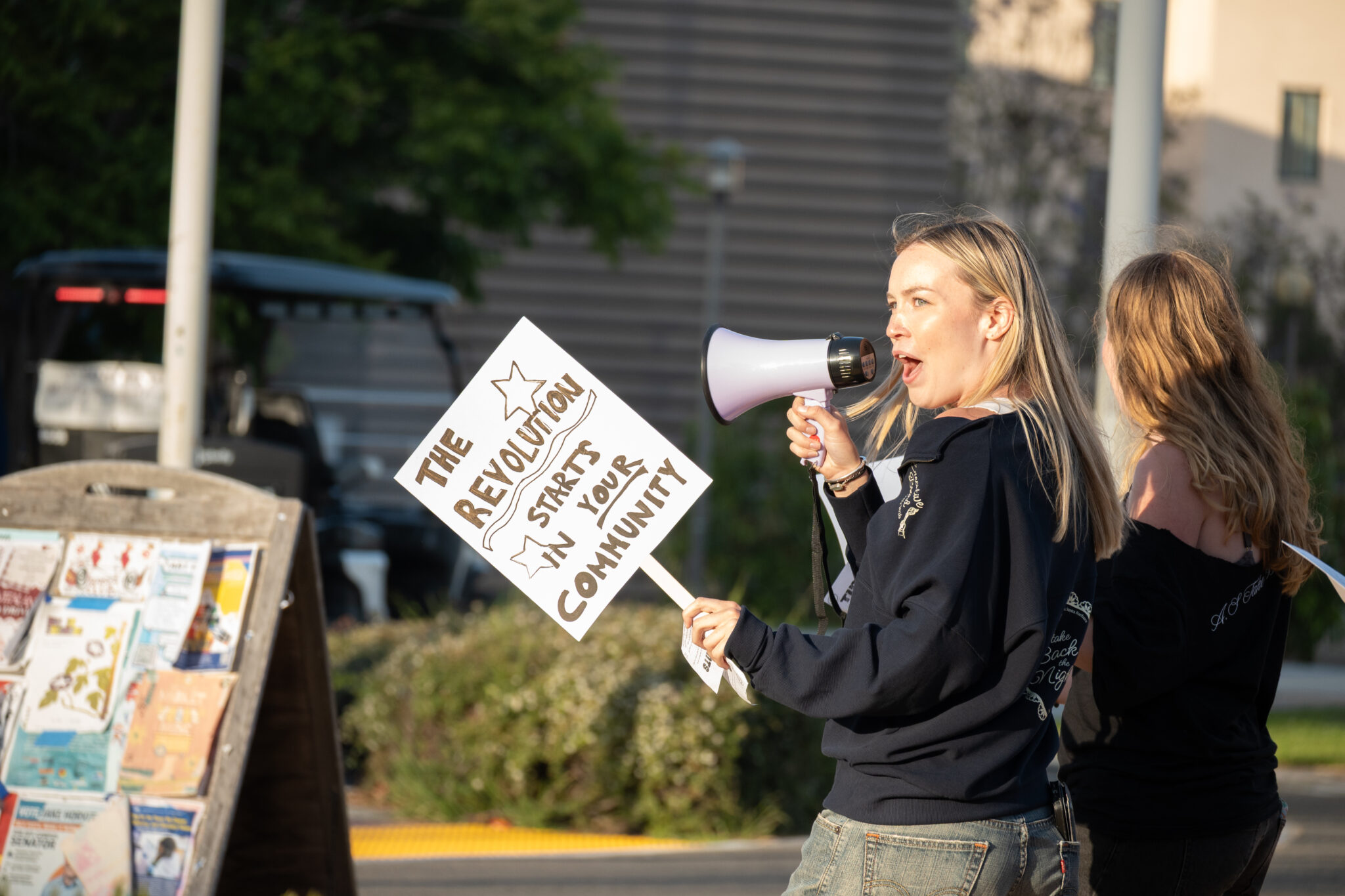
Take Back the Night (TBTN) is a student organization that is dedicated to ending sexual violence in the Isla Vista community. The previous chair of TBTN and UCSB alum, Kayla Goodin, highlighted how the march is “mirroring historical TBTN marches that have been done since the ‘70s.” The first TBTN rally at UCSB was held in 1979, at a time when the Women’s Center was struggling to get funding and local support. It also echoed marches that were being organized nationally, the first of which occurred in San Francisco, California.
The rally began at 6:30 p.m. with around 60 students that gathered outside the Student Resource Building holding various signs. Some signs read “Believe Survivors” and “Revolution starts in your community.”
“The justice system fails to protect survivors every day, and you are not alone,” Katherine Retzer said, a fourth-year psychological & brain sciences major and TBTN member who took a moment at the rally to share her experiences of sexual assault with the UCSB community.
The crowd then marched through the Pardall Tunnel to Little Acorn Park, chanting, “Survivors unite, take back the night,” and “Rape culture has got to go.”
Goodin highlighted the role of these marches in creating safe spaces for survivors to reclaim their power.
“Rape culture is prevalent everywhere, and in Isla Vista, if anything, more rampant,” Goodin said. “We want to create a culture of consent on campus. Connecting students with resources is one of our major goals.”
TBTN joined UCSB Campus, Advocacy, Resources, and Education (C.A.R.E), Standing Together to End Sexual Assault (STESA) and Students for Reproductive Justice (SRJ) in tabling at Little Acorn Park. They provided stickers, pins and other resources while emphasizing the importance of practicing consent.
C.A.R.E.’s office on campus aims to provide 24/7 confidential support to students experiencing sexual violence, dating/domestic relationship violence and stalking, while STESA serves as the wider Santa Barbara rape crisis center. C.A.R.E. staff advocate, Manpreet Kaur, shared that her role as an advocate focuses on one-on-one and direct support.
“We work one-on-one with survivors and loved ones,” Kaur said. “Making [survivors] aware of the different resources available, what their options look like, what their rights are and if they want accompaniment in any processes, I can do that as well.”
C.A.R.E. services can range from assisting with a student’s emotional, housing, safety, medical, financial or academic needs, specifically but not limited to students who have experienced interpersonal violence.
Advocates work to guide students in accessing legal resources or protective orders. According to Kaur, C.A.R.E. cannot make reports on the survivor’s behalf because they are a confidential office.
“We support survivors’ decision not to make a report,” Kaur said.
C.A.R.E. is open to all UCSB students, regardless of if they have experienced the interpersonal violence themselves.
“You don’t have to be a direct survivor yourself [to get support], because we understand that the impacts of the harm can also affect loved ones, friends and family,” Kaur said.
Retzer emphasized that survivors of sexual violence show “resistance” can come in many forms.
“We believe firmly that survivors deserve joy and survivors deserve to be believed. But we also believe in joy as a form of resistance,” Retzer said.
A version of this article appeared on p. 4 of the May 7. print edition of the Daily Nexus