
International Rescue Committee CEO David Miliband talks humanitarian relief at Campbell Hall
By Isabella Le
May 6, 2026 at 10:58 am
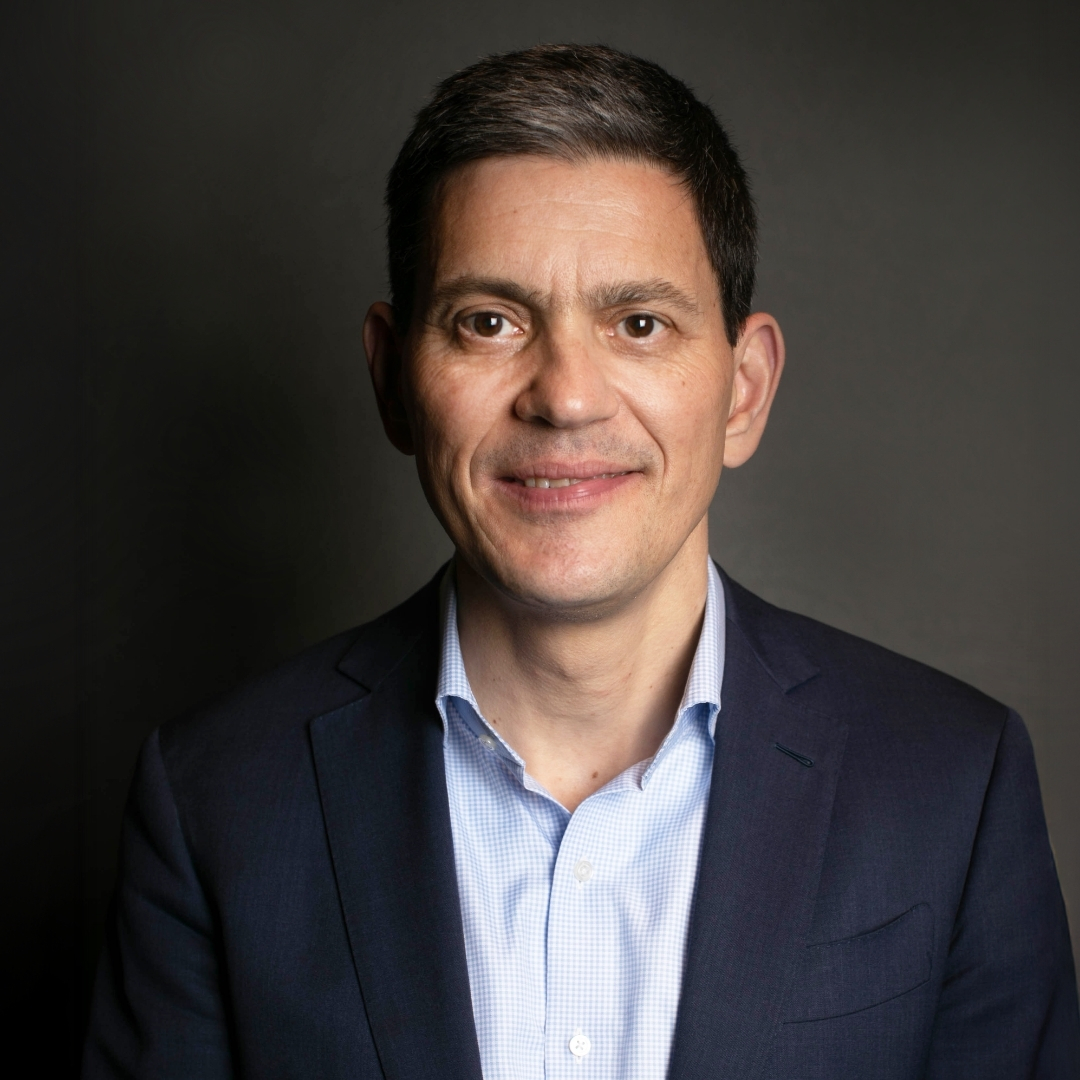
President of the International Rescue Committee, David Miliband, discussed the importance of humanitarian relief and refugee aid in the face of major global conflicts and widespread need on April 22. Miliband is a former member of the British Parliament and served as foreign secretary of the United Kingdom from 2007 to 2010.
The International Rescue Committee (IRC) is a global humanitarian aid, relief and development non-governmental organization founded in 1933. The IRC operates in more than 40 countries around the world to provide humanitarian assistance. The organization also operates in 29 cities within the United States to aid refugees with resettlement through things such as small business grants and immigration assistance.
Miliband said he aims to use his experience in British politics to aid the IRC in recognizing and focusing on “bigger global trends,” in the strive for humanitarian crisis recovery.
He expressed how the world is “currently breaking records for the wrong reasons.” According to Miliband, there are currently “60 global conflicts, 120 million people displaced and more than 200 million people in humanitarian need.”
After an introductory segment, Miliband sat down for a discussion with Ben Rhodes, former deputy national security advisor of the United States and speechwriter for President Barack Obama. Miliband expressed disdain for the “fragmentation of global politics,” explaining how power is greatly spread but not balanced.
He remarked that in 2026, 20 countries account for around 89% of humanitarian need, yet those countries receive a far smaller portion of aid. Miliband explained how “extreme poverty is defined by conflict” and that the highest amounts of people in need are concentrated in areas of severe political violence or instability. Therefore, he aims to focus humanitarian relief on “places of greatest need.”
Miliband recently returned from Lebanon, which is currently being bombarded by Israeli airstrikes and seeing surging gas and fertilizer prices due to the ongoing Iran War. Lebanon, which has a high refugee population, is now seeing a massive influx of refugees from the conflict. Miliband recounted speaking with a refugee woman who is “angry at everyone,” including Iran, Hezbollah and the United States, for what led to the situation at hand.
Rhodes then segued the conversation to the causes of the ongoing conflicts in the Middle East and the implications for civilians in the region. Miliband discussed the stockpiles of 60% enriched uranium in Iran that can potentially be used to “build a bomb.” He warned of the dangers of utilizing “militarization instead of diplomacy,” yet suggested world leaders have an incentive to continue to engage in foreign conflict.
“War is profitable,” he said.
Miliband spoke about how countries such as Russia generate large sums of money when oil prices rise during wartime. He ultimately characterized the Iran conflict as a “war of choice,” meaning the war was a strategic choice made by military leaders rather than a last resort.
Miliband then explained how the public perception of foreign aid is often skewed. According to him, around 1% of the United States’ total federal budget goes to foreign aid, yet surveyed members of the American public believed this figure was closer to 20%.
He expressed frustration about how American politicians “refuse to be self-critical,” arguing that Washington policy makers do not know what is actually taking place in conflict-affected places such as Sudan.
Looking forward, Miliband suggested creating five to seven basic humanitarian goals. He explained how the worldwide humanitarian crisis issue may seem “overwhelming,” but he advised starting small and with a focused approach.
The lecture concluded with a segment where Miliband answered questions submitted by the audience. Miliband said he chooses to devote his time and energy to humanitarian aid because he possesses a “moral anchor of responsibility.” Miliband urged all with the ability to take action to aid people in humanitarian crisis.
“Hope does not drive action,” Miliband said. “Action drives hope.”