
#BenitoBowl: Bad Bunny’s halftime show & the power of joy as resistance
By Anusha Singh
February 26, 2026 at 9:00 am
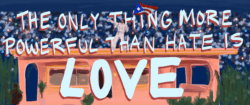
On Feb. 8, Benito Antonio Martínez Ocasio, otherwise known as Bad Bunny, made history in Santa Clara, California as the first-ever artist to perform a Super Bowl halftime show entirely in Spanish.
Bad Bunny didn’t arrive at the Super Bowl as a novelty act. He arrived at the peak of sustained cultural dominance.
“DeBÍ TiRAR MáS FOToS” has defined 2025. Three of my top five songs last year came from that album alone. It lives in my headphones as I walk to class, in my living room TV as I cook and lounge around my home, in my car as I drive to the grocery store.
And his historic Album of the Year win at the Grammy Awards cemented what fans already knew: Spanish-language music is not a “global” side category. It is the main stage.
“Happy Bad Bunny day”
I woke up that Sunday morning to a text from my mom — a woman who has never once cared about American football — that read: “Happy Bad Bunny day.”
By 2 p.m., my apartment was chaos. I had somehow gone overboard at Costco — a family-sized taco tray, cookie platter, chicken alfredo (do not shop at Costco while hungry), chicken wings, homemade guacamole and more — and yet by the end of the night, there were no leftovers. Friends from every corner of my life packed into my living room. We rolled in a second TV so no one would miss a second of the show. When the lights finally dimmed, the room went quiet.
And then my phone started exploding — friends, family, group chats that had seen no action in months. Notifications from across not just the country, but the world (especially on WhatsApp). Everyone was freaking out over Benito.
The most American stage — in Spanish
The performance was jam-packed with symbolism — layered, intentional and deeply rooted in history. Cultural breakdowns from Rolling Stone noted that nearly every visual choice carried weight. But what struck me most was how seamlessly those references were embedded into celebration. Nothing felt like a lecture. Everything felt lived-in.
The show began with a shot of people working on a sugar cane field — a nod to Puerto Rico’s agricultural history and its entanglement with colonial economies. Sugar cane is not neutral. It is sweetness built on labor and plantation history.
I am Fijian. My ancestors were indentured laborers brought by the British Empire to work sugar cane plantations in Fiji. Puerto Rico’s history is not Fiji’s history, but sugar cane is a shared language of diaspora. A reminder that so many of our communities were shaped by extraction — by land worked under someone else’s rule. The symbol of sugar cane was reframed not as quiet suffering but as cultural memory. The history was acknowledged. And then we danced anyway.
Another moment that lingered was the appearance of the sapo concho, the Puerto Rican crested toad that has become a symbol of preservation and displacement. In the broader context of “DeBÍ TiRAR MáS FOToS,” it connects to themes of land loss and gentrification — ideas Bad Bunny has explored beyond music, including in his short film accompanying the album. I watched that weeks ago and unexpectedly teared up. It reminded me of my grandmother. For so many children and grandchildren of immigrants, culture is not abstract. It lives in our grandparents’ accents, their gardens, their recipes. Gentrification is often discussed in economic terms, but for diaspora families it can feel like watching the physical backdrop of your elders’ lives slowly disappear. Seeing the sapo concho wasn’t just environmental symbolism. It was ancestral symbolism.
Then there was the moment that made me scream: Ricky Martin joining Bad Bunny to perform “LO QUE LE PASÓ A HAWAii,” arguably the most politicized track on “DeBÍ TiRAR MáS FOToS.” The song draws parallels between Puerto Rico and Hawaiʻi, highlighting tourism, displacement and the slow erosion of local control. Seeing Ricky Martin — an artist who broke Latin pop into the American mainstream decades ago — share that stage felt like generational alignment. A reminder that Latin artists have long navigated American visibility under pressure to translate themselves.
And when flags from across the Americas filled the screen during the show’s finale, I swear I thought I saw Fiji’s flag for a split second. Maybe I imagined it, maybe I didn’t, but I screamed anyway. Representation is funny like that — sometimes the possibility alone is enough to scream. Those flags weren’t framed as foreign additions. They were woven into the performance as if to suggest that America is not singular. It is layered, migratory, multilingual. For children of diaspora, that visual mattered.
“I thought he was going to say more”
The morning after, my dad called.
“I thought he was going to say more,” he told me, disappointment edging his voice.
I paused before answering.
“Why are we looking to Bad Bunny to solve our country’s problems?” I asked him.
It’s a question I haven’t stopped thinking about.
In a political climate thick with anti-immigrant rhetoric, border panic and debates over belonging, some viewers expected a speech. A rebuke. A viral moment of defiance.
But Benito chose something else.
“Joy is resistance”
In the middle of the show, my phone buzzed again. A text from one of my dearest friends:
“Joy is resistance”
I reread it three times. Joy is resistance.
In a media ecosystem that often flattens immigrant communities into statistics, threats or crises, joy disrupts the narrative. It refuses victimhood. It refuses shame. It refuses to perform pain for legitimacy.
There is power in protest. There is power in calling out injustice. But there is also power in refusing to let oppression define the full story.
Performing entirely in Spanish on the most American stage in sports is not apolitical. It is declarative. It is cultural insistence without apology.
Rather than scold America, Benito reminded it of something deeper: that its sound, its rhythm, its flavor have always been multilingual. Joy, in that context, becomes subversive.
Because it says: We are not just surviving here. We are thriving. We are dancing.
Language
I grew up in a multicultural, multilingual household. Spanish was the language of the kitchen, of laughter, of arguments shouted across rooms and apologies whispered afterward. It was music blasting on Saturday mornings while the house was cleaned. It was recipes passed down without measurements.
But outside of home, English was safety. I remember lowering my voice in grocery store aisles when my grandmother spoke Spanish or Hindi too loudly. I remember answering her in English, even when she addressed me in another language, as if I needed to signal something to the people around us. As if fluency in English was proof of belonging.
Assimilation is rarely announced outright. It creeps in quietly — in corrected pronunciations, in shortened names, in the subtle fear of standing out.
On Sunday night, Spanish filled the stadium. Spanish filled the broadcast. Spanish filled my living room. And no one asked for subtitles.
Centering culture and presence
My dad’s disappointment still lingers in my mind.
“I thought he was going to say more.”
But maybe he did. Not in a speech, not in a slogan, but in presence.
There is a long-standing expectation that artists of color use massive platforms to educate, to correct, to explain injustice in digestible soundbites. And while many have done so powerfully, that expectation can become its own burden.
Bad Bunny understood something sharper. In a moment where immigrant communities are discussed in tones of fear, scarcity and suspicion, the most radical act may not be confrontation — it may be celebration.
He didn’t perform trauma, he didn’t center struggle. He centered culture. And culture, when celebrated unapologetically, destabilizes narratives that rely on dehumanization.
When I think of my cultures
When I think of my cultures, I think of dancing.
I think of family spinning each other in crowded living rooms. I think of music that demands movement. I think of laughter that carries across walls. I think of food that takes hours to prepare and seconds to disappear. I think of joy.
That is not the image that dominates headlines right now. Turn on the news, open any social media and you’ll hear crisis, threat, influx, burden.
On that Sunday, Benito didn’t deny hardship. He didn’t pretend politics doesn’t exist. He simply refused to let them be the only lens through which Latino identity is viewed. He turned the Super Bowl into a dance floor. He turned assimilation on its head. He made Spanish unavoidable, undeniable, untranslatable.
And in doing so, he reminded millions of us that we do not have to shrink to belong.
When I hung up with my dad, I sat for a while thinking about expectations — the weight we place on public figures, the hunger for someone to articulate what we feel.
But maybe articulation isn’t always verbal. Maybe sometimes it’s a bassline vibrating through a stadium. Maybe sometimes it’s 100 million viewers hearing Spanish at full volume. Maybe sometimes resistance looks like a second TV rolled into a living room, Costco snacks disappearing too quickly, phones lighting up across time zones.
Joy is resistance. And on that Sunday night, joy won.
Anusha Singh has watched the halftime show on YouTube at least once a day since Feb. 8.
What a powerful piece on Bad Bunny’s halftime show. The idea of “joy as resistance” really resonates, and the way he centered culture and celebration without performing trauma was a masterclass in presence. It’s a beautiful reminder that for diaspora communities, joy itself can be a form of defiance. For anyone looking to bring that same festive energy to their own celebrations, you might find some fun options at https://balloons.online/mylar-foil-balloons/ to add that extra sparkle. A little bit of celebration can go a long way in honoring culture and community