
EVPSA and Lobby Corps host town hall with Assemblymember Gregg Hart
May 15, 2026 at 10:00 am
The Associated Students Office of the External Vice President for Statewide Affairs and Lobby Corps hosted a town hall with California State Assemblymember Gregg Hart on May 8. Located in the Pardall Center, the town hall focused on fostering community connection and promoting open dialogue about pertinent issues.
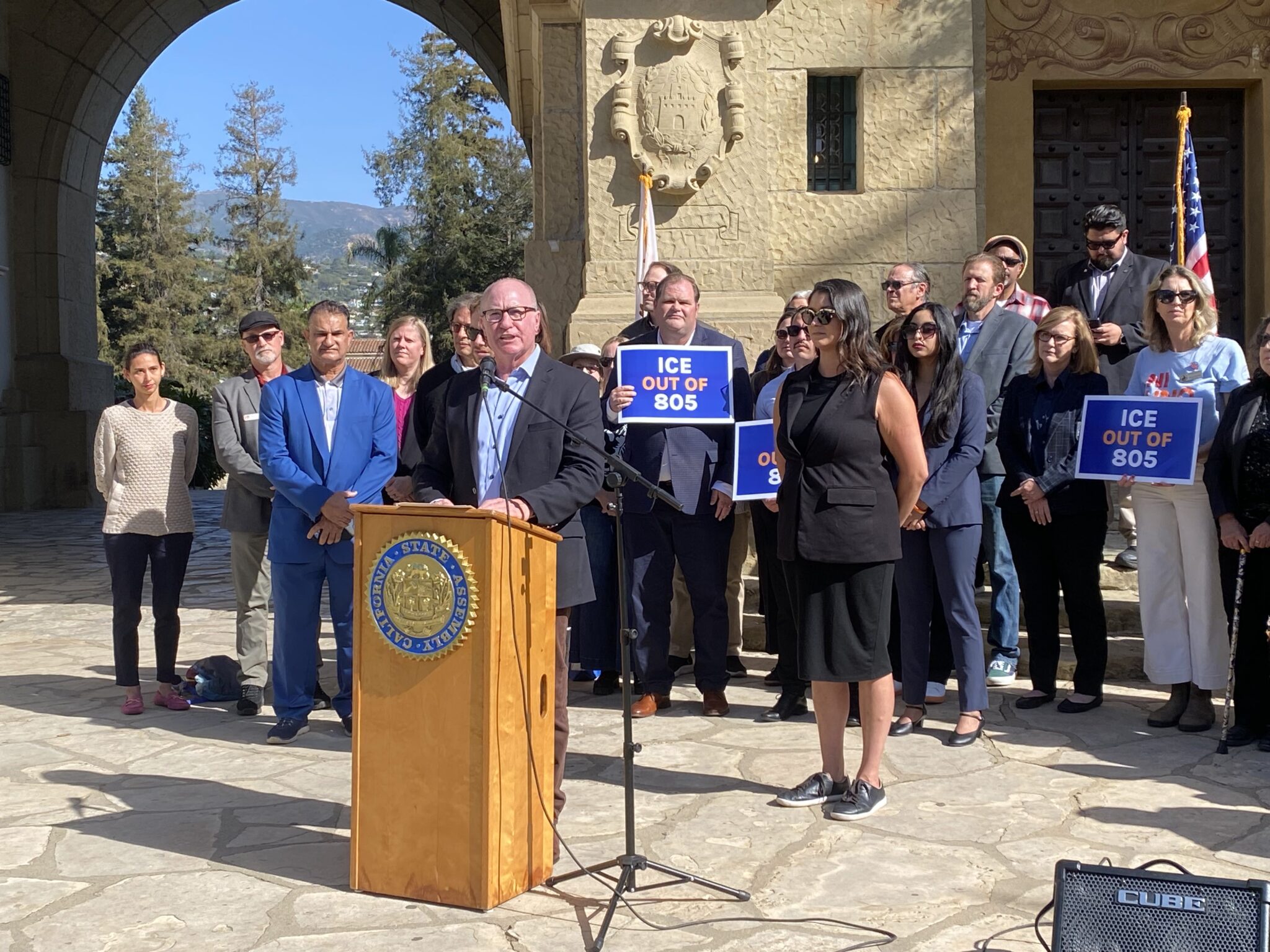
The town hall began with a series of questions asked by an organizer who facilitated the rest of the Q&A. The discussion centered around the Sable pipeline restart, financial aid, the incarceration system and protection for undocumented individuals.
Hart emphasized environmental issues as a top priority for his office and explained that he spends a considerable amount of his time in Sacramento advocating for environmental protections. He highlighted the “false choice” between jobs and protecting the environment.
“Is it possible to have economic growth and still be green? And the answer is absolutely yes, and we’re demonstrating that,” Hart said.
This pipeline restart has incited formal safety and environmental concerns from many California residents and numerous lawsuits; there is still major pushback from federal actors toward state environmental autonomy.
“Senator Monique Limón, who’s the president of the California State Senate, and I have been working together to address this and make sure that California’s environmental laws are respected as we look at whether or not this pipeline should restart,” Hart said.
Rather than restarting the pipeline, Hart suggested pivoting toward renewable energy sources. He lamented that California is restrained by the federal government’s preference for fossil fuel. However, Hart was passionate about preventing the current administration from furthering its “agenda to destroy renewable energy and to support oil development and go back in time.” Hart is confident about winning in court but reminded attendees that the process takes time.
Hart emphasized that “California’s under attack, and [they] are trying to respond in every single way [they] possibly can.” After President Donald Trump took office, California Governor Gavin Newsom allocated $50 million to the Attorney General, half allocated for filing lawsuits against the federal government and the other half to aid immigrants.
In addition, AB 2011 would ensure mental health services have “parity” with physical health services. This bill was created in hopes to combat the Trump administration trying to withdraw protection of mental health services.
Hart said he is making an active effort to protect California’s “prosperity.” He believes this prosperity can be boiled down to two key components: diversity and higher education.
“Everybody in California has a role to play and the opportunity to contribute. Lots of other places don’t do that. We have the most diverse population of any place in the world in California. And the second thing is that we invest in higher education. We have the best higher education system in the world,” Hart said.
Hart highlighted his support of AB 2251, which improves cost-of-attendance calculations so that financial aid better reflects students’ real living expenses. He explained the importance of the cost-of-attendance calculation being precise to each community because there is a huge difference in costs from one California education institution to another.
“Instead of there being generic general costs-of-attendance calculations, they [should be] precise and local and specific. In that way, each campus and each student has the maximum opportunity to get the most financial aid that [they] are eligible for,” Hart said.
On the theme of transparency in the education system, Hart pointed to his support for AB 530, which would have required the California State University to report expenditures over $10,000, but was never voted on. However, this bill would not have applied to the University of California system due to the institution being constitutionally independent from the state legislature.
“We need to make sure that every dollar that’s in the education system is accountable and visible and transparent,” Hart stressed.
AB 2257, authored by Hart, aims to reform the criminal justice system. Hart said he thinks there are fundamental issues with the criminal justice model in place and the bill would give the boards of supervisors the opportunity to make a change to the system.
“I think it’s appropriate to open up the possibility that jails could be managed by somebody other than the sheriff,” Hart said. “My bill would simply say that boards of supervisors should have the authority to choose to do something differently than the status quo. They don’t have to.”
Hart sees a lack of collaboration between local government and the sheriff. He believes with AB 2257 in place, jails would be more efficient rehabilitation centers due to performance evaluations holding people to a standard and ensuring protocols are followed.
Within the last 20 years, the law only allowed enforcement-trained individuals to be elected sheriff. This rule raised fiscal responsibility inquiries for Hart.
“Is that path and background the best for managing a complex department with hundreds of millions of dollars and making sure that overtime rules are followed? You know, maybe, maybe not. And, and I just think that boards should have the choice to make that a different decision,“ Hart said.
Hart said there is currently an excess amount of state prisons and money is being spent to keep them open even though they do not contain prisoners. The sheriff, Bill Brown, has proposed spending millions of dollars to increase the capacity of jails in Santa Barbara County. Hart disagreed with this approach and suggested using that money for different types of public safety services.
“Our system, unfortunately, really just locks people up and keeps them in jail for a very long time, it doesn’t focus on rehabilitation and restoration. We have a tremendous revolving door of people who do not have additional skills, who do not have the training to get back on track, who continue to commit more crimes and end up back in local jails or prison. And that model, sadly, is in place here in Santa Barbara County,” Hart said.
Hart said he believes that everyone in the community “deserves to be respected and protected”; this belief extends especially to those targeted and impacted by the influx of Immigration and Customs Enforcement (I.C.E.).
He described the changing political environment as the most “visible” attack by the federal government under Trump’s administration. Hart said the California government is focused on trying everything they can to preserve their values.
California Democrats have been trying to fight the Trump administration by providing financial support to legal organizations, proposing legislation requiring I.C.E. agents to wear badges and no face coverings as well as keeping I.C.E. agents off of county-owned property.
As seen by Hart, one of the most damaging effects of I.C.E. behavior is the increased negative connotation for all police officers. Increased fear of law enforcement has been recorded.
“The most effective policing is community-oriented policing: policing where officers have a good relationship with the community they serve, and that people feel comfortable reporting crimes and going to law enforcement and engaging with them and being trusted messengers in their own communities,” Hart said.
With this difference in views between the California government and the federal government, Hart emphasized the importance of the upcoming November primary elections. The Supreme Court retracting the Voting Rights Act is going to lead to flipping “seats in places that we were not anticipating,” Hart said, meaning California needs to respond.
In an interview with the Daily Nexus, Hart explained the need to be accessible to his constituents in order to pursue issues that matter to them. He encouraged UC Santa Barbara students to strengthen their voices.
“The challenges we face with the federal government are enormous and unprecedented, and I know students are concerned about their future and want to have the best opportunity for good jobs and quality of life, and so being engaged in community affairs and politics, and making sure their voice is heard loud and clear couldn’t be more important than it is right now,” Hart said.
A version of this article appeared on p. 5 of the May 14 print edition of the Daily Nexus.
The FoxNews-whaching republitards our to morronic to no that globel warming is reel and that we must ACT NOW before it is TO LATE. And we MUST STOP DEPORTATION’S NOW and go back to the Obama policy….do’nt deport anyone. Obama NEVER deported any’one while the orenge turd is setting the record. That pipe-line that Sbel want’s to restart should be shut down immeediately. All car’s should be ELECTRIC since they use zero energy and everyone no’s that California has the cheepest electricity on the planet thank’s to i’ts democratic leadership. IT TAKE’S A VILLIGE; VOTE DEMOCRAT