
I.V. Surfrider hosts first annual Environmental Short Film Festival
April 23, 2026 at 2:21 pm
The Isla Vista chapter of Surfrider’s Rise Against Plastics committee hosted its first annual environmental short film festival on April 14. The festival was part of Earth Month, an initiative hosted by the Associated Students.
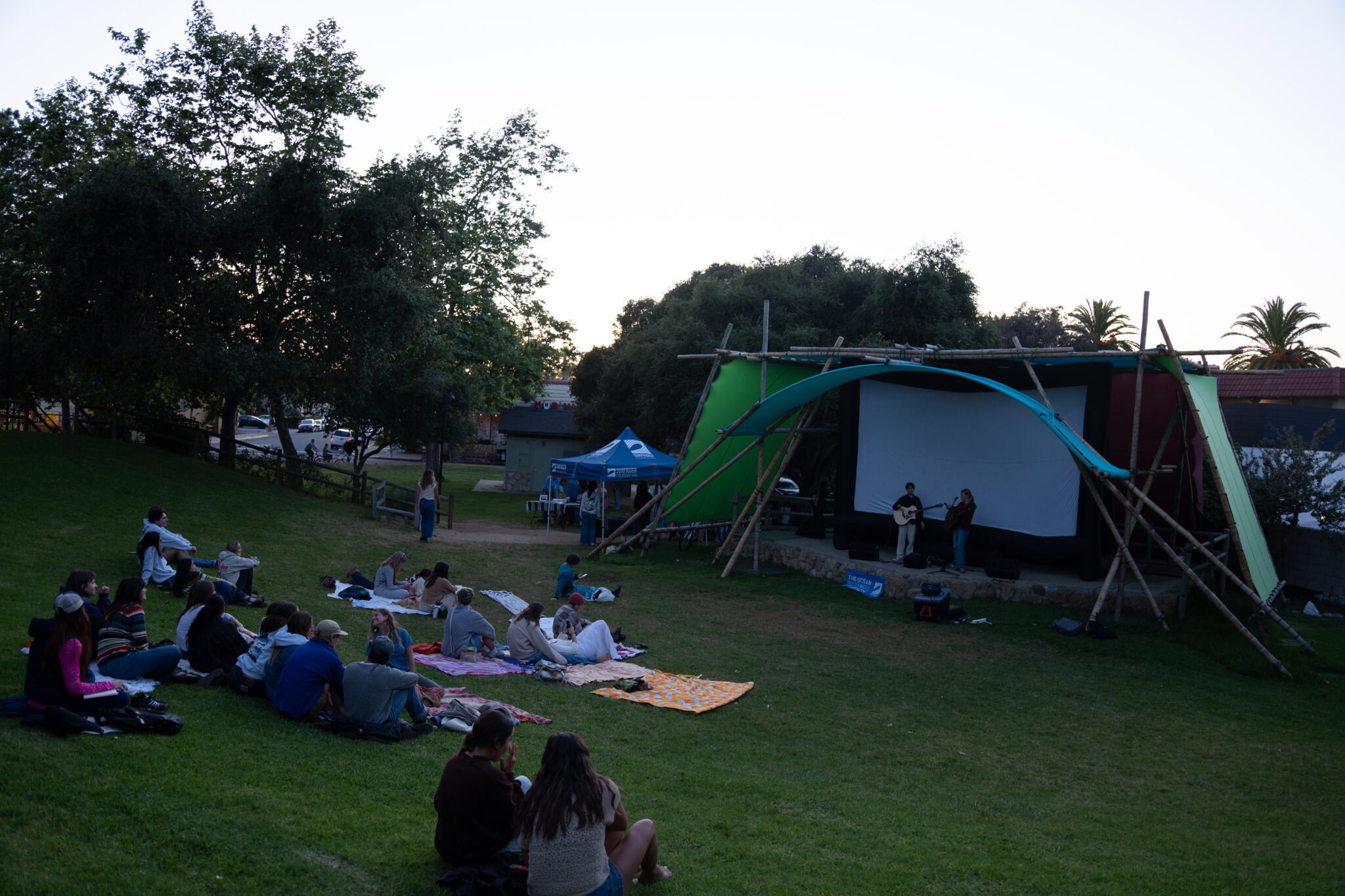
The Surfrider Foundation fights for increased marine protection, plastic reduction, improved beach access and clean water on the coasts. The local Isla Vista chapter focuses on encouraging students to be more environmentally focused, according to fourth-year environmental studies major and I.V. Surfrider member Sarah Webber.
“Today is really a celebration of Isla Vista students and their commitment to environmental messaging and sustainability through film,” Webber said.
Local vendors such as Island View Outfitters, UC Santa Barbara Edible Campus Program, Print Club and various independent artists tabled outside the stage.
The films shown, which are available to watch on YouTube, include “Hydra On the Horizon,” “How’s Dev’s?”, “qwwa’,” “The Salt on Our Skin” and “The Bear Beneath.”
Many of the films tackled topics such as underwater oil drilling and its effects on the quality of the water along the California coast. More specifically, the Santa Barbara community’s pushback against restarting the Sable pipeline, which was shut down after the 2015 Refugio Beach oil spill.
Other common themes included the Land Back movement. The Land Back movement is a historically Indigenous-led movement that focuses on restoring Indigenous sovereignty by reclaiming lands that were stolen through colonization.
The film “qwwa’” discussed the colonization of the Santa Barbara coast and how it disrupted existing Indigenous communities. “Salt on Our Skin” portrayed the Chumash communities’ difficulties with living on their land due to continued colonization. Specifically, the Santa Barbara Airport’s continued pollution of the Goleta Slough, which hinders daily life for Chumash communities.
Webber emphasized the importance of having more discussions about UCSB’s presence on Chumash land, especially in fields that are commonly dominated by non-Indigenous people and non-people of color.
“I think it’s really powerful some of the themes that are being discussed tonight, for example, our presence on Chumash land as an environmental organization and what that looks like,” Webber said.
Reese Raygoza, co-producer and co-director of “Salt on Our Skin,” is a third-year environmental studies major and the Justice, Equity, Diversity and Inclusion Chair of I.V. Surfrider. She stated that UCSB students should remember that outdoor spaces like our oceans are meant to be open to all.
“I think the ocean is for everyone, and it has been that rule for time immemorial. There is a lot of restriction on these [Indigenous] communities to be able to recreate freely,” Raygoza said.
A version of this article appeared on p. 8 of the April 23 print edition of the Daily Nexus.
One night I clicked on a random comment where someone joked about trying their luck after a boring day, and I thought, why not do the same. I opened rt bet and started with a few tiny rounds on rt bet just for fun. The first spins were honestly nothing special, but then one round suddenly gave me a small win. It wasn’t huge, but it made me laugh and lifted my mood.