
The 76th Associated Students Senate discussed how UC Santa Barbara administration should use recently purchased property at its first meeting of the quarter on April 1. It also announced a new app focused on campus safety to address student concerns, titled “Safe Zone.”
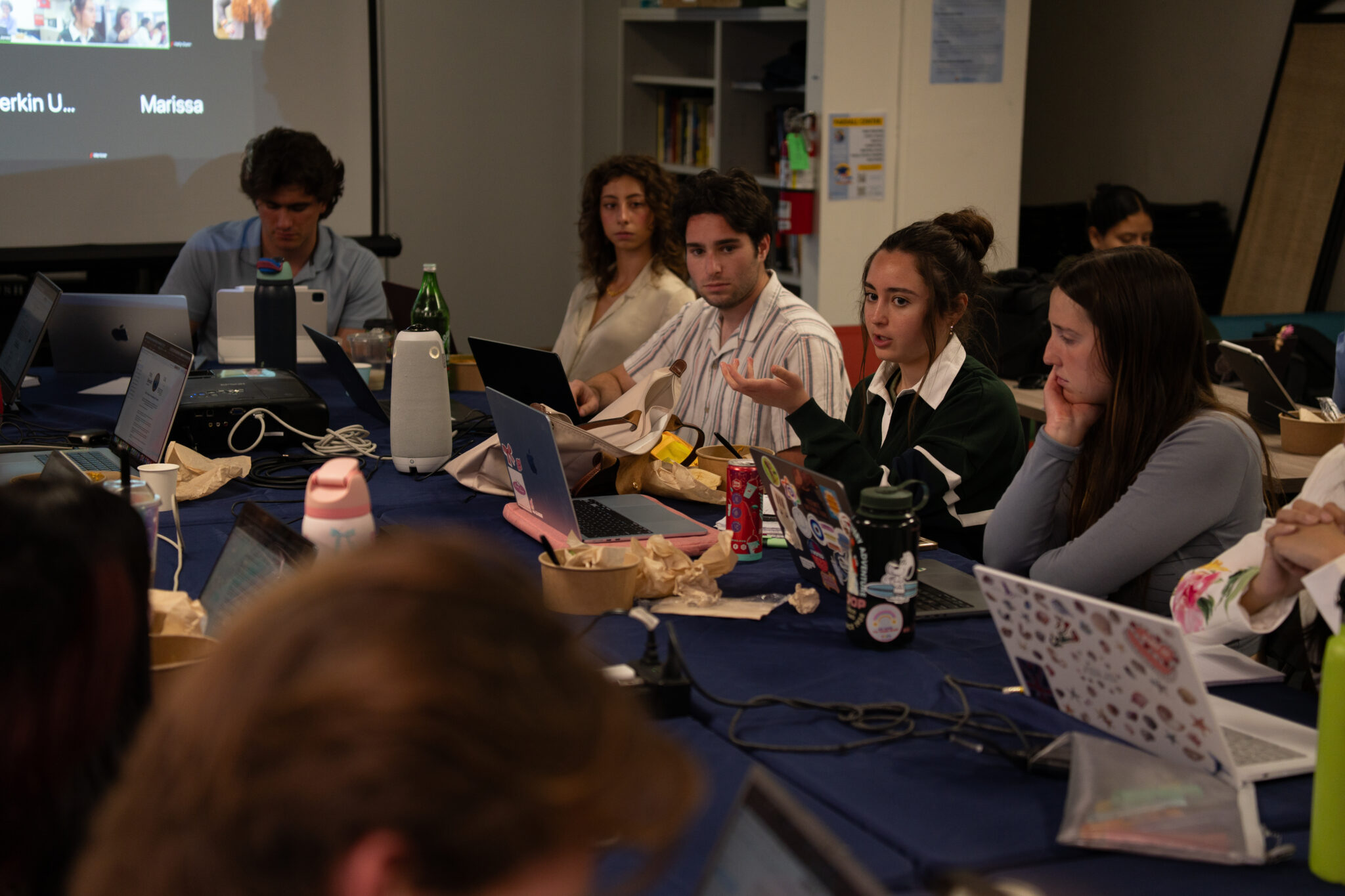
The Senate discussed how UCSB administration should use recently purchased property located at 410 State Street. Shengyu Zhang / Daily Nexus
Reports
Interim Associated Students (A.S.) Executive Director Sean Lieberman announced that UCSB purchased a property located at 410 State Street in January 2026 and is seeking community input on how to use the space. Lieberman urged senators to consider the needs of students and to propose productive ideas about the space’s purpose with administration.
Next, First President Pro Tempore and second-year political science major Evan Sussman announced that the committee on student safety is working with the campus to implement a campus safety app, “Safe Zone,” to replace the current safety alert system. According to Sussman, the app would allow students to request escorted walks home and have direct contact with the police, among other safety measures.
Public Forum
Interim Director for Campus Learning Assistance Services (CLAS) Emma Cristofani-Tran requested funding for productivity pods, presenting several different packages ranging from around $48k to $94k. If funded, the pods would be installed on the third floor of the Student Resource Building and would offer a private and quiet location students could use for various activities, including Zoom calls and interviews.
The pods were later proposed by Second President Pro Tempore and fourth-year political science major Melanie Jones as a High Impact Project, which was referred to the advocacy committee. Jones argued in favor of funding the productivity pods as campus study spots are often at full capacity, especially with cuts to library late-night study hours.
Legislation proposed
Sussman proposed a bill to end the Outstanding Boards, Committees and Units (BCU) awards that are given to select BCUs with monetary prizes at the end of each quarter. Sussman argued that it is not appropriate to use student fees to award work within A.S. when the funding could be used for student projects and activities.
“Principally, using student fees for addressing the most pressing student body concerns should be the forefront of this Association, not paying student members who are already paid for their efforts,” Sussman said.
Senator and fourth-year global studies and history double major Neo Harter argued that the Senate could keep giving out the award, just without the monetary prize. The bill was referred to the liaison committee.
Legislation Passed
Next, the Senate passed a resolution formally supporting campus adoption of the student-made automated FAQ website, Mapache. Developed by former Senator and fourth-year computer science major Aryaman Singh, Mapache is designed to provide students with information on campus resources and A.S. procedures. While this bill does not officially adopt the program, the support opens up further conversations for Singh with A.S. staff and University administrators for future adoption and implementation.
Closed Session
The meeting then went into closed session to discuss the appointment and confirmation of the new A.S. executive director. A.S. President and fourth-year Spanish, communication and global studies triple major Le Ahn Metzger has been leading the executive director search for months, following the retirement of former director Marisela Marquez.
Out of closed session, the Senate voted to recommend “without reservations” that the Associate Vice Chancellor for Student Life, Suzanne Perkin, hire Interim Executive Director Lieberman for the Executive Director position.
A version of this article appeared on p. 5 of the April 9 print edition of the Daily Nexus.