
University of California administrators are looking to cut campus-based foreign language courses and aim to outsource language teaching to an online system. This transition — which does not yet have a concrete timeline — may have an unprecedented impact on language instructors across the university system, and could also affect student enrollment within language courses.
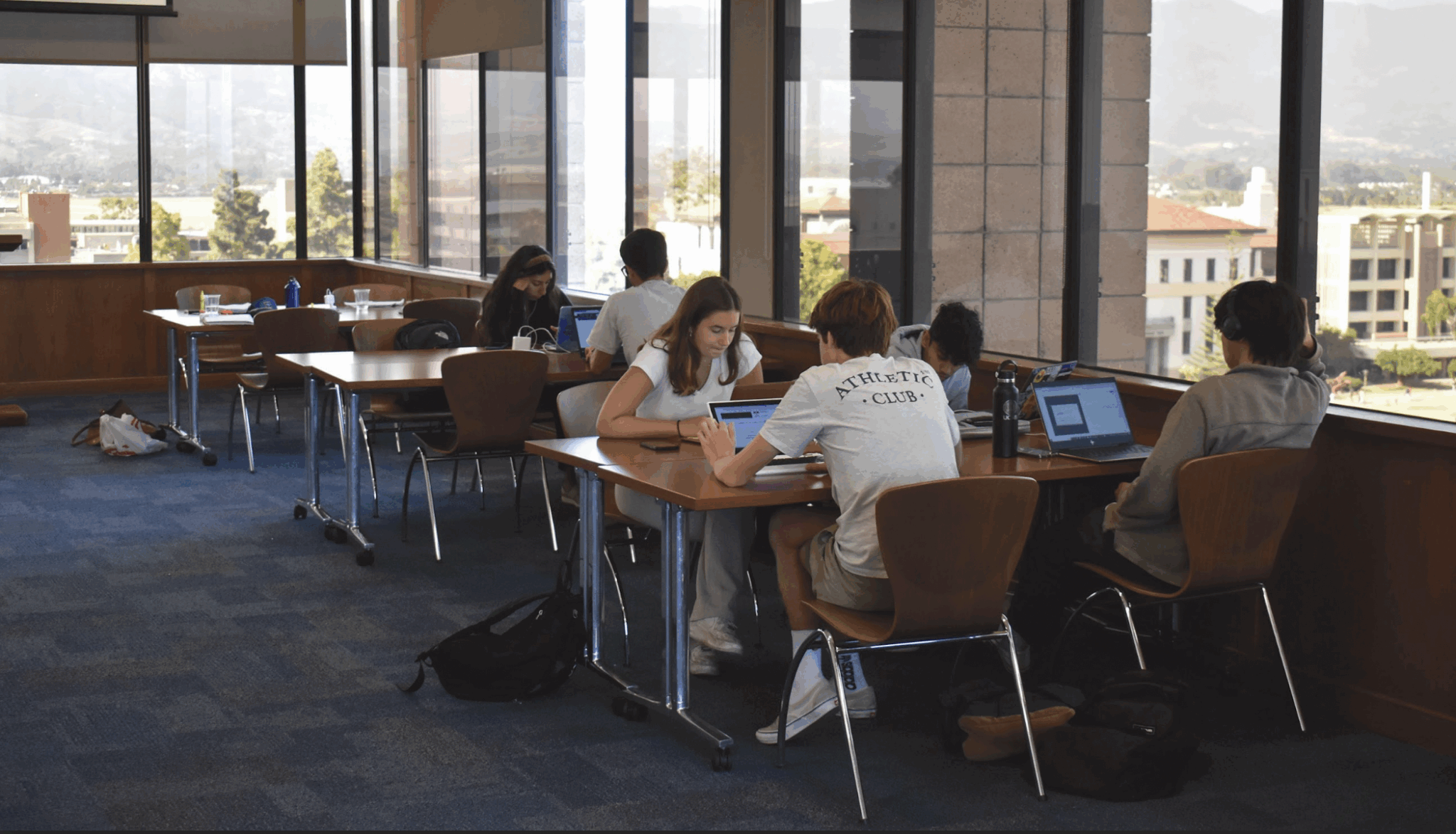
A transition to online learning could significantly deter students from taking language courses through the UC. Nexus file photo
This initiative, known as the UC Global Language Network (GLN), was created by a coalition of University of California (UC) Humanities Deans with the goal of expanding undergraduate access to a diverse world language education. The proposed timeline for the GLN features three phases, with the last phase aiming to scale online language instruction across the entire UC system.
David Moak, a UC Santa Barbara lecturer in French studies and comparative literature, said that there has been a significant lack of transparency from UC administrators regarding the GLN as a whole.
“There’s been no information about which languages. There’s been no information about the timeline. There’s been no information about what these classes are going to look like,” Moak said.
Moak mentioned that the information that has circulated about the GLN is limited even to department chairs, and that much of what staff currently know about it is “indirect information through various channels.”
The decision to outsource to the GLN has significantly impacted the number of language courses offered and the number of faculty employed as lecturers by language departments within the UC.
According to Marion Labatut, a lecturer in French, the number of courses offered by the French and Italian department at UCSB has decreased significantly over the past year. While the department used to offer 36 French courses per academic year, it is now offering 18 courses for the 2025-26 academic year. Additionally, Labatut said that the department will offer 13 courses in the next academic year.
“It is not optimal at all, as we have students who now have to wait for a whole quarter, two quarters or even a whole year before they can enroll in the class they need,” Labatut said in a statement to the Nexus.
Moak said that this reduction has resulted in many students who are either interested in learning a new language or are required to do so under their major or minor requirements reaching out with concerns about whether they would be able to graduate on time.
According to Moak, the administrative decisions relating to the GLN stem from “catastrophic” budget cuts which have resulted in language departments across UCSB needing to lay off faculty and replace them with “computer programs or robots.”
“They want to lay people off. They want to get rid of faculty,” Moak said. “For example, in French, two people were laid off last year who have not been brought back to teach this year. I myself am losing my job at the end of this academic year.”
During the 2025-26 academic year, the UC faced a $30 million, or 0.3%, decrease in state funding. In March 2025, UCSB was projected to face a $24 million permanent reduction in state funding, alongside an expected $45 million increase in costs.
The French department employed seven lecturers in language instruction in the 2024-25 academic year, two lecturers will remain by the 2026-27 academic year. Despite these layoffs, Moak mentioned that university administrators are simultaneously hiring developers to build the software for the GLN, signaling a “clear shift in priority to a digital interface.”
While Moak acknowledges that online learning has certain benefits, including flexibility for students, he believes that this transition could have detrimental impacts on student learning, including enabling cheating through artificial intelligence and online translators.
“It is exceptionally easy to cheat when you’re doing a class online,” Moak said. “If anything, what we should be doing is a kind of more old-school model of being in-person, doing assignments with pen and paper so that we can actually be testing the knowledge of students.”
First-year biology major Melanie Vincent took an intermediate French course during winter quarter, and said that learning in-person fostered a collaborative environment that allowed her to get a “full immersion” of the language. She believes that learning in person from an instructor who is a native speaker or has an academic background in a language enables students to receive a more enriching learning experience.
“It just felt like you could feel the cultural enrichment in the classroom and actually being able to ask them cultural questions, things that you really wouldn’t be able to get from an online platform,” Vincent said. “There’s just certain things that you pick up on by living in a country that speaks that language or by having family that speaks that language.”
Interdepartmental Graduate Program in Marine Science student Dexter Davis shared a similar experience taking French 5 with Labatut, and said that being able to learn vocabulary, grammar and sentence structure while asking clarifying questions made him feel more comfortable learning French.
Davis believes the online language resources would not provide students with the same experience as an in-person course, as they wouldn’t be able to discuss the nuances of language while engaging in conversations about culture and pop culture.
As a result, both Vincent and Davis said they would not choose to continue their French education at UCSB if their only option was online courses.
“I know there’s language resources online already that I don’t necessarily need to go through the University for,” Davis said. “The resource that I want is access to a person who speaks that language that is engaged with the culture.”
Moak said that he hopes that university administrators will listen to student feedback before making concrete decisions on the GLN, because a transition to online learning could significantly deter students from taking language courses through the UC and result in further decreases in the number of students pursuing higher language education.
“I’m sorry to the students. I think that this is not something that ultimately is going to serve them and their interests,” Moak said. “I would hope that the University would listen to the causes for concern that students have. We are here to serve students and that needs to be the priority. I wish I could have the power to change things myself, but alas, I do not.”