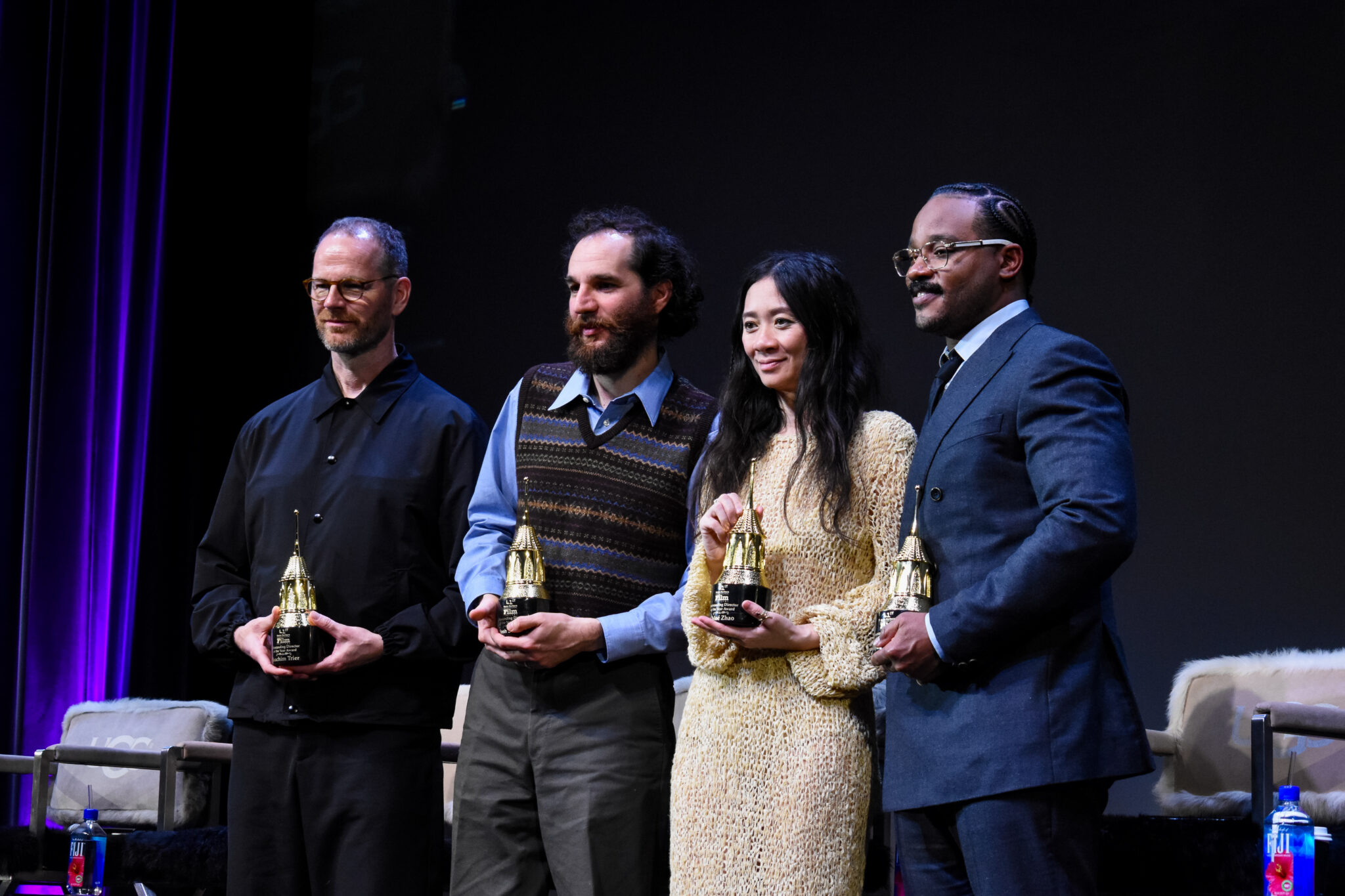
(L to R): Joachim Trier, Josh Safdie, Chloé Zhao and Ryan Coogler posing with their awards. (Sara Stevens / Daily Nexus)
As rain nearly flooded the red carpet of Arlington Theatre, the Santa Barbara International Film Festival welcomed four of this year’s Academy Award-nominated directors for the Outstanding Directors of the Year Award. Since 2009, the festival has invited the year’s best and brightest directors to share the stage and celebrate their films.
2026’s honorees directed the season’s biggest and critically acclaimed films. Ryan Coogler’s “Sinners” took the world by storm and received a record-breaking 16 Academy Award nominations. Chloé Zhao’s “Hamnet” shattered hearts across the globe. Josh Safdie’s “Marty Supreme” became A24’s highest-grossing worldwide release. Joachim Trier’s “Sentimental Value” also made history, as the first Norwegian film to ever be nominated for Best Picture at the Academy Awards.
Audience members filed past the rain-soaked red carpet and into the warm Arlington Theatre on Feb. 10, filling seats with devout film fans ready to hear from the minds of their favorite directors.
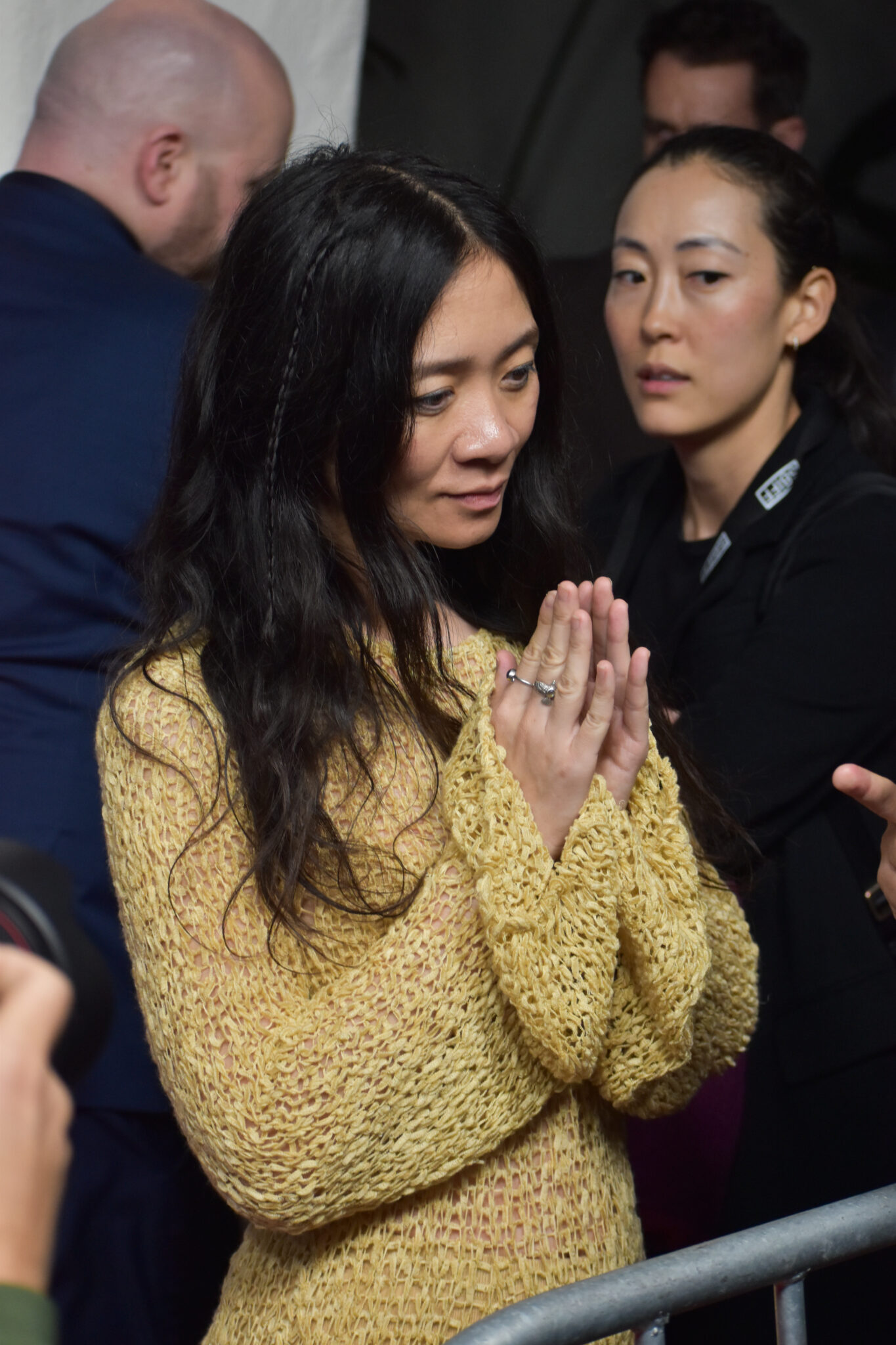
Chloé Zhao talking to reporters on the SBIFF red carpet. (Sara Stevens / Daily Nexus)
Santa Barbara International Film Festival (SBIFF) Executive Director Roger Durling opened the ceremony by introducing moderator Scott Feinberg, who serves as executive editor of awards at the Hollywood Reporter.
Feinberg welcomed the first honoree, Zhao, to the stage. Zhao is no stranger to SBIFF, having attended the festival in 2021 when she was honored with the Outstanding Directors Award for her film “Nomadland.” A month after her first appearance at SBIFF, she won the Academy Award for Best Director, becoming the first woman of color to do so. She returned to Santa Barbara this year with “Hamnet,” a film adaptation of Maggie O’Farrell’s 2020 book of the same name. The story follows Agnes Hathaway and William Shakespeare, and their grief after losing their beloved son Hamnet to the bubonic plague.
The film is Zhao’s first since 2021’s “Eternals,” a four-year stretch that Zhao referred to as a “midlife crisis” in an interview with the New York Times. Feinberg asked about this period, and how “Hamnet” brought her back to film.
“I learned very humbly that there are four seasons to a person’s life, to a day, to a creative cycle. And I didn’t understand the importance of winter,” Zhao said. Recalling the years before her break she continued, “[directing] started to feel very unnatural, both internally and externally.”
Zhao spent the next four years learning how to “winter,” a process she described as slowing down and letting things die.
“[It’s] a really uncomfortable feeling, and then also sitting in the process of the compost, the chrysalis,” she said. Zhao’s period of inactivity ultimately prepared her for the seed of “Hamnet.”
“By the time when a little bird dropped a seed … into that soil, it was growing with the energy, the fertility that I was missing,” Zhao said.
In a red carpet interview with the Daily Nexus, Zhao discussed the emotional aspects of directing such a heartwrenching film.
“I think the hardest for me was when it triggered something in me, and I feel my own sadness,” Zhao said.
She continued, emphasizing that vulnerability is what allowed for the emotional story of “Hamnet” to take flight.
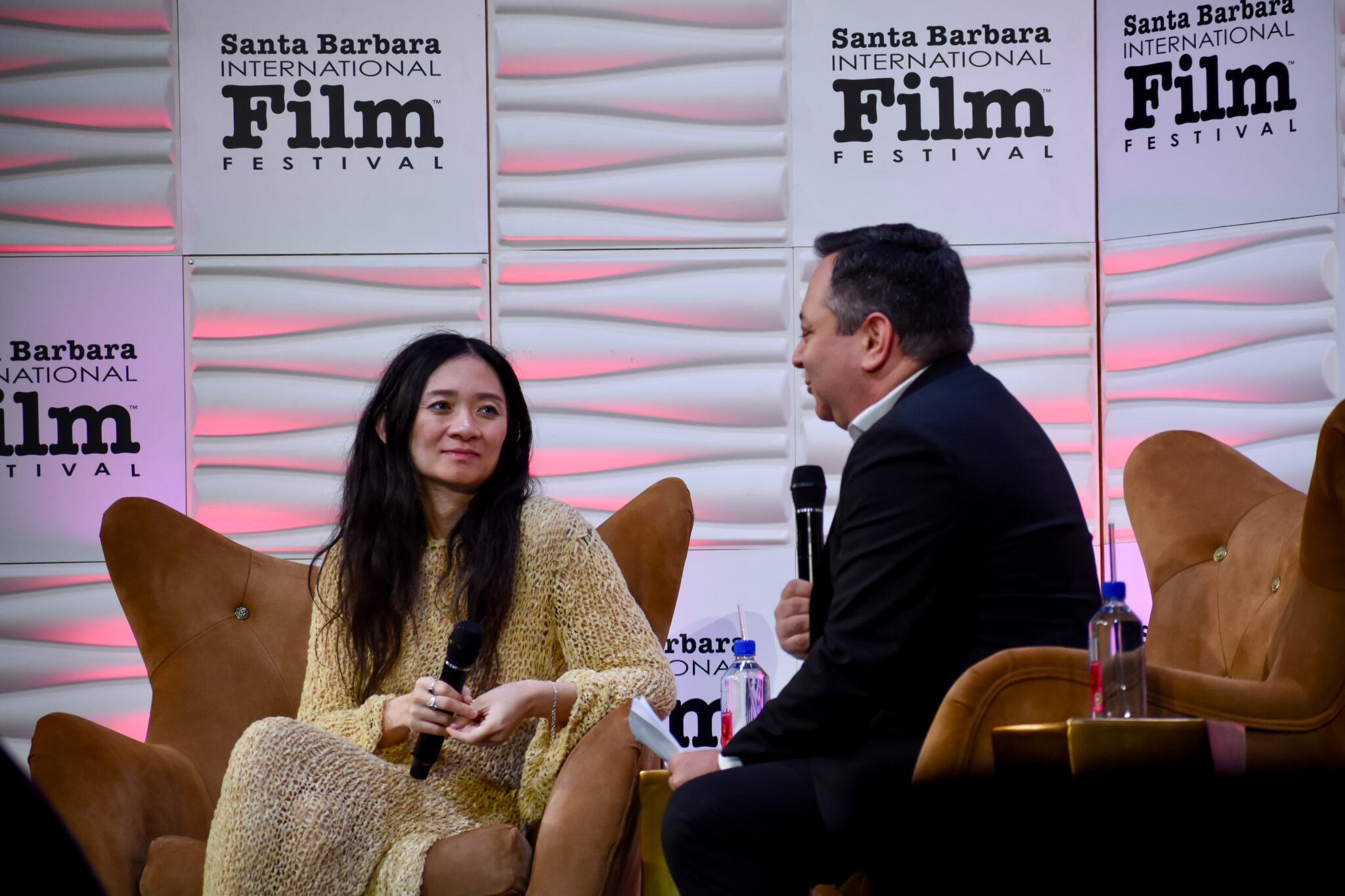
Chloé Zhao talking with moderator Scott Feinberg. (Sara Stevens / Daily Nexus)
“Sometimes it’s important that I keep that to myself … and other times it’s important for me to share so that I can receive holding from my cast and crew, so that they know it’s okay to be vulnerable,” she said.
Next came Trier, whose film “Sentimental Value” is a story defined by fraught familial tension and generational trauma within the entertainment industry.
Feinberg began the conversation by asking if the film was inspired by Trier’s own life, given Trier’s familial filmmaking legacy. Trier credited his family for creating an environment that allowed him to dream and create his art.
“You have a word for this … ‘nepo baby’?” Trier joked, which was met with laughter from the crowd.
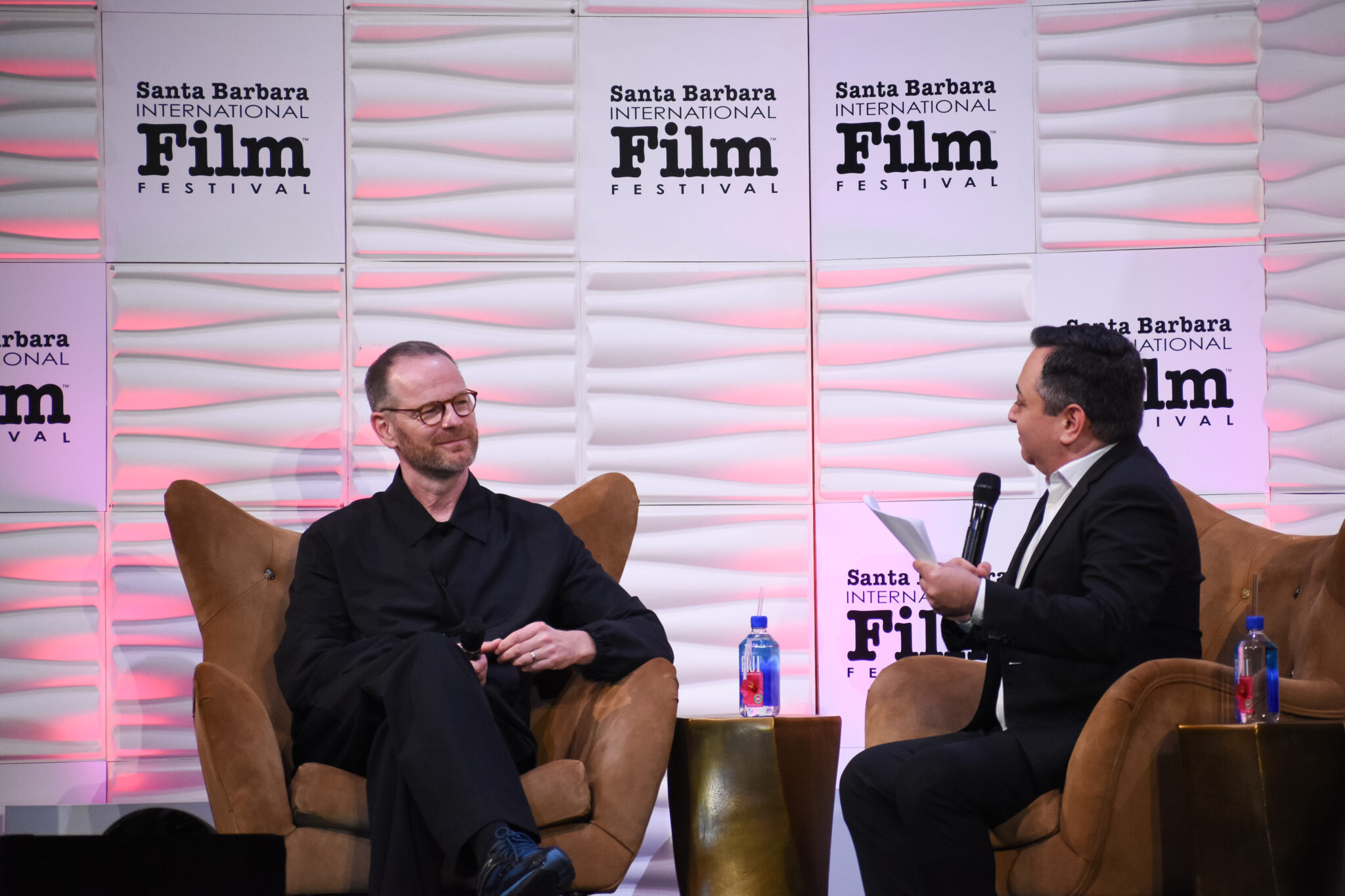
Joachim Trier talking about his inspiration for the film “Sentimental Value.” (Sara Stevens / Daily Nexus)
Feinberg dug deeper later on in the interview, discussing the aspects of generational trauma in the film as they related to Trier’s own experiences.
“I was interested in that there was some trauma that percolated through people that grew up … being children of people who didn’t allow themselves to have language about the trauma of the war,” Trier said. This culture of silence was a cycle Trier wanted to not only break, but explore through the film.
“I really wanted to make a film with some hope. That even in the most difficult family, there is some sense that maybe there is an unspoken space to get closer to each other,” he said.
After Trier’s spotlight interview, Safdie took the stage. When Feinberg asked if the “Marty Supreme” director liked Santa Barbara, Safdie responded, “Everyone told me the weather is amazing,” poking fun at the stormy weather.
When asked where Safdie got the inspiration for “Marty Supreme” — a high-energy sports drama about an overly ambitious table tennis player — he shared that the film is a love letter to his hometown of New York City.
“You encounter all walks of life,” Safdie said. “The pace of the city, obviously, a lot of characters, I had flawed people around me as a kid … I tried to see the best in people and be as empathetic as I could.”
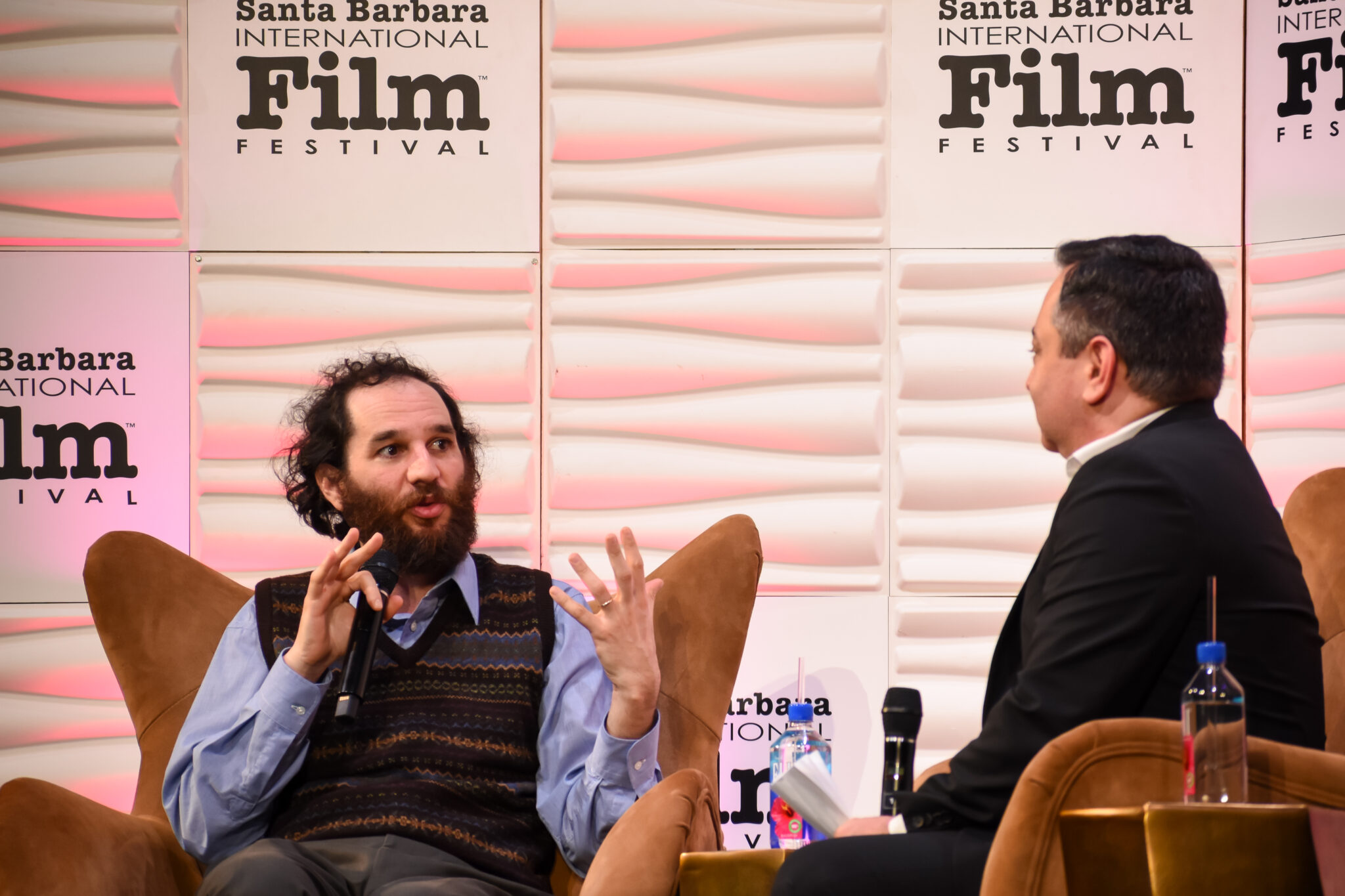
Josh Safdie talking “Marty Supreme.” (Sara Stevens / Daily Nexus)
Safdie also spoke about his collaboration with lead actor Timothée Chalamet, revealing that he wrote “Marty Supreme” specifically with him in mind.
“He can’t stand still, and he’s just got this hungry energy, [an] intense dream. Like his dream, you could feel other people believed in it. That’s how powerful it was … he was Timmy Supreme,” Safdie said, grinning.
Last but not least, Coogler — appearing both grateful and grounded — took the stage to a standing ovation and acknowledged the record-breaking success of “Sinners.”
“I’m trying to find a healthy balance of enjoying it but not acknowledging it too much, because I’m not sure what it all means,” he said.
Rather than focus on accolades, Coogler emphasized the collaborators who brought the film to life.
“I’m really proud of all my collaborators … I think they did some of their best work,” Coogler said. “Seeing what they gave to the movie, and seeing it up close, I was incredibly impressed.”
Known for balancing blockbuster spectacle with intimate storytelling, Coogler described feeling a sense of urgency to reveal more of himself through his work.
“We went through the strikes, we went through the pandemic and I kind of got scared that I hadn’t shown that side of myself to the audience, and I felt like a little bit of chicken shit,” Coogler said candidly.
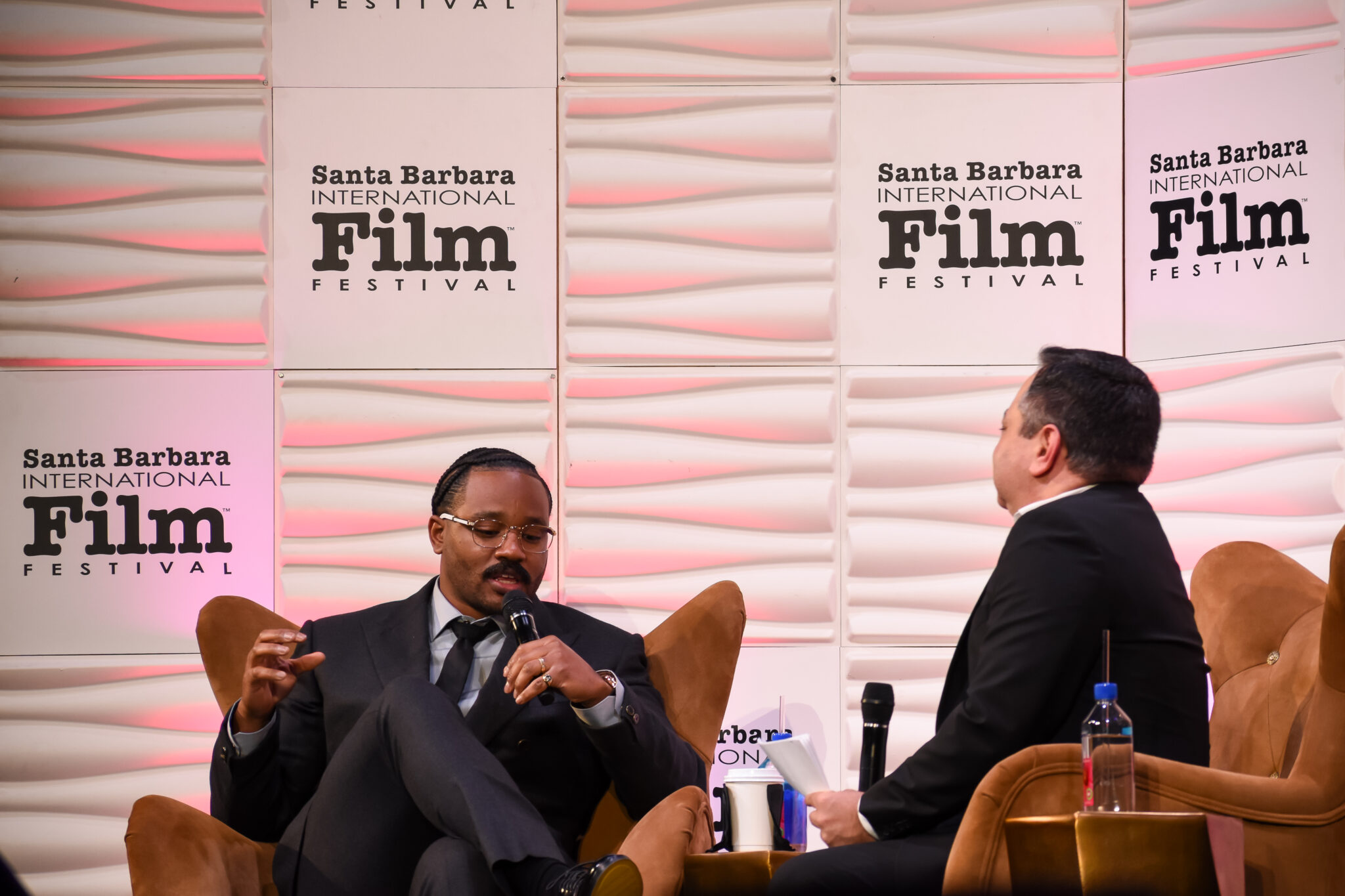
Ryan Cooger talking about the record-breaking success of “Sinners.” (Sara Stevens / Daily Nexus)
One of the film’s most talked-about sequences — a surreal montage connecting past, present and future generations — was born from that vulnerability.
“And that was kind of where the idea of, ‘Wouldn’t it be cool if they could experience just spending some time with the ancestors and their descendants that wouldn’t be condemned to a life of sharecropping, you know, and just party?,’” Coogler explained.
Feinberg moved into the panel portion of the evening, the audience erupting in applause as Trier and Zhao entered the stage arm-in-arm, with Safdie and Coogler just moments behind.
While past years have showcased directors from completely different sides of the film industry, this year’s panel felt like old friends coming together for a fireside chat.
Feinberg asked about their shared history, and Coogler explained that he, Zhao and Trier met at the 2012 Sundance Screenwriters Lab, where Trier served as an advisor for the program. Trier mentioned feeling unqualified for the position, but he emphasized the collective spirit of the experience.
“What the hell did I teach you?” Trier joked. “But as we’ve learned through the years, it’s a collegial thing. We all learn all the time, and we share stuff.”
Safdie did not attend the 2012 Sundance Screenwriters Lab, but he and Zhao attended the New York University’s Tisch School of the Arts around the same time. Zhao was familiar with his work.
“You were too cool for our parties,” she joked.
“You say that but … I would have gone to the parties,” Safdie retorted.
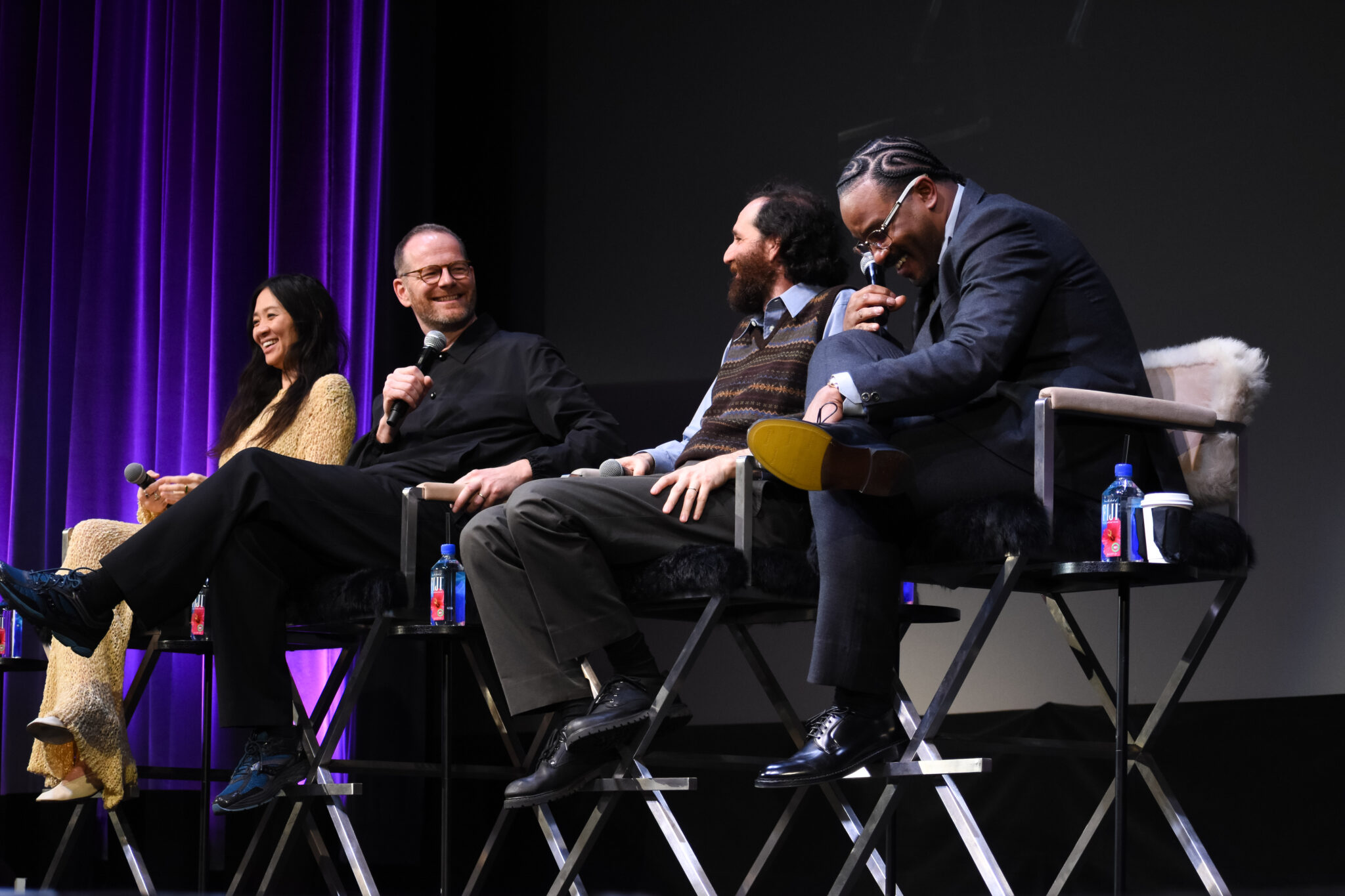
Zhao, Trier and Coogler are old friends, having met at the Sundance Screenwriters Lab in 2012. (Sara Stevens / Daily Nexus)
When asked about whose opinion they care about the most, Safdie answered easily: “I would say my wife, she’s a producer on the film, and she’s just, she’s nasty. She gives it to you.”
Zhao’s answer had a little more humor. “I care about my Letterboxd curve. Yeah. I mean, I also care about Rotten Tomato[es], but I know I shouldn’t.”
Coogler offered a bit more humility, favoring the opinions of the people of Clarksdale, Mississippi. “Sinners” was inspired by Coogler’s family’s experiences living in Jim Crow-era Clarksdale, but there were no theaters in Clarksdale that could show the movie.
“Warner Brothers set up a big theater in Clarksdale in the community center … and they opened it up for about a week there. When I heard that people in the community were going back a second or third or fourth time because they like it, that made me feel pretty nice,” Coogler said.
Durling came out to conclude the ceremony. He thanked the directors for their time and their work, before welcoming painter and filmmaker Julian Schnabel to the stage.
Durling and Schnabel handed out the small Arlington Theatre-shaped trophies to the directors before turning to speak.
“Everybody that’s sitting over there is so radically different, but that one in one way, they’re all the same. They all want to make work. They want to make something,” Schnabel said.
As the evening drew to a close, Feinberg gathered all four directors back onstage for a final round of applause. Though their films span centuries, continents and genres, each director spoke of storytelling as an act of empathy: a way to confront silence, process grief, honor ancestry or capture the electric momentum of a city street.
Outside, the rain continued to fall on State Street. Inside the Arlington Theatre, however, the mood was warm: celebratory yet reflective. Old friends reunited, new milestones marked and four filmmakers at very different seasons of their lives paused, if only briefly, to take it all in.
With the Academy Awards just weeks away, the night felt less like a competition and more like a conversation — one that Santa Barbara audiences were lucky enough to witness firsthand.
The 98th Academy Awards will take place on March 15, where Coogler, Safdie, Trier and Zhao are nominated for Best Directing. Each of their respective films is nominated for Best Picture.
This article appeared in the 2/19 print edition of the Daily Nexus