The 41st Santa Barbara International Film Festival recently held their annual Women’s Panel, highlighting the achievements of women in the film industry on Saturday, Feb. 7.
The event featured six panelists — all of whose projects have been nominated for an Academy Award. The panelists included costume designer for “Marty Supreme” Miyako Bellizzi, sound designer for “Sirāt” Laia Casanovas, producer for “Zootopia 2” Yvett Merino, director of the semi-short film “Two People Exchanging Saliva” Natalie Musteata, producer of the Netflix documentary “The Perfect Neighbor” Alisa Payne and producer for the film “Train Dreams” Ashley Schlaifer.
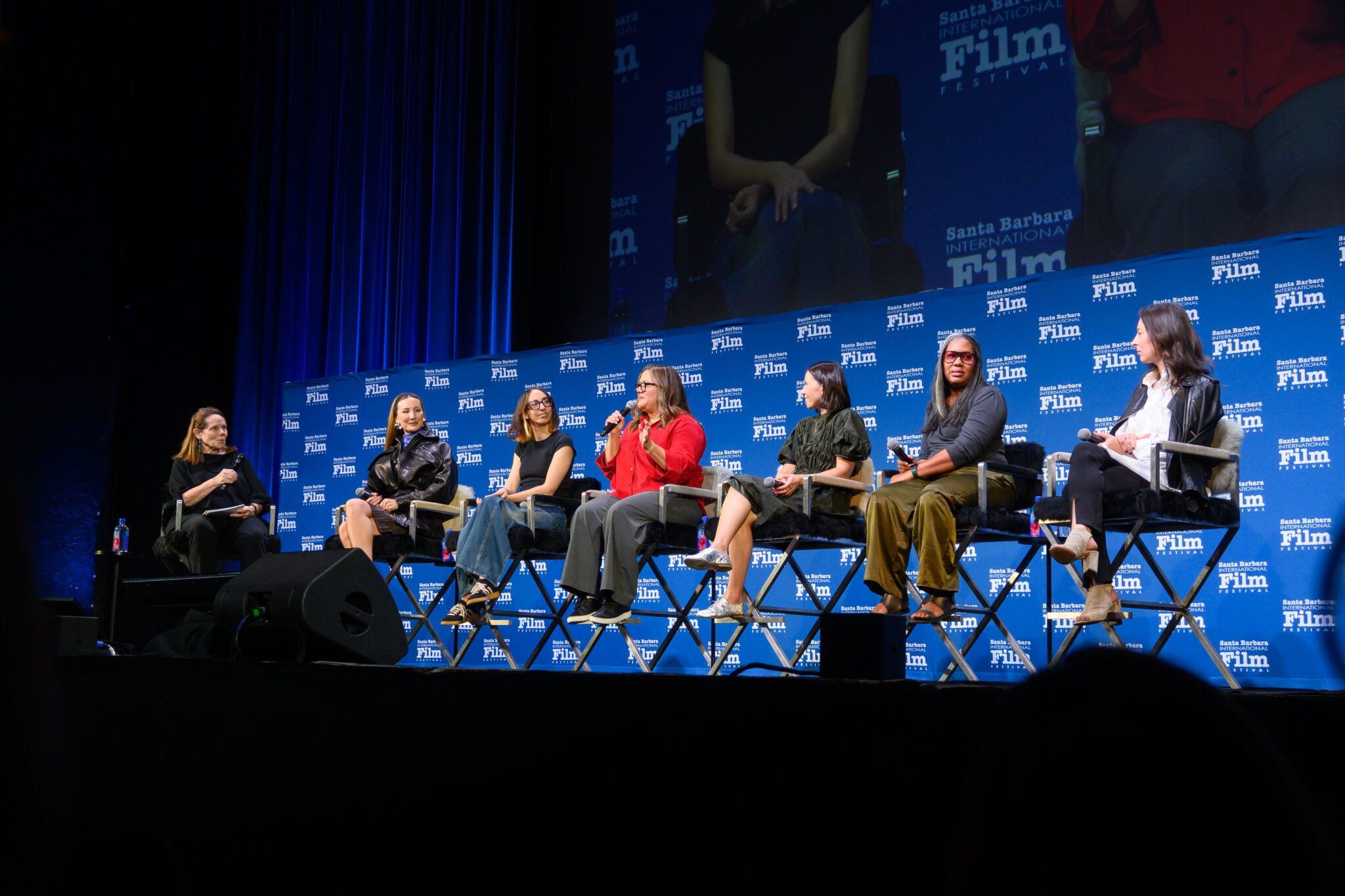
All six panelists are nominated for Academy Awards. (Sherine John / Daily Nexus)
This was the 24th year of the panel, moderated by producer Madelyn Hammond. The audience consisted of little girls with starlit eyes, women getting to know each other in the crowd and families.
“The first year we did this, there were 11 people in the audience. 11 people. I remember that,” Hammond said, noticing the crowded front half of the theater.
Merino, a UC Santa Barbara alum, became the first-ever Latina to win the Academy Award for Best Animated Feature for “Encanto” in 2022. Most recently, Merino produced “Zootopia 2,” which became the highest-grossing animated film of all time. When discussing the accomplishments of the film, Merino noted how fulfilled she and her colleagues felt.
“Watching the success of the film has been amazing, because it really just means all of the artists that worked day in and day out, and put everything into it, got their work seen and appreciated,” Merino said.
When asked about the process of animation and how producing a sequel differs from the original film, Merino responded by noting the community within Walt Disney Animation Studios and the overall collaborative process.
“We invited the entire studio, about 1,200 people in Disney Animation, to see the film and asked them for feedback. They sent us their notes, and they told us what worked and what didn’t work,” Merino said. “The great thing about Disney Animation is we’re a very tight-knit community and they like to tell us the absolute truth — so they told us things that weren’t working and such.”
Costume designer Bellizzi also detailed what it was like working with a large group for the Academy Award-nominated film “Marty Supreme.” She noted how the costumes were housed in a 30,000-square-foot warehouse with thousands of actors to dress.
“I think the first background breakdown I had, there was over 9,000 people, and that was just for background. Of course, we had to eliminate some people because it’s just too big to accomplish — it’s a feat,” Bellizzi said.
When asked about her collaboration with different departments during the film, Bellizzi pointed to casting director Jennifer Venditti and their close relationship during the casting and filming processes.
“Her and I have been working together since ‘Good Times,’ and we work very closely together,” Bellizzi said. “The casting process is a very exciting time and it’s very formative.”
When asked about the casting process, Bellizzi explained how she differentiated extras via small facial features.
“I had to look through all the pages of background people to make sure they had vintage faces, because it is 1952,” Bellizzi said. “It’s interesting when you think about what makes a face contemporary, and what has to change to make them contemporary.”
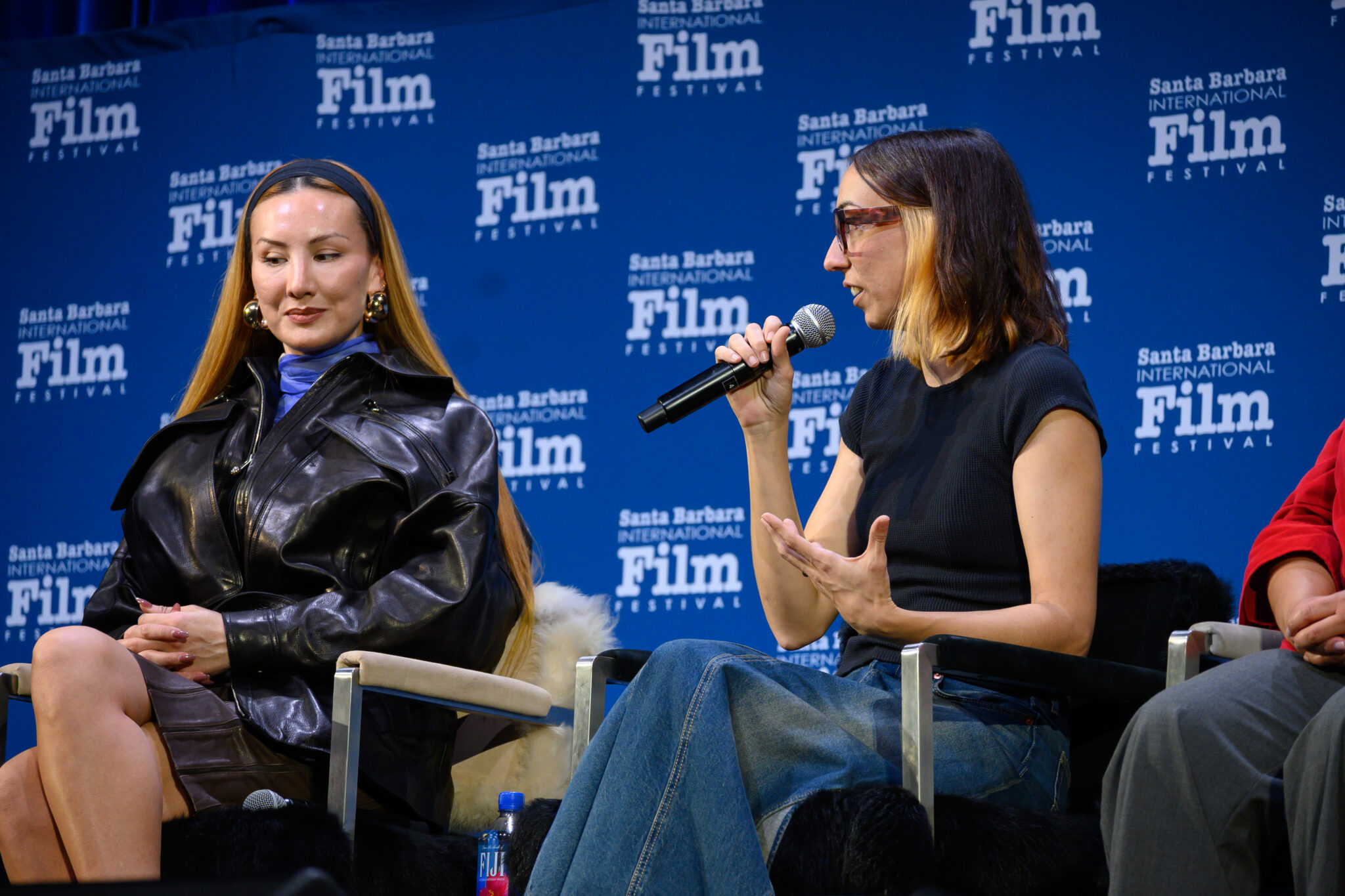
Sound designer Laia Casanovas talking about her work on “Sirāt.” (Sherine John / Daily Nexus)
The panel moved to sound designer Casanovas, whose recent project, “Sirāt” was nominated for an Academy Award for Best Sound. “Sirāt” features a 17-minute rave scene in the beginning with real ravers, offering an atmospheric and gritty sound to accompany the film.
“It was difficult to find how to treat all the sound of the rave,” Casanovas said. “It’s incredible to hear and listen because being on the dance floor is like a ritual.”
Casanovas explained how the 17-minute sequence, and the act of dancing, feels like a community ritual.
“It was forbidden to stop the speakers from shaking, so that’s why the images have that kind of hue, because they are actual real ravers … raving,” she said.
When asked about her passion for sound design, Casanovas explained that the texture in the music and images are intriguing to her.
“When you are watching a film, you don’t realize when the music stops and when the sound starts. It’s mesmerizing and hypnotic in the sound [of the film], to see all of the layers,” Casanovas said.
Hammond pivoted the panel to Payne, producer of Netflix documentary “The Perfect Neighbor,” and the intricacies of sound. Payne and her team pulled from police body cam footage, which had minimal sound quality, to include in the documentary.
When people see a film categorized as a documentary, many don’t feel inclined to watch it, according to Payne.
“We made it a scripted thriller instead, because we wanted all sorts of people who would never come to it to see it and see the harmful effects of ‘stand your ground’ gun laws in America,” she said.
Payne also reflected on the emotional aspect of this storytelling and how, as a producer, it was her job to manage the heartiness that this story evokes.
“This has been one of the most emotionally and most technically challenging films I’ve ever done,” Payne said. “As a producer, I’m the self-appointed chiefs emotions officer.”
Payne noted how her job as a producer is to be a mom to everybody in the credits, something Schlaifer, producer of “Train Dreams” can agree with.
Schlaifer explained how the film took roughly 10 years to come together and “[find] all the people that were meant for it.”
“I wanted this film to feel timeless,” Schlaifer said. “We talked a lot about making sure the film felt resonant to today.”
The film is predominantly shot in nature, which Schlaifer explained came with its own challenges for the ever-changing role of the producer. “We got to style some of the most beautiful forests in the state of Washington and spend time in these beautiful, magical places … we got to make this film in a very analog way.”
Schlaifer reflected on how the film was created completely independently, as was Payne’s documentary, and Netflix graciously partnered to help garner accessibility with showing the film.
“It’s not lost on me that we got to make a film like this in general,” Schlaifer said.
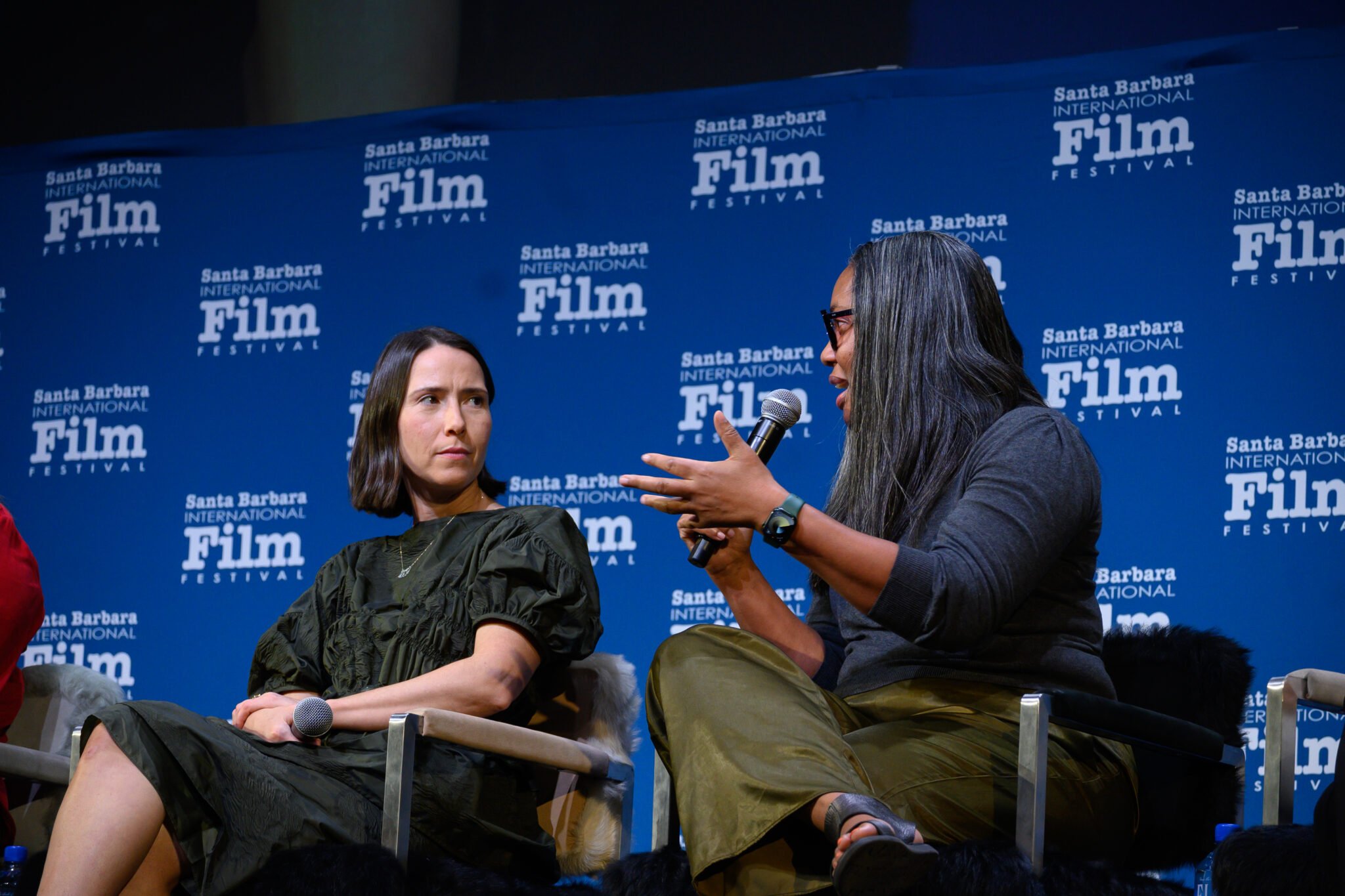
Director Natalie Musteata (L) listening to producer Alisa Payne (R). (Sherine John / Daily Nexus)
The panel finally reached director Musteata of semi-short film “Two People Exchanging Saliva,” an absurdist love story where people pay for things by being slapped in the face, and kissing is illegal.
Musteata explained that she and her partner, Alexandre Singh, her co-creators on the film, had no contacts in the industry, nor did either of them attend film school — yet they created a 36-minute short film.
When asked about the themes surrounding the film, Musteata emphasized absurdity and ridiculousness as a reflection of the consumerist culture and absurd international political climate.
International production intersects within the film’s plot and protagonist Zar Amir Ebrahimi’s life.
“Living in a time where violence has become really normalized in a horrific way … it was important to twist the rules of our world to reflect back the absurdity of our world,” Musteata said.
Hammond then asked the panelists rapid-fire questions, ranging anywhere from their celebrity crush to something they know better than anyone else.
The event ended with clips from each film the panelists worked on being projected on the Arlington Theatre screen, highlighting their contributions and allowing them to be celebrated and recognized by the Santa Barbara audience.