
Courtesy of Santa Barbara Symphony
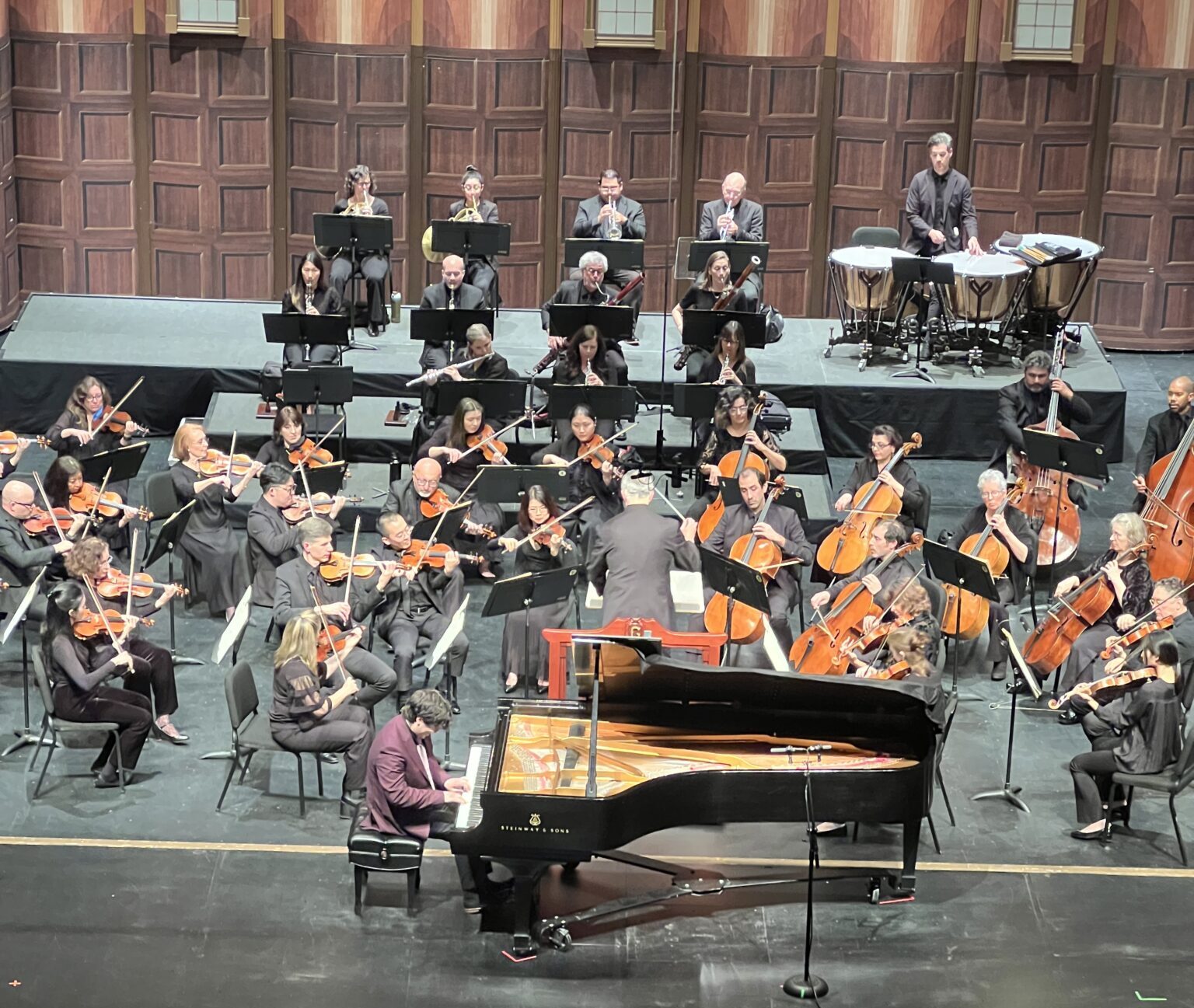
The Santa Barbara Symphony performed a weekend-long marathon of all five of Beethoven’s piano concertos at the Granada Theatre from Jan. 17-18. The concertos were conducted by the symphony’s 10-year Music and Artistic Director Nir Kabaretti, with each arrangement accompanied by a different piano competition medalist.
Ludwig van Beethoven, considered to be one of the greatest composers in history, wrote his piano concertos in three movements. All five of these concertos are known for bridging a path from classicism to romanticism, and are regarded as masterpieces of his newly created transitional genre. The Santa Barbara Symphony perfectly replicated Beethoven’s timeless sound through the beautiful notes played on their wind and string instruments.
On the afternoon of Sunday, Jan. 18 — the second and last day of the marathon — a crowd gathered to witness the excellence of medalists Dmitry Shishkin, Angie Zhang and Jonathan Mamora as they performed Beethoven’s piano concertos No. 1, 2 and 5.
Dmitry Shishkin began with the delicate sound of “Concerto No. 1.” The Geneva International Music Competition winner has been commended for his unique approach to music, and this was easily recognizable throughout his time on stage. His fingers soared across the piano as he played each note of the three movements of this piece. He sophisticatedly transitioned the soft sound to a rather bold one as conductor Kabaretti used powerful movements to guide the orchestra.
To end the third movement, Shishkin executed the final piano solo carrying the intensity of the original piece. The audience roared into a standing ovation as his electrifying movements made the finale of the concerto a striking one. As Shishkin left the stage after his well-deserved applause, Angie Zhang appeared in his place to perform “Concerto No. 2.”
Zhang is a prizewinner of multiple competitions, but most notably a three-time winner of the Juilliard Concerto Competition. She is praised for her individual interpretations of historical pieces, which has led to her extensive career as a piano orchestra soloist. Her talents were no secret to her Santa Barbara audience as she moved with elegance playing the second concerto.
The first movement consisted of a melody reminiscing a gala as it swayed with enchanting sounds. Zhang reflected this elegance not only in her beautiful cerulean gown, but also in the gestures used. She put her whole body into the performance — from the first movement with her solo to the last movement’s intensity. She synchronized her body with the notes, oscillating her head — unintentionally making the concerto a magical viewing experience.
Beethoven’s original warmth of the second concerto was heard with delight through Zhang and the Santa Barbara Symphony. Beethoven had written this at a fairly young age, and his playful youth is apparent throughout the piece. The listening experience left the audience with smiles on their faces as the violins played a positive tune.
As Zhang completed “Concerto No. 2,” the audience, yet again, rose to their feet with a proud standing ovation. With that, intermission approached and the audience refueled for the finishing of the marathon, “Concerto No. 5.”
Jonathan Mamora was the final pianist of the late afternoon. Known for his positively uplifting performances, Mamora is the proud winner of the Palm Springs International Piano Competition — the perfect individual to complete this impressive concerto.
Beethoven’s “Concerto No. 5,” consists of more fast-paced, intense sound in comparison with No. 1 and 2. Though, the intensity is not throughout the whole concerto since the piano portions bring delicacy to each movement. Mamora specifically performed this with a sense of ease, moving his head with his hands as they play across the piano. Additionally, it is not a mystery to the audience how much Mamora enjoyed this performance. His facial expressions said it all — he felt the emotions throughout his whole performance.
With the second movement being particularly emotional, the facial expressions given by Mamora assured the audience of the complexity of Beethoven’s piece. Unsurprisingly, Mamora was given a round of applause — prematurely, however, as he continued playing when the claps arose.
While the third movement continued, the audience was left surprised with the continuous beauty. The third movement is a reminder of the excellence of Beethoven’s composition. It is fascinating that after 200 years, his music still gets played consistently. Specifically, having these three talented pianists playing his work indicates the everlasting impact classical music has on human beings. A momentous figure like Beethoven inspires well-rounded musicians like Shishkin, Zhang and Mamora.
As Mamora concluded the final performance of the weekend-long marathon, a respectful celebration of Beethoven had also been concluded as the audience gasped with awe when the final note of the piano was played. Unsurprisingly, the whole theatre was brought to their feet for the final time of the late afternoon. An endless ovation from the audience’s part as the pianists, conductor and symphony musicians bowed with gratitude.
This appeared in the Jan. 22 printed edition of the Daily Nexus