The 2025-26 Associated Students Student Advocate General spoke with the Daily Nexus regarding her work supporting vulnerable student populations during fall quarter.
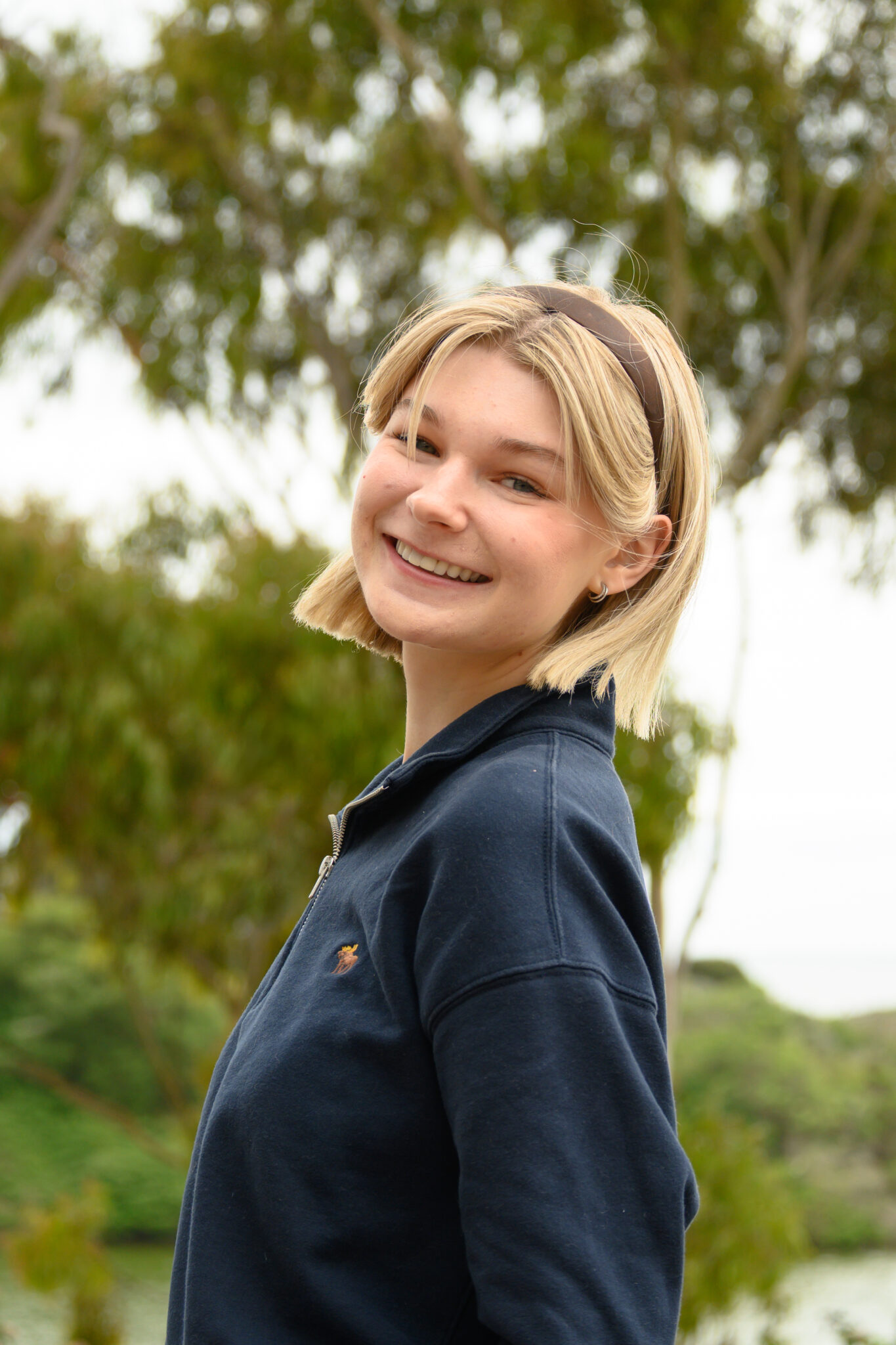
Bivins’ work this past fall quarter involves supporting vulnerable student populations. Sherine John / Daily Nexus
Fourth-year sociology major Sydney Bivins worked in the Office of the Student Advocate (OSA) for two years before becoming the Student Advocate General (S.A.G.). Bivins is responsible for facilitating communications between students and the University in matters of dispute, as well as educating students on issues that affect them.
This past fall quarter, Bivins and OSA caseworkers took on 11 cases, which she described as “much slower” than she had anticipated. However, her office has seen a significant increase in new cases for the winter quarter, which she credits to marketing efforts.
In addition to working on student cases, Bivins has also dedicated time to mediating interpersonal conflicts within Associated Students (A.S.) before they reach the Conduct and Ethics Committee, which conducts investigations and recommends remedies for policy violations.
“If somebody were to feel that they are facing abusive conduct and bullying, or somebody they know is, they can report that to me,” Bivins said. “I act as a mediator in conversations or at least give some alternative options for association members to access.”
One of the largest projects Bivins has been working on is the A.S. “Protect Your Peers” initiative, involving various events and resources raising awareness on protections for undocumented and international students.
“We wanted basically as many students and community members within [UC Santa Barbara] and also the general [Isla Vista] area to be educated about how they can protect the people around them as soon as possible,” Bivins said.
The first event in this initiative was held during Week 8 of fall quarter, which was an Immigration and Customs Enforcement rapid response training hosted by 805 UndocuFund, a local non-profit organization that supports mixed-status families and undocumented communities.
After this event saw around 115 attendees, Bivins and other A.S. members felt compelled to plan additional events.
“We really had the student safety and comfort in mind so that they don’t feel like they’re walking into this very daunting, very overwhelming issue alone,” Bivins said. “We also will have campus security at two of our major events to make sure that students feel safe going to these events.”
One of the events Bivins coordinated for Week 2 of winter quarter was a teach-in presented by Asian American Studies Professor John Park. Bivins invited Park to do the event after hearing him speak at a different event.
“I definitely wanted it to take it into consideration when trying to figure out how we would support these vulnerable populations this academic year,” Bivins said. “Even outside of the ‘Protect Your Peers’ week, he’s been a great [resource] and he just knows so much about U.S. immigration policy and the arguments being made on a federal level.”
Beyond focusing on raising awareness for undocumented student rights, Bivins has also been advocating for international students, who make up 9% of the student body.
“We also know that international students have really been monitoring U.S. policy, California policy and seeing what’s going on across the country, knowing that their ability to post on social media about the things that they care about may be limited,” Bivins said. “A lot of them are worried about their safety. What happens if their I-20 gets randomly terminated? There’s a lot of possibilities.”
During fall quarter, Bivins invited representatives from the Office of International Students & Scholars to speak with OSA caseworkers on the process that international students undergo to matriculate at UCSB.
Bivins hopes to work alongside the Global Gaucho Commission, which has planned workshops to help international students learn more about self-advocacy and navigating bureaucratic processes.
Bivins has also been overseeing updates to GoGaucho — a mobile and web application developed by OSA’s sub-technology committee. According to Bivins, the application has “around 10,000 users and growing.” A new feature introduced on the application is “fuzzy search,” allowing users to look up courses through related keywords and a new resource page.
One of the planned changes to GoGaucho is updating systems between the iOS, Android and website versions of the application to be identical. Additionally, developers are working to add a feature that would automatically transfer users’ class schedules to Google Calendar, as well as including a dining hall rating system allowing users to review dining hall menu items.
During her summer check-in interview, Bivins mentioned that she aimed to seek transparency from the Disabled Students Program. However, Bivins stated she did not have updates on this goal but she aims to prioritize it in the future.
Another initiative that Bivins mentioned in a previous interview was having professors explicitly state their artificial intelligence (AI) usage policies in their syllabi. According to Bivins, it has been difficult to contact professors and have them comply with this. Bivins said that student AI usage is a “multi-part issue” that the OSA has been working on.
“Our office has been seeking clarity about [student AI usage]. We have a meeting and a training coming up with the Office of Student Conduct to get a better understanding of how this actually will work for students moving forward,” Bivins said.
According to Bivins, OSA has been “flooded with casework” that relates to students facing allegations of academic misconduct potentially related to AI usage. In order to address this issue, Bivins hopes to plan an event engaging students on AI’s role in education.
A version of this article appeared on p. 5 of the Jan 15, 2026 edition of the Daily Nexus.